

Drip Campaigns Explained for E-Commerce Store Owners
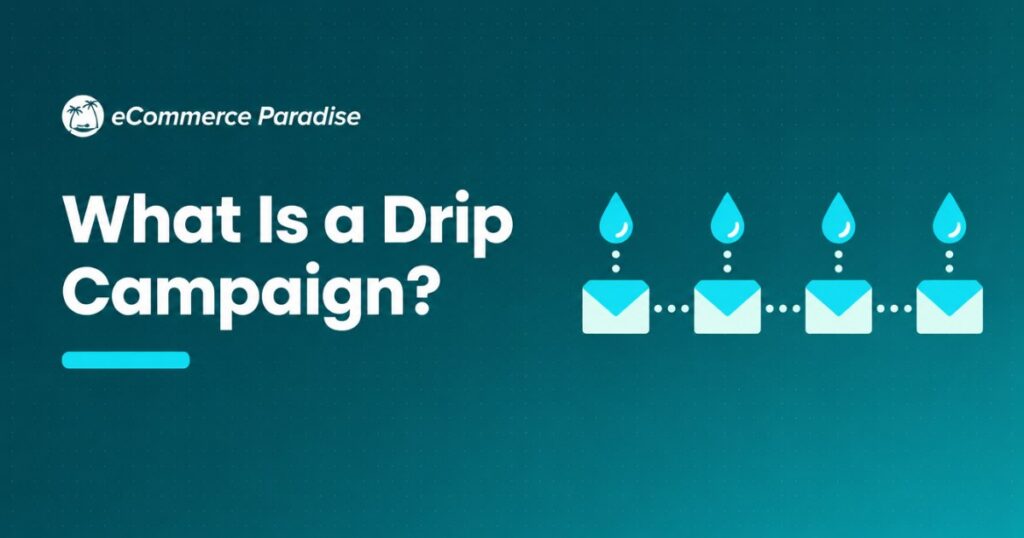
A drip campaign is a series of pre-written emails that are sent automatically to subscribers on a scheduled timeline. Instead of sending one email and hoping for the best, a drip campaign “drips” a sequence of messages over days or weeks, each one building on the last to move the subscriber closer to taking action. For e-commerce stores, that action is usually making a purchase, but drip campaigns can also be used to educate, build trust, re-engage inactive customers, or welcome new subscribers.
The name comes from the concept of drip irrigation in agriculture, where water is delivered slowly and steadily to plants over time rather than flooding them all at once. It’s the same idea with email. Instead of overwhelming someone with everything you want to say in one massive email, you deliver your message gradually in digestible pieces that keep the subscriber engaged over time.
I’ve been building e-commerce businesses for over 15 years, and drip campaigns are one of the most consistently profitable tools in my email marketing toolkit. At E-Commerce Paradise, every high-ticket dropshipping store we build includes multiple drip campaigns running from day one, because they convert better than single emails and they work around the clock without ongoing management.
How Drip Campaigns Work
A drip campaign has three core components: a trigger, a sequence of emails, and timing rules. Let me break down each one.
The Trigger
Every drip campaign starts with a trigger event. Something happens that enrolls a subscriber into the campaign. Common triggers for e-commerce include: someone subscribes to your email list, a customer abandons their shopping cart, a customer makes their first purchase, a subscriber hasn’t engaged with emails in 60 days, or a specific date arrives (like a customer’s birthday or an upcoming holiday).
When the trigger event occurs, the subscriber automatically enters the drip campaign and starts receiving the pre-written sequence of emails.
The Email Sequence
The sequence is the series of emails that make up the drip campaign. Each email has a specific purpose and builds on the previous one. A welcome drip campaign might look like: Email 1 delivers the promised lead magnet or discount code, Email 2 introduces your brand story and what makes your store unique, Email 3 showcases your best-selling products, Email 4 shares customer testimonials and reviews, and Email 5 includes a stronger purchase incentive with urgency. Each email moves the subscriber one step closer to buying while providing genuine value along the way.
The Timing
The delays between emails are critical. Send them too close together and you’ll overwhelm subscribers. Space them too far apart and you’ll lose momentum. For most e-commerce drip campaigns, delays of 1 to 3 days between emails work best. An abandoned cart campaign might have shorter delays (1 hour, then 24 hours, then 48 hours) because urgency matters. A nurture campaign for a high-ticket purchase might have longer delays (3 to 5 days) because the buying cycle is longer.
Drip Campaigns vs Regular Email Campaigns
Understanding the difference between drip campaigns and regular email campaigns (also called broadcasts or blasts) is important because they serve very different purposes.
A regular campaign is a one-time email sent to a segment of your list at a specific date and time that you choose. You write it, schedule it, and it goes out once. A flash sale announcement is a regular campaign. A weekly newsletter is a regular campaign.
A drip campaign is an automated sequence that runs continuously. Each subscriber enters at a different time based on when they trigger the campaign, and they progress through the sequence on their own individual timeline. The emails are written once and then sent automatically to every subscriber who triggers the campaign, indefinitely.
The key difference is personalization in timing. With regular campaigns, everyone gets the email at the same time regardless of where they are in their journey. With drip campaigns, everyone gets the right email at the right time relative to their individual trigger event. Both are essential for a complete e-commerce email strategy, and we cover how they work together in our guide on creating an email marketing strategy.
The Most Important Drip Campaigns for E-Commerce
Not all drip campaigns are equally impactful. Here are the ones that generate the most revenue for online stores, ranked by priority.
Welcome Drip Campaign
This is the first impression your brand makes through email, and it’s often the highest-converting drip campaign you’ll build. When someone subscribes to your list, the welcome drip campaign introduces your brand, delivers any promised incentive, and guides them toward their first purchase over 4 to 7 emails spread across 7 to 14 days.
A well-built welcome campaign converts 5% to 10% of new subscribers into customers. For a detailed walkthrough of how to build yours, see our guide on creating a welcome email series that converts.
Abandoned Cart Drip Campaign
When someone adds products to their cart and leaves without buying, this 3 to 4 email sequence works to bring them back. Abandoned cart drip campaigns recover 5% to 15% of abandoned carts, which for high-ticket stores translates to substantial monthly revenue. Our complete guide on abandoned cart emails covers every email in the sequence.
Post-Purchase Drip Campaign
After someone buys from your store, this campaign nurtures them toward becoming a repeat customer. It typically includes order confirmation, shipping updates, delivery follow-up, review request, and cross-sell recommendations spread across 2 to 4 weeks. See our post-purchase email sequence guide for the full strategy.
Browse Abandonment Drip Campaign
When someone views products on your site without adding anything to their cart, a 2 to 3 email drip campaign featuring the products they viewed can bring them back. These convert at lower rates than cart abandonment (1% to 3%) but capture a much larger audience.
Winback Drip Campaign
For customers who haven’t purchased in 60 to 90 days, a winback drip campaign with escalating offers can reactivate their interest. The first email is a gentle reminder, the second includes a discount incentive, and the third is a “last chance” message. Our winback campaign guide has the full breakdown.
Education and Nurture Drip Campaign
For high-ticket products where buyers need time to research, an education-focused drip campaign that provides valuable information about the product category over several weeks can build the trust and confidence needed for a large purchase. A store selling home saunas might have a 6-email drip campaign covering health benefits, installation considerations, sizing guides, maintenance tips, comparison charts, and finally a purchase incentive.
How to Build an Effective Drip Campaign
Here’s my process for creating drip campaigns that actually convert. This is the same approach I use for my clients at E-Commerce Paradise.
Define the Goal
Every drip campaign needs one clear goal. Is it to convert new subscribers into first-time buyers? Recover abandoned carts? Re-engage lapsed customers? Drive repeat purchases? Having a clear goal determines everything else: the number of emails, the content of each email, the timing, and how you measure success.
Map the Subscriber Journey
Think about where the subscriber is mentally when they enter the drip campaign and where you want them to be when they finish it. For a welcome campaign, they start as a curious stranger and should finish as a confident, motivated first-time buyer. For an abandoned cart campaign, they start as an interested but undecided shopper and should finish as a customer. Map each email to a specific step in that mental journey.
Write the Emails
Each email in your drip campaign should provide standalone value while advancing toward the campaign goal. Don’t write “filler” emails just to fill out the sequence. If you can’t write a genuinely useful email for a particular step, you don’t need that step.
Use clear, action-oriented subject lines that preview the value inside. Keep the body copy focused on one main point per email. Include a single, clear CTA in each email. And write in a conversational tone that builds a relationship, not a hard-sell tone that pushes people away.
Set the Timing
The right timing depends on the campaign type and your audience. For abandoned cart campaigns, the timing should be aggressive (1 hour, 24 hours, 48 hours) because purchase intent decays rapidly. For welcome campaigns, 1 to 2 days between emails works well. For nurture campaigns targeting high-ticket purchases, 3 to 5 days between emails gives subscribers time to absorb each piece of content.
Set Up in Your Platform
Most modern email platforms have visual workflow builders for creating drip campaigns. Klaviyo calls them “flows,” Omnisend calls them “automations,” and ActiveCampaign calls them “automations” as well. The terminology varies but the concept is the same: define a trigger, add emails with time delays between them, and set conditions to control who receives which emails. According to Omnisend’s research, automated workflows (which include drip campaigns) generate 29% of all email marketing orders while representing only 2% of email sends.
Drip Campaign Optimization Tips
Once your drip campaigns are live, here’s how to make them perform even better over time.
Monitor Drop-Off Points
Track how engagement changes from email to email in your sequence. If Email 1 gets a 40% open rate but Email 3 drops to 10%, something is wrong between those steps. The content might not be providing enough value, the timing might be off, or the sequence might be too long. Use this data to identify and fix weak points.
A/B Test Individual Emails
Test different subject lines, content, CTAs, and timing for individual emails within your drip campaign. Change one variable at a time so you can isolate what’s making the difference. Even small improvements in each email compound across the entire sequence. Our guide on A/B testing e-commerce emails covers the methodology.
Add Conditional Branches
Advanced drip campaigns include conditional logic. If a subscriber opens Email 2 but doesn’t click, they get a different Email 3 than someone who clicked. If someone makes a purchase during the drip campaign, they should be pulled out and moved to a post-purchase drip instead. These conditional branches make your campaigns smarter and more responsive to individual behavior.
Review and Update Quarterly
Don’t set up a drip campaign and forget about it for a year. Review performance quarterly. Update product recommendations, refresh offers, and adjust timing based on what the data tells you. Stale drip campaigns with outdated pricing or discontinued products hurt your credibility.
Common Drip Campaign Mistakes
Here are the mistakes I see most often when e-commerce store owners build their drip campaigns.
Too many emails in the sequence. More is not always better. A 12-email welcome drip campaign is likely to annoy subscribers before it converts them. Keep your sequences focused and trim any emails that aren’t pulling their weight. Most e-commerce drip campaigns work best at 3 to 6 emails.
No clear goal for each email. Every email in your drip should have a specific purpose. “Stay top of mind” is not a specific purpose. “Build trust by sharing a specific customer success story and link to reviews” is. If you can’t articulate the purpose of an email in one sentence, cut it or rewrite it.
Forgetting about overlap. A subscriber might be in multiple drip campaigns at once, which can result in receiving too many emails in a short period. Set up suppression rules to prevent campaign overlap and ensure no subscriber receives more than one email per day from your automated sequences.
Getting Started with Drip Campaigns for Your Store
If you don’t have any drip campaigns running yet, start with your welcome series and abandoned cart sequence. These two campaigns will generate the most immediate revenue and they’re the simplest to set up. Once you see results, add post-purchase, browse abandonment, and winback campaigns one at a time.
Make sure your store foundation is solid before you start driving subscribers into your drip campaigns. Pick the right niche, source reliable suppliers, and handle your business formation. A drip campaign that leads subscribers to a store that’s not ready to sell is a wasted opportunity.
For store owners who want all their drip campaigns built and optimized by professionals, our turnkey service includes complete email automation setup. Our management service handles ongoing drip campaign optimization and testing.
Join our community to learn from other high-ticket dropshipping store owners who are building and optimizing their drip campaigns. Seeing real results from real stores is the best motivation to get your own campaigns up and running.
I wish you guys the best of luck with your drip campaigns. Once you set them up and see those automated sales rolling in at all hours of the day and night, you’ll understand why I’m such a big fan of email automation. It’s a really really powerful way to grow your e-commerce business. I’ll see you in the next one.

Trevor Fenner is an ecommerce entrepreneur and the founder of Ecommerce Paradise, a platform focused on helping entrepreneurs build and scale profitable high-ticket ecommerce and dropshipping businesses. With over a decade of hands-on experience, Trevor specializes in high-ticket dropshipping strategy, niche and product selection, supplier recruiting and onboarding, Google & Bing Shopping ads, ecommerce SEO, and systems-driven automation and scaling. Through Ecommerce Paradise, he provides free education via in-depth guides like How to Start High-Ticket Dropshipping, advanced training through the High-Ticket Dropshipping Masterclass, and fully done-for-you turnkey ecommerce services for entrepreneurs who want a faster, more hands-off path to growth. Trevor is known for emphasizing sustainable, real-world ecommerce models over hype-driven tactics, helping store owners build scalable, sellable, and location-independent brands.


