




LinkedIn can be a strong channel for a high-ticket ecommerce business, especially when you sell to dealers, commercial buyers, procurement teams, or other companies. The hard part is not opening Campaign Manager. The hard part is telling the difference between an ad that created real pipeline and an ad that simply collected a nice-looking number of clicks.
At E-Commerce Paradise, I care less about vanity metrics than whether a channel creates an order, a qualified sales conversation, or a repeatable path to revenue.
That is what revenue attribution is supposed to solve. The goal is to connect LinkedIn activity to a CRM record, an opportunity, and eventually revenue without pretending that a single click deserves all the credit. For the broader business-model context, start with this guide to high-ticket dropshipping.
There is a promise every attribution tool makes: plug it in, and you will finally see the whole picture of what is driving pipeline. Most teams buy on that promise alone. But attribution data is only as useful as the campaigns underneath it. A tool that shows, in perfect multi-touch detail, that a LinkedIn campaign is burning budget on the wrong accounts has not solved anything. It has just documented the problem more precisely.
The real question for 2026 is not which tool has the prettiest attribution model. It is which one connects the data back to something a marketer can actually act on. That distinction is why the tools below split into two camps: attribution-focused platforms that report on what happened, and platforms where a LinkedIn revenue attribution tool is one layer of a system that also touches targeting and spend.
Both camps have a place, but they solve different problems. Pricing can also change quickly, so use the figures here as a current buying guide and confirm the final plan, limits, and contract terms directly with each vendor before you sign.
Tool Summary
| Tool | What it is strongest at | Website-visitor context | Published starting price |
|---|---|---|---|
| DemandSense | LinkedIn-focused attribution and campaign controls | Yes, through WebID and CRM data | $89/month Basic |
| Dreamdata | B2B journey mapping and multi-touch analysis | Yes, with first-party journey tracking | Free tier; advanced plans are quote-based |
| HockeyStack | Full-funnel revenue analytics for larger GTM teams | Yes, including account and user journeys | $1,400/month Growth |
| Factors.ai | Account intelligence, buyer journeys, and ad activation | Yes, with account identification | $199/month Lite; $6,000/year Basic |
| Fibbler | Accessible LinkedIn ad attribution and CRM sync | Company and deal-level data, not a visitor-ID product | $89/month Growth |
A quick warning before the list: no attribution tool can repair a messy CRM, a missing conversion definition, or a sales team that never closes the loop on lead quality. Think of the platform as the measuring system, not the strategy itself.
1. DemandSense
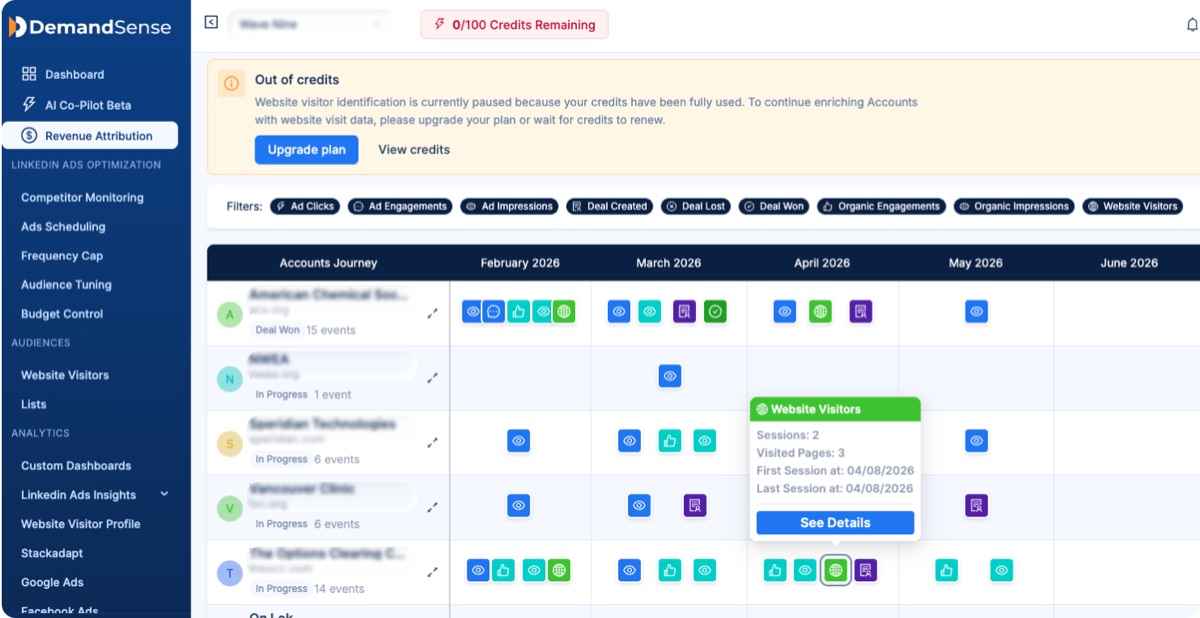
DemandSense starts from a different place than most of this list. It does not just connect ad clicks to CRM deals. It combines LinkedIn engagement, website-visitor identification, and CRM outcomes so a company that saw an ad, visited a pricing page, and later became a deal can appear as one buyer journey rather than three disconnected data points.
The practical upside is the tight connection between reporting and action. A marketer can review attribution, audience fit, scheduling, frequency, and budget controls inside the same product instead of exporting a report and hoping someone changes the campaign next week.
DemandSense advertises an average 5.8x ROAS improvement from its multi-touch attribution loop, but treat that as vendor-reported marketing rather than a forecast for your account. Results depend on your targeting, offer, spend, sales cycle, and the quality of the revenue data flowing back from the CRM.
Published pricing currently starts at $89 per month for Basic and $149 per month for Plus. The platform says its revenue attribution feature syncs CRM deal data, so confirm the available integrations and included usage limits during a trial.
The DemandSense platform is built around LinkedIn advertising intelligence, which is why it belongs in this comparison even though it does more than attribution alone.
Who should put it on the shortlist
This is the best fit for a B2B team that spends enough on LinkedIn for poor account targeting to hurt, and that wants to adjust delivery instead of simply reporting on results. It is probably overkill if you run occasional awareness campaigns and have no CRM opportunity data worth joining to the ad record.
For a high-ticket store, the useful use case is a commercial or trade campaign where the path from ad engagement to a phone call, dealer application, or large quote may take weeks. That is a real revenue path, not a $20 impulse checkout.
2. Dreamdata
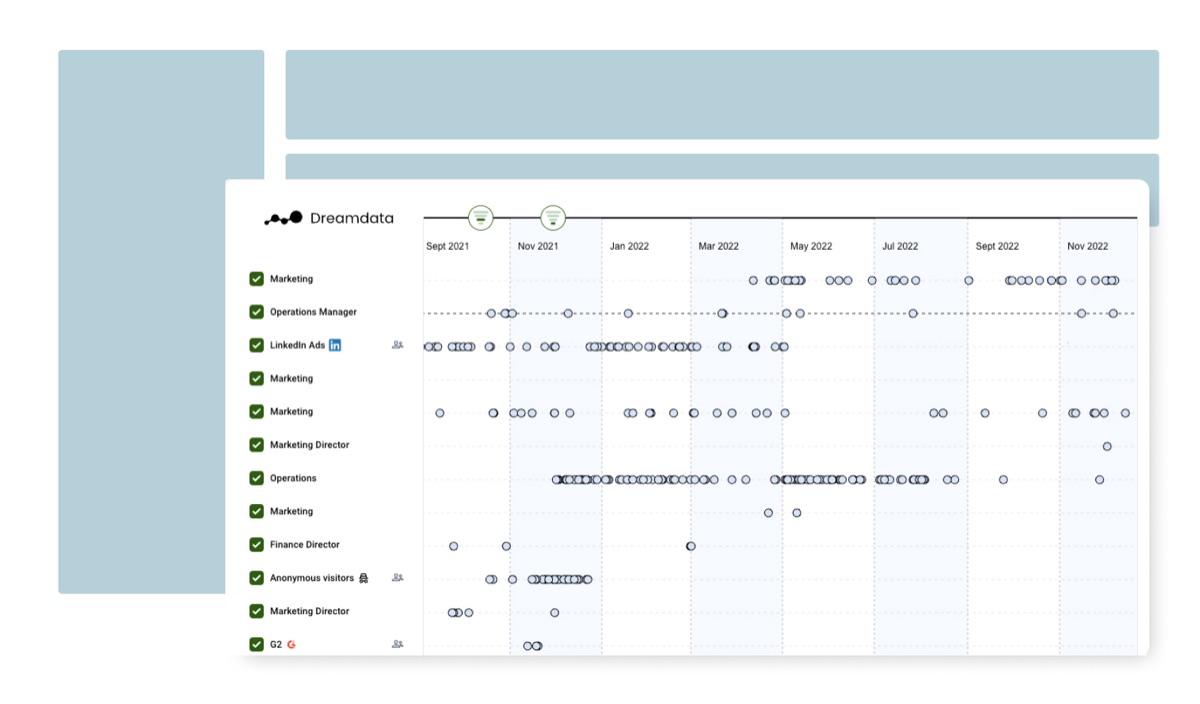
Dreamdata has a genuine free tier for foundational B2B web analytics, company identification, audience building, and ad-spend reporting. That makes it a sensible way to see whether your team can keep the underlying data clean before committing to an advanced attribution implementation.
The deeper activation and attribution capabilities are quote-based. Dreamdata positions those plans around AI-based attribution and larger data volumes, which is a good signal that this is a serious platform purchase rather than a $50 plug-in you can forget about.
Dreamdata is strong when multiple stakeholders touch the same deal over a long cycle. Its attribution product supports different models, which matters because first touch, last touch, linear, and W-shaped reporting can each tell a different story about the exact same pipeline.
Best for teams that need model depth
This is a good fit for an enterprise revenue team with a real operations owner, a defined lifecycle, and enough deal volume to learn from the data. It is not a magic answer for a small team that is still debating what qualifies as a lead.
If your store sells high-ticket products to commercial buyers, give the sales team a say in the stage model before implementation. A qualified request for quote, an approved dealer, and a closed order should not all be reported as the same conversion.
3. HockeyStack
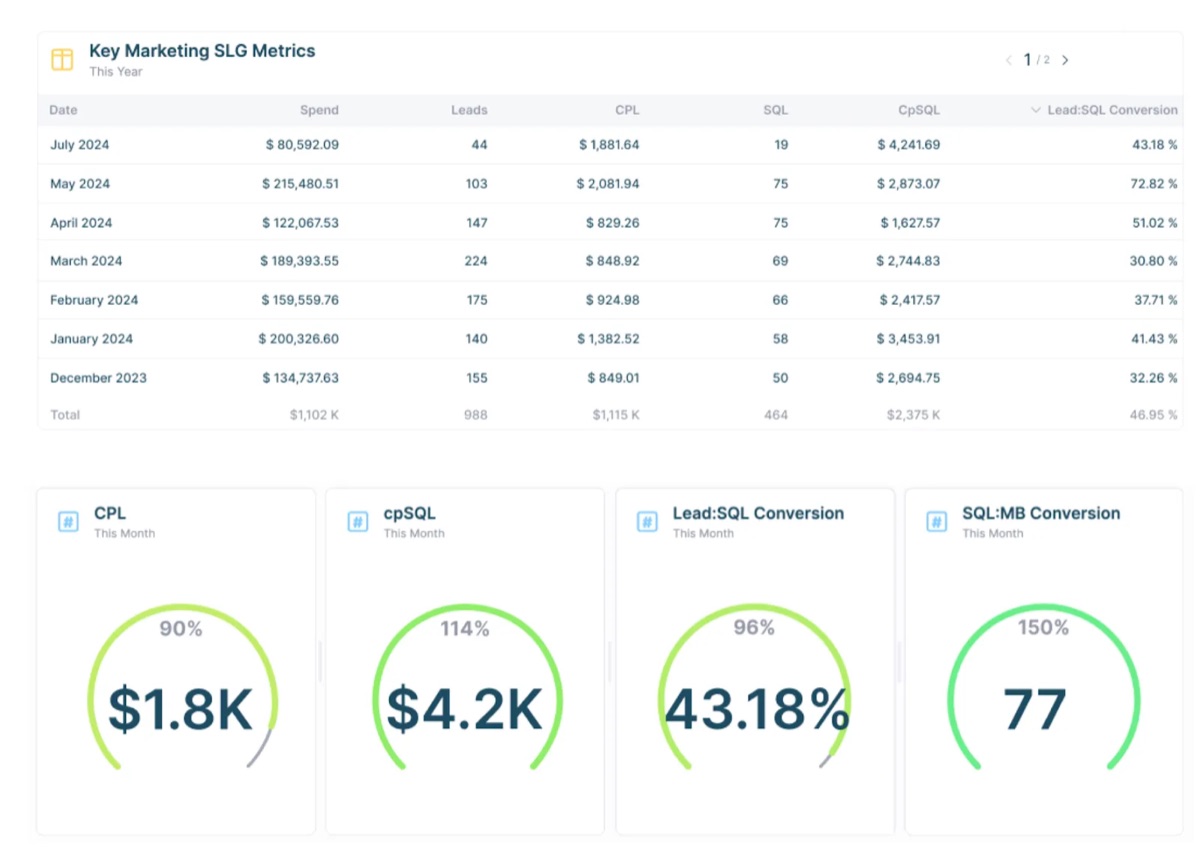
HockeyStack covers full-funnel attribution beyond LinkedIn, which is useful when paid social, search, email, content, and sales activity all need to live in one measurement system. It is built for a team that wants to answer broad pipeline questions rather than only optimize one campaign.
Its current public pricing lists Growth at $1,400 per month and Scale at $2,400 per month, with Enterprise quoted separately. That is a materially different buying decision from the old third-party estimates around $599 per month, and it is worth budgeting for implementation time as well as the subscription.
The Growth plan includes multi-touch models, account and user journeys, a LinkedIn Ads impression tracker, and cookieless tracking. Scale adds IP identification, lead scoring, cohort analysis, and more hands-on support.
Best for a cross-channel revenue team
HockeyStack makes sense when a company already has multiple paid channels, a substantial CRM, and a person who will use the output to make budget decisions. If LinkedIn is the only channel you are actively testing, start simpler and earn your way into a broader platform.
That is the same principle I use when evaluating high-ticket businesses: go deep before you go wide. The high-ticket niches list can help you focus the business first, then you can decide whether a large attribution stack is justified.
4. Factors.ai
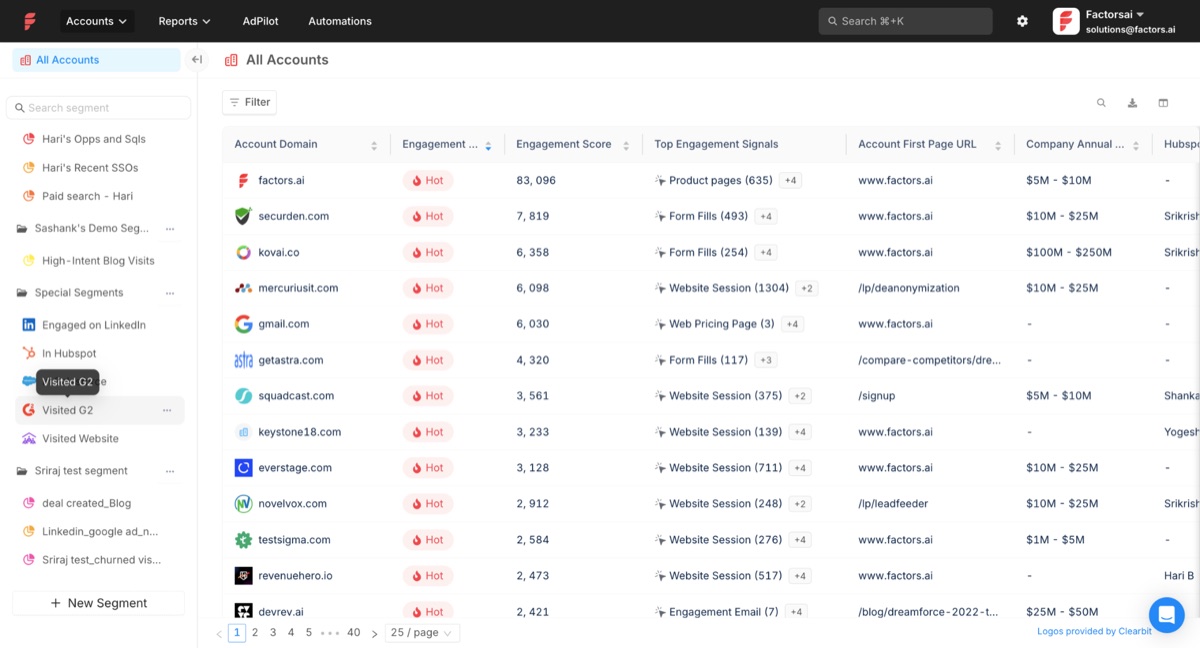
Factors.ai combines account identification, account intelligence, buyer-journey analysis, workflows, and ad activation. Its entry Lite plan is $199 per month after trial, but that plan is mainly for visitor identification and basic analysis.
For the features most attribution buyers care about, pricing moves up quickly. Factors lists Basic at $6,000 per year, Growth at $20,000 per year, and Enterprise from $30,000 per year, while noting that feature add-ons and the final configuration can change the total.
That does not make it a bad option. It just means the buying conversation should be honest. If your LinkedIn budget is $3,000 a month, a $20,000 annual measurement platform needs to produce a very clear improvement in pipeline quality or budget efficiency.
Best for ABM teams with mature operations
Factors.ai is a better fit for account-based marketing teams that have a defined ideal-customer profile, a sales workflow, and enough media spend to act on account-level signals. It will not turn loose targeting into a strategy by itself.
If you are still building the business foundation, do that first. This business formation checklist is a better starting point than buying enterprise analytics before you have clean ownership, access, and financial controls.
5. Fibbler
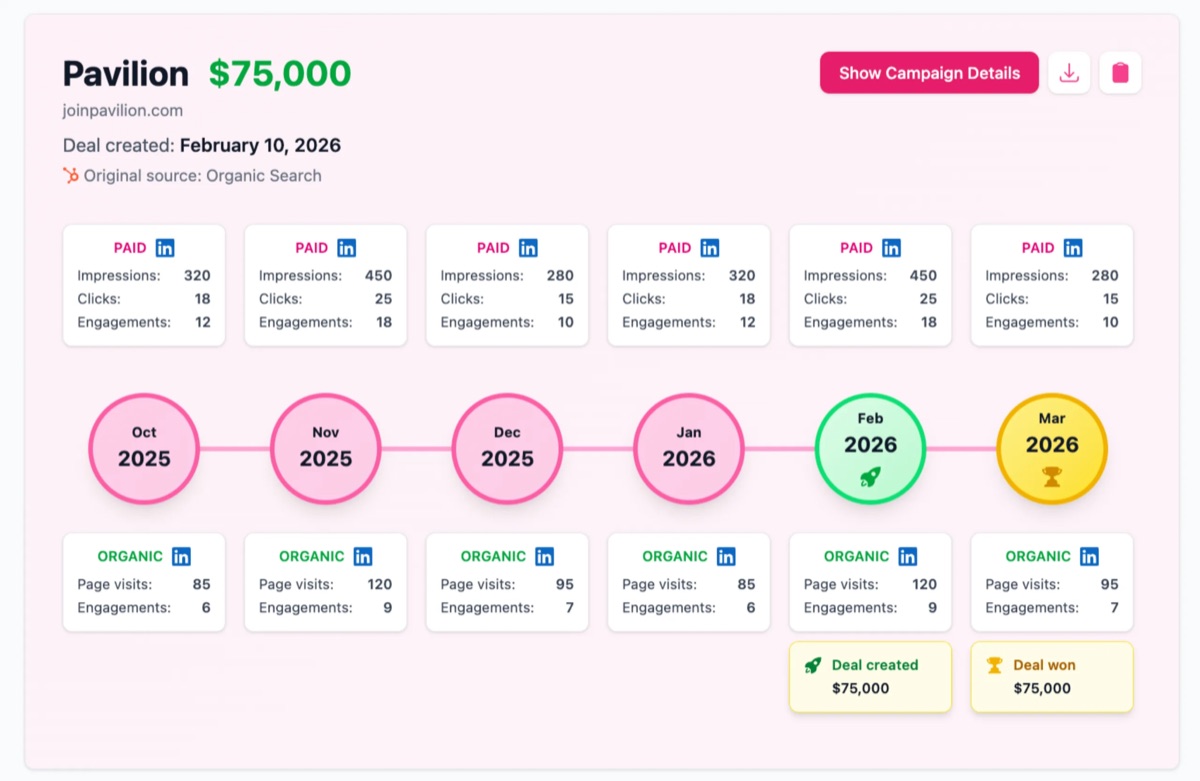
Fibbler is more LinkedIn-specific than the broader revenue suites. It connects paid and organic LinkedIn activity to pipeline and revenue in HubSpot, Salesforce, Attio, and Pipedrive, then brings those signals back into campaign optimization and sales workflows.
Its published monthly base pricing is $89 for Growth, $129 for Unlimited, and $159 for Agency, each with a 30-day trial. The lower tiers include HubSpot, Attio, and Pipedrive, while Salesforce is available in the Unlimited and Agency packages.
Fibbler is particularly compelling for teams on Attio or Pipedrive because native support for those CRMs is less common in this category. It is not a substitute for a full website-visitor-identification platform, so make sure that distinction matches the actual problem you are trying to solve.
Best for a practical LinkedIn starting point
This is the best value pick for a smaller B2B team that wants LinkedIn-to-CRM visibility without starting with an enterprise data project. Run the free trial against a known campaign and see whether the deal and company records answer a decision you genuinely need to make.
For a smaller ecommerce team, keep the stack boring and usable. If your store itself needs a reliable ecommerce core, Shopify is usually the platform I would start with before layering in specialized B2B measurement software.
Why Website Visitor Data Changes the Attribution Picture
A growing number of B2B deals involve an anonymous website visit somewhere in the middle of the journey. Someone sees a LinkedIn ad, does not convert, comes back to a pricing page two weeks later with no form fill, and eventually becomes a deal.
Attribution tools that only track known contacts can miss that middle step entirely. Platforms that bring company-level visitor context into the model can give the team a more complete influenced-pipeline view, but they still need to explain what was observed, how it was matched, and what the result actually means.
Start with LinkedIn’s measurement foundation
LinkedIn itself supports website-tag conversions, imported conversions, and continuous conversion sharing through its API. Its conversion-tracking guide is worth following before you buy a third-party attribution product.
Use the Insight Tag or an approved implementation to capture the online events you care about. Then send offline milestones such as qualified opportunities, paid invoices, or sales-assisted orders back through the appropriate workflow so the platform can learn from outcomes that happen beyond a thank-you page.
Do not confuse identification with permission
Visitor identification and enriched account data can be useful, but they add privacy, consent, and data-governance obligations. Make sure your privacy notice, vendor agreements, regional requirements, and internal access controls are in place before you treat a visitor signal as a sales trigger.
LinkedIn’s marketing terms also require a legal basis for data transferred through its marketing integrations. That means this is not a setting you hand to an intern and forget about after lunch.
The ecommerce angle
For a normal consumer store, LinkedIn may not be the first place to spend. For commercial product lines, dealer recruitment, corporate gifting, trade buyers, and high-ticket custom orders, it can make much more sense because the buyer is often researching before they ever call or request a quote.
That is why the attribution event should match your actual sales motion. A catalog download might be a useful early signal. A completed quote request is stronger. A dealer account that places its first order is revenue.
When manufacturer relationships are central to the offer, use the supplier-sourcing guide to build the business side before you start measuring lead quality.
What Matters When Picking Measuring Attribution Tools
Attribution data is only valuable if it changes a decision. Before comparing feature lists, ask two questions: does the model account for the anonymous middle of the funnel, and does the platform sit close enough to campaign controls that a marketer can act on a finding the same day?
DemandSense was built around those two ideas, which is one reason it is priced more like a monthly SaaS product than an enterprise attribution contract. It is not automatically the best choice for every team, but it illustrates the difference between reporting on spend and using data to change spend.
Use this five-question buying test
- What exact revenue event will the platform report on: a form, a qualified opportunity, an invoice, or a closed-won deal?
- Can it join LinkedIn engagement to the CRM objects that your sales team actually uses?
- Which attribution model will leadership use for budget decisions, and will they understand its limitations?
- Can the marketing team turn a finding into a campaign change without exporting spreadsheets?
- Will the improvement in budget efficiency plausibly pay for the platform and the time required to run it?
If you cannot answer those questions before a demo, pause. The demo will be full of beautiful dashboards, and you will still not know whether the software belongs in your stack.
Set up the data before you judge the tool
Define your campaign naming convention. Make sure CRM stages have one owner. Standardize your UTM parameters. Decide what counts as influenced revenue versus directly sourced revenue. Then let the data collect long enough to include a meaningful part of your sales cycle.
LinkedIn’s Conversions API implementation checklist is a useful technical reference for validating conversion rules, attribution windows, data sources, identifiers, and deduplication.
This is where most teams get stuck. They want a tool to produce certainty on day one, but good measurement is a process. You are building a feedback loop between marketing, sales, and operations.
Pick the right amount of complexity
Start with native LinkedIn tracking if you only need website conversions and basic campaign reporting. Move to Fibbler or DemandSense when LinkedIn-to-CRM visibility and practical optimization matter. Consider Dreamdata, HockeyStack, or Factors.ai when the business has enough channels, deals, and operational discipline to benefit from a larger data model.
The expensive mistake is buying enterprise attribution before you have an enterprise measurement problem. The cheap mistake is relying on last-click data after LinkedIn has become an important part of a long sales cycle. Your job is to find the point in the middle that fits your current business.
The practical next move
Choose one active LinkedIn campaign, one CRM outcome, and one weekly decision you want the data to improve. Run that as a contained test before rolling a tool across every channel and every team.
If you are building a high-ticket ecommerce operation and want help turning the marketing, supplier, and store pieces into a working system, you can get one-on-one coaching. The tools matter, but the business process around them matters more.
My final take is simple: pick the tool that helps you make a better weekly decision, not the one that gives you the most impressive dashboard in a sales demo. Start with clean data, stay honest about attribution, and expand only when the revenue opportunity justifies the complexity.

Trevor Fenner is an ecommerce entrepreneur and the founder of Ecommerce Paradise, a platform focused on helping entrepreneurs build and scale profitable high-ticket ecommerce and dropshipping businesses. With over a decade of hands-on experience, Trevor specializes in high-ticket dropshipping strategy, niche and product selection, supplier recruiting and onboarding, Google & Bing Shopping ads, ecommerce SEO, and systems-driven automation and scaling. Through Ecommerce Paradise, he provides free education via in-depth guides like How to Start High-Ticket Dropshipping, advanced training through the High-Ticket Dropshipping Masterclass, and fully done-for-you turnkey ecommerce services for entrepreneurs who want a faster, more hands-off path to growth. Trevor is known for emphasizing sustainable, real-world ecommerce models over hype-driven tactics, helping store owners build scalable, sellable, and location-independent brands.

Still deciding what to sell?
Grab the free list of 1,000+ niches that work for high-ticket dropshipping, sorted by category.
Free. Unsubscribe any time.


