

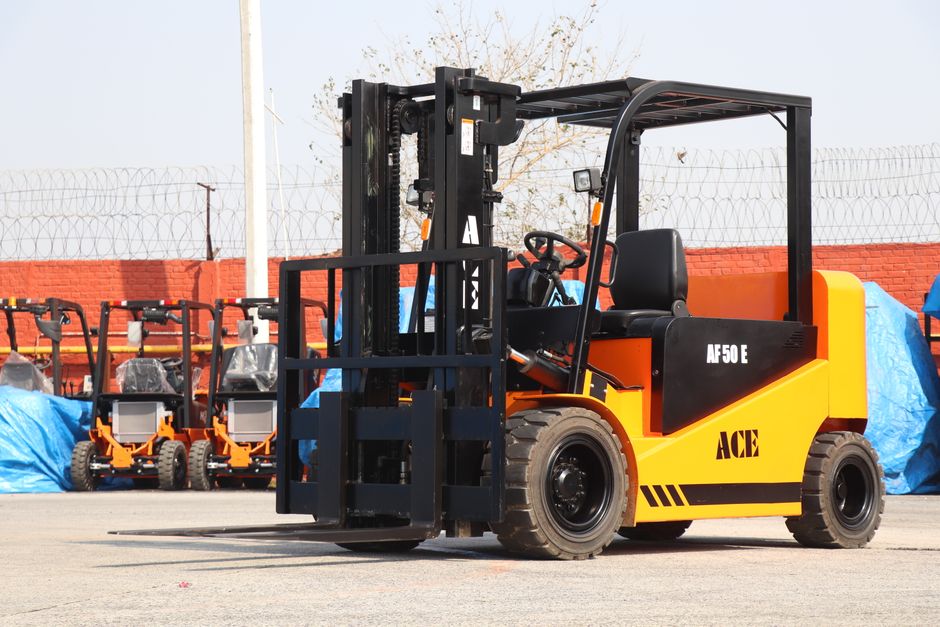
If you run or scale an online store, you probably spend a lot of time thinking about ad spend, conversion rates, and shipping costs. What often gets ignored is the equipment behind your fulfillment flow. A single delayed forklift repair can throw off receiving, picking, restocking, and outbound shipping in ways that show up later as refunds, chargebacks, and unhappy customers. Once you look closely, warehouse parts replacement stops feeling like maintenance and starts looking like a core e-commerce issue.
How parts sourcing decisions affect fulfillment resilience
Not all parts sourcing decisions are equal. Some businesses rely on local distributors, some use OEM channels, and others work with specialized online inventory suppliers that understand industrial equipment compatibility at a deeper level. The quality of that decision matters when you need correct fitment, fast shipping, and less back-and-forth on model details.
If your operation runs Hyster equipment, choosing this supplier can make practical sense when you need Hyster forklift parts tied to real model requirements rather than vague catalog matches. That matters because ordering the wrong component doesn’t just waste money. It extends downtime, delays repairs, and can pull technicians off other preventive maintenance tasks. In e-commerce, resilience usually sounds digital, but a big part of it is mechanical and operational.
Why forklift downtime hits e-commerce harder than most operators expect
In e-commerce, speed is part of the product. Customers may never see your warehouse, but they feel every delay that starts there. If a forklift goes down during a busy intake window, pallets sit longer at the dock, inventory takes longer to enter the system, and products can remain unavailable online even when they’re physically in the building.
That disconnect creates messy downstream problems. Your stock accuracy slips, your promised ship dates become less reliable, and your support team starts handling “Where is my order?” tickets that were preventable. In a high-volume operation, one unavailable lift truck can affect labor allocation for an entire shift. Workers end up walking more, waiting longer, and improvising around bottlenecks instead of moving through a clean pick path.
The real cost isn’t the part; it’s the chain reaction around it
A replacement part usually looks cheap compared with the consequences of waiting too long to order it. The direct expense might be manageable, but the indirect costs pile up quickly. You may pay overtime to catch up, spend more on expedited freight, or lose margin through split shipments because replenishment lagged behind demand.
Peak periods make this worse. During a holiday rush or a major promotion, your warehouse management system can only do so much if material handling equipment is unavailable. A failed hydraulic component or worn ignition part doesn’t stay a maintenance issue for long. It becomes a fulfillment issue, then a customer experience issue, and eventually a profitability issue. E-commerce teams often measure everything in dashboards, yet maintenance-related losses can hide in several categories at once.
Preventive maintenance works best when paired with smarter inventory habits
Many warehouse teams say they believe in preventive maintenance, yet their spare-parts strategy is still reactive. They service equipment on schedule but wait until failure to think seriously about replacement components. That gap creates risk, especially for parts with known wear patterns such as brakes, filters, belts, contactors, and electrical switches.
A better approach is to track maintenance intervals and failure history together. If a forklift model tends to need specific parts after a certain number of operating hours, you can stock those items before they become urgent. This isn’t about filling shelves with expensive extras. It’s about carrying a lean, evidence-based parts inventory shaped by actual equipment data. When your warehouse supports same-day or next-day shipping, a small cache of the right parts can protect a large amount of revenue.
What e-commerce brands should ask their warehouse teams right now
If you’re on the business side of e-commerce, you don’t need to become a forklift technician. You do need better questions. Ask how often equipment downtime affects receiving capacity. Ask whether your team tracks mean time to repair, recurring failure points, and parts-order lead times. Ask which machines are business-critical during peak volume and what happens if one goes offline for 24 hours.
You should also ask whether your warehouse has standardized asset records. In a lot of operations, model numbers, serial numbers, service logs, and parts history are scattered across spreadsheets, email threads, and old invoices. That slows every repair decision. Cleaner records reduce ordering errors and help maintenance teams act faster under pressure. For e-commerce leaders, these questions are as relevant as cart abandonment metrics because both influence whether customers actually get what they ordered.
The customer experience problem starts earlier than most brands realize
When shoppers complain about late delivery, they rarely know the root cause. They see the front-end promise and the missed expectation. Internally, though, those service failures often begin far earlier than the handoff to a carrier. Delayed putaway, poor replenishment timing, and disrupted pick waves can all trace back to equipment that wasn’t ready when the shift started.
That should change how you think about warehouse reliability. Fast fulfillment is not just software orchestration, labor planning, and parcel contracts. It also depends on whether your physical tools are consistently available. Brands that obsess over conversion but neglect warehouse uptime create avoidable friction in the very system that fulfills demand. The flashy parts of e-commerce get attention, yet routine maintenance and parts readiness often protect customer trust more effectively than a new homepage redesign.
A stronger operations mindset can protect margins in a tighter market
Margins in e-commerce are under pressure from rising acquisition costs, return rates, and carrier fees. That environment rewards operators who remove hidden waste. Equipment downtime is one of those waste sources that doesn’t always get executive attention until performance slips badly enough to force it.
The fix is rarely dramatic. It usually comes from tighter maintenance planning, better supplier selection, cleaner asset data, and more realistic thinking about what keeps an order moving. If your warehouse depends on lift equipment every day, replacement parts are not a side issue. They are part of your uptime strategy, labor efficiency, and customer experience stack. The brands that treat operations details seriously tend to build something more durable: a fulfillment system that keeps working when volume spikes and small failures could otherwise turn expensive fast.

Trevor Fenner is an ecommerce entrepreneur and world traveler from Seattle, Washington, and the founder of Ecommerce Paradise, a platform focused on helping entrepreneurs build and scale profitable high-ticket ecommerce and dropshipping businesses. With over a decade of hands-on experience, Trevor specializes in high-ticket dropshipping strategy, niche and product selection, supplier recruiting and onboarding, Google & Bing Shopping ads, ecommerce SEO, and systems-driven automation and scaling. Through Ecommerce Paradise, he provides free education via in-depth guides like How to Start High-Ticket Dropshipping, advanced training through the High-Ticket Dropshipping Masterclass, and fully done-for-you turnkey ecommerce services for entrepreneurs who want a faster, more hands-off path to growth. Trevor is known for emphasizing sustainable, real-world ecommerce models over hype-driven tactics, helping store owners build scalable, sellable, and location-independent brands.
He maintains homes in Seattle and Bali, spends most of the year overseas, and usually returns to Seattle for about a month each summer.


