

Ecommerce is a crowded field, and the way a store communicates can influence how useful its messages feel to customers. A clear delivery update, a relevant product reminder or an easy route to support can help someone move forward. Rich Communication Services, commonly called RCS, offers another channel for designing those interactions.
RCS can support richer experiences than a plain text message, including media, cards and suggested actions where the recipient’s device and network support them. For a retailer, the opportunity is to make a message easier to understand and act on. Better presentation can be useful, but it does not guarantee more sales or make every message relevant.
The distinction between the channel and the software behind it matters. RCS is not automatically an AI assistant, a customer database or an abandoned-cart workflow. Automation, response generation and personalization depend on the messaging platform, connected systems, configured rules and the information the retailer is permitted to use.
At Ecommerce Paradise, the practical question is whether a tool solves a real problem in the customer journey. This guide keeps that focus: what rich messaging can present, how an ecommerce team might use it, and what to check before treating a campaign as successful.
Why RCS Can Offer More Than Traditional SMS
SMS remains useful for straightforward updates. A short order notification or a simple reminder does not always need a richer format. RCS adds options for supported conversations, such as visual product information and actions that help a recipient continue without first interpreting a long block of text.
A retailer evaluating RCS business messaging should separate the presentation options from the implementation. The channel can carry rich content, while the selected provider and the retailer’s integrations determine how the content is assembled, when it is sent and how replies are handled. Compare those operational capabilities against the store’s actual requirements.
Google’s explanation of how RCS for Business works describes agents exchanging messages and events through APIs and configured webhooks. In practice, the retailer still needs a working flow behind the conversation. An order update must come from a reliable order event; a support reply needs a defined response process.
A richer channel does not remove the need for concise writing. The recipient should understand who is contacting them, why the message matters and what the next step does. A small number of useful actions will usually make a better starting design than a message packed with competing buttons and unrelated promotions.
Check Recipient Capabilities Before Designing the Experience
Not every recipient can receive the same RCS experience. Availability depends on factors including the device, messaging client, mobile network and the business agent’s reach. A feature working on one test phone is not evidence that every customer will see it in the same way.
Google’s capability-check documentation explains how a service can check supported features and tailor the interaction. Where RCS is unavailable, another channel such as SMS or MMS may be needed. The fallback should be part of the implementation plan rather than an afterthought.
Keep the core meaning available when the rich version is not. A customer should still be able to understand an important update and reach the relevant order or support page. Test the fallback text and destination as carefully as the richer message. Avoid designing an essential step that depends entirely on a carousel or a particular action type.
Fallback also needs delivery logic. Do not assume that an uncertain RCS status means the message never arrived, and then send repeated copies through other channels. Ask the provider how it handles expiry, delivery confirmation and duplicate prevention. These details affect the customer experience even though they are less visible than the message design.
Interactive Product Promotions
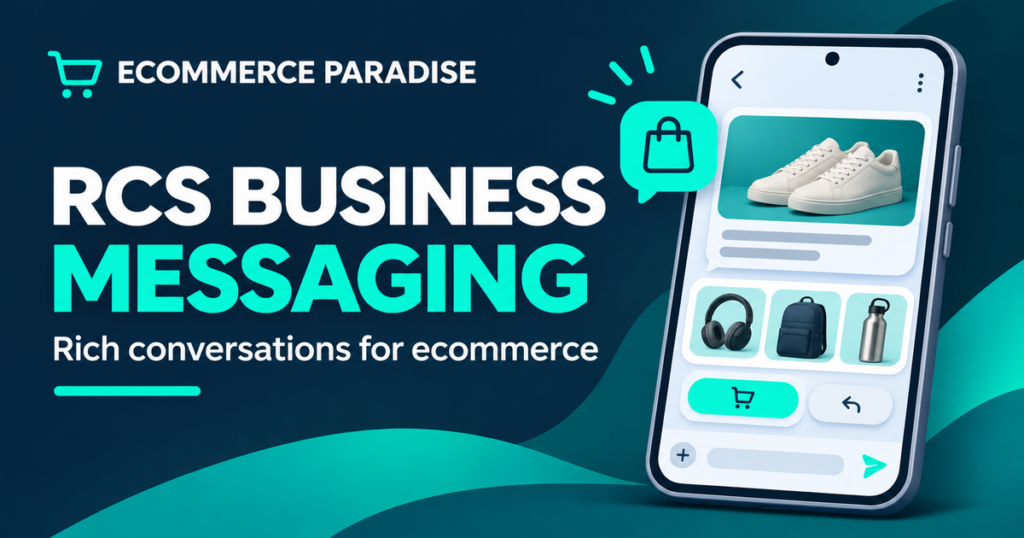
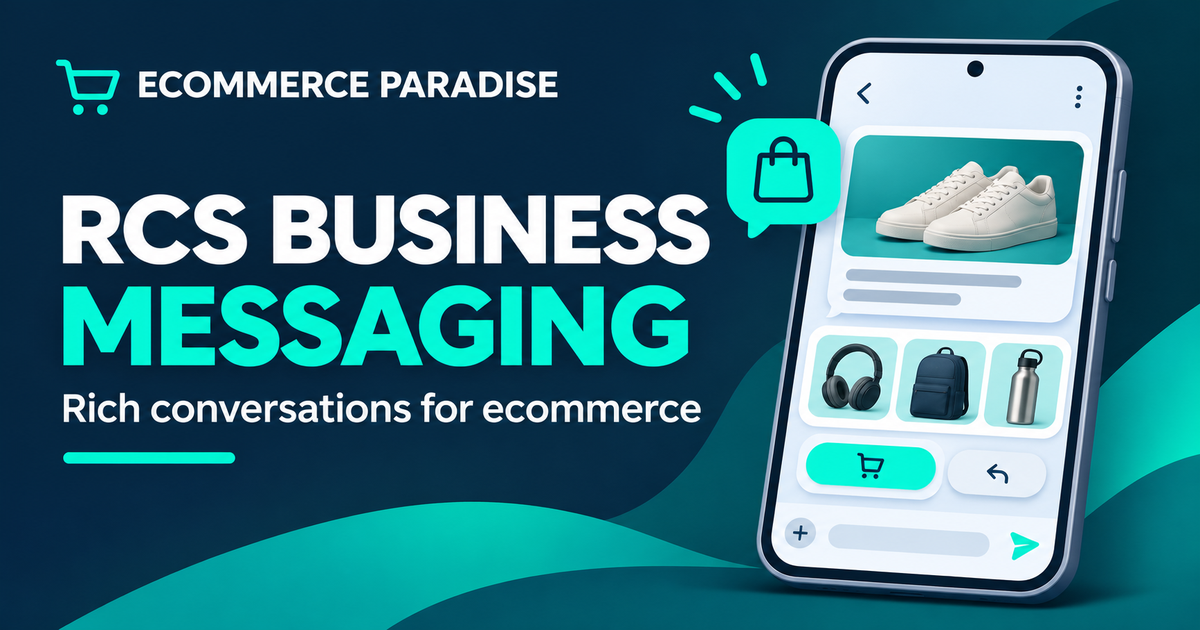
A product promotion can be easier to evaluate when the customer can see the relevant item, understand the offer and reach the right page. A rich card might combine a product image, a short description and a suitable action. A carousel may help present a small related collection where that format is supported.
Google’s rich-card documentation describes media, text and suggestions, while noting that rendering and support depend on recipient capabilities. Use that as a reason to test, not as permission to assume that a desktop mock-up represents every phone.
Choose products deliberately. A campaign built around a few relevant items can be more understandable than a miniature version of the whole catalog. Make sure images match the actual products and that linked pages show current availability. If an advertised item sells out, the destination should explain the situation rather than leaving a customer with a broken purchase path.
For a store working with expensive products, the useful action may be to view specifications or ask a question rather than immediately buy. The customer’s decision process should determine the call to action. A prompt that suits a low-cost replenishment item may be unsuitable for a complex purchase requiring measurements, compatibility checks or delivery planning.
That is one reason to connect messaging choices with your ecommerce niche research. Consider what buyers need to know before they feel comfortable ordering. A richer message should reduce a specific information gap, rather than add visual decoration to a promotion that was poorly targeted in the first place.
Abandoned Cart Recovery
A cart left without a completed purchase is an opportunity to investigate, not proof that a reminder will recover the sale. The shopper may be comparing options, checking delivery costs or deciding that the product is unsuitable. Some may return naturally without any campaign.
A carefully designed reminder can show the relevant item and provide a clear route back to the store. Product imagery, a concise description and an appropriate action can make that journey easier. The supporting software must identify the correct cart and use a secure, suitable destination. RCS itself does not connect the customer’s cart to the message automatically.
Be particularly careful with price and availability. The amount in a reminder should reflect the actual offer the customer can use. If a discount is included, check its eligibility, expiry and effect on margin. Sending an incentive does not make the recovered order profitable by itself, and a broad discount may reward customers who would have bought anyway.
Measure cart recovery as an outcome rather than a claim about the channel. Compare the relevant orders, costs and timing with a meaningful baseline. Track whether customers unsubscribe or contact support because the reminder is confusing. A message can generate clicks while creating little additional value for the business.
A More Relevant Shopping Experience
Personalization starts with data and a useful reason to use it. A retailer might recommend an appropriate accessory after a purchase or send a replenishment reminder for a consumable. Those ideas depend on accurate records and configured logic. They are not features that appear simply because the retailer has enabled RCS.
Work out which information is actually needed. A message about an order may need an order identifier and status, while a broad promotional message may not need detailed personal history. Use the store’s approved data practices and consent process. Avoid adding sensitive information to a message merely because the integration makes it technically possible.
Begin with a small number of understandable segments. For example, separate customers waiting for an item to arrive from customers who already received it. A promotion that ignores an unresolved delivery issue can feel careless even if its product recommendation is technically accurate. Relevance includes the customer’s current situation, not just what they previously clicked.
Review the rules when products or operations change. An accessory recommendation can become inappropriate if compatibility changes. A replenishment interval may be unsuitable for customers with different usage patterns. Give the team a way to stop an inaccurate campaign and correct the underlying rule without continuing to send the same mistake.
Customer Support Within the Conversation
Messaging can help customers find support from an update they already received. An order notification might offer a route to tracking, a delivery question or the relevant service team. The value is a clearer path to help, rather than a claim that every question will receive an instant answer.
Decide which questions the connected software can answer reliably and which require a person. Simple order-status responses may be practical when the source system is current. Product suitability, exceptions and complaints may need human judgment. A customer should be able to understand when a conversation has been escalated and what information the team needs.
If AI responses are part of the chosen platform, define their scope. Provide approved information, test common questions and check how the system behaves when it does not know the answer. Automation should not invent a delivery date, refund decision or product capability. The responsibility for accurate customer communication stays with the business.
This is especially relevant in high ticket dropshipping, where the retailer may need to confirm details with a supplier. A message should reflect verified status rather than presenting a guess as an update. Make the handoff between store staff and suppliers part of the workflow before increasing message volume.
Build One Useful Flow Before Scaling
Choose a single use case with a clear purpose. An order-status flow, a targeted product campaign or a carefully defined cart reminder is easier to evaluate than launching every possible conversation at once. Write down the event that starts the flow, the intended audience, the content and the condition that ends it.
Map the data path. Identify where the order, inventory or customer information comes from, which system creates the message and where replies go. Check that the necessary integrations actually exist in the selected product and plan. A feature shown in a vendor demonstration is not proof that the store’s current setup supports the same process.
Assign an owner for both routine operation and exceptions. Somebody needs to review failed deliveries, incorrect content and unresolved replies. If that person is unavailable, the process should still have a defined route for urgent issues. A campaign is not ready simply because the first test message looked good.
Supplier coordination matters here as well. Clear supplier relationships and operating expectations make it easier to communicate accurate stock and delivery information. Messaging can present that information well, but it cannot repair unreliable source data on its own.
Measure Business Outcomes Without Assuming the Answer
Define success before sending the campaign. For a support flow, that might be helping customers reach an accurate answer with fewer repeated contacts. For a promotion, it might be additional contribution after campaign costs. For a cart reminder, it might be a measured increase in completed orders beyond the normal return pattern.
Keep delivery, interaction and sales measures separate. A delivered message is not necessarily read, and an interaction is not necessarily a purchase. A purchase following a message does not automatically prove that the message caused it. Use the provider’s reporting definitions and explain the limitations when sharing results internally.
Where practical, compare the new flow with a suitable baseline or a carefully managed test group. Keep the offer and audience comparable enough for the result to be meaningful. If several things change at once, acknowledge that the channel’s individual contribution may be difficult to isolate.
Include costs that a headline engagement figure leaves out. Messaging fees, integration work, content preparation, support time and discounts can affect the result. A richer campaign may be worthwhile, but its value should be supported by the store’s experience rather than a general promise that richer messages always outperform plain ones.
A Practical Prelaunch Review
Read each message as a customer would. Is the reason for contact obvious? Does the image match the item? Does the action take the customer to the expected page? Check the full journey on supported devices and the fallback route. Testing only the first screen can miss problems at checkout or in the reply process.
Then test operational changes. What happens if stock becomes unavailable, an order is canceled or the customer replies with an unexpected question? Check that the workflow uses current data and can stop when its purpose no longer applies. Keep important failure cases in the review rather than testing only the ideal path.
Finally, agree on a limited launch and an outcome review. Use what the team learns to improve the flow before expanding it. RCS can offer a useful way to present information and support a conversation, but the results depend on the relevance of the message, the quality of the implementation and the business process behind it.
Keep a Clear Operating Record
A short campaign record makes later improvements easier. Save the approved message, the audience rule, the event that triggers it and the destination used by each action. Record who approved changes and which version was tested. This helps the team distinguish a content problem from an integration or delivery problem when a customer reports an issue.
Separate routine improvements from changes that need more review. Correcting a broken destination is different from expanding the audience, adding another data source or allowing automation to make customer-service decisions. Give each change an appropriate owner and test it before putting the revised flow into normal use. A small, well-understood workflow is easier to maintain than a large one whose behavior nobody can explain.
Make feedback usable. Ask staff to report the actual message, the customer’s issue and the observed result instead of simply saying that messaging did not work. Where the problem involves personal information, keep that evidence inside the business’s approved systems. The purpose is to fix the flow without spreading customer data unnecessarily.
For a new operator, this belongs alongside the other foundations in a step-by-step ecommerce launch plan. Reliable supplier information, clear product pages, working payments and responsive support should support the messaging campaign. Adding a channel before those basics work can move customers into an unresolved problem more quickly.
Review the record after the initial launch. Keep the parts that helped customers, simplify anything confusing and stop flows whose costs exceed their demonstrated value. A useful messaging program earns its place through observed results and maintainable operations.
Common Questions About RCS for Ecommerce
Does RCS automatically provide AI customer service?
No. It is a messaging channel. AI responses and workflow automation depend on the software, configuration and integrations used by the retailer. Check the actual product scope and how it handles escalation before relying on an automated conversation.
Can every customer receive rich cards and carousels?
No. Recipient capabilities and network availability vary. Check supported features, test the experience and prepare an appropriate fallback. Essential information should remain understandable when the rich version is unavailable.
Will rich messages increase conversion?
They may help a particular campaign, but an increase is not guaranteed. Measure the relevant business outcome with a clear baseline and include the cost of the campaign. Relevance, timing, offer quality and implementation can matter as much as presentation.
Where should a small retailer start?
Start with one specific customer need, reliable data and a manageable support process. Test the message, destination and fallback together. Expand after the actual results justify it, rather than adding complexity because the channel supports more features.

Trevor Fenner is an ecommerce entrepreneur and world traveler from Seattle, Washington, and the founder of Ecommerce Paradise, a platform focused on helping entrepreneurs build and scale profitable high-ticket ecommerce and dropshipping businesses. With over a decade of hands-on experience, Trevor specializes in high-ticket dropshipping strategy, niche and product selection, supplier recruiting and onboarding, Google & Bing Shopping ads, ecommerce SEO, and systems-driven automation and scaling. Through Ecommerce Paradise, he provides free education via in-depth guides like How to Start High-Ticket Dropshipping, advanced training through the High-Ticket Dropshipping Masterclass, and fully done-for-you turnkey ecommerce services for entrepreneurs who want a faster, more hands-off path to growth. Trevor is known for emphasizing sustainable, real-world ecommerce models over hype-driven tactics, helping store owners build scalable, sellable, and location-independent brands.
He maintains homes in Seattle and Bali, spends most of the year overseas, and usually returns to Seattle for about a month each summer.


