

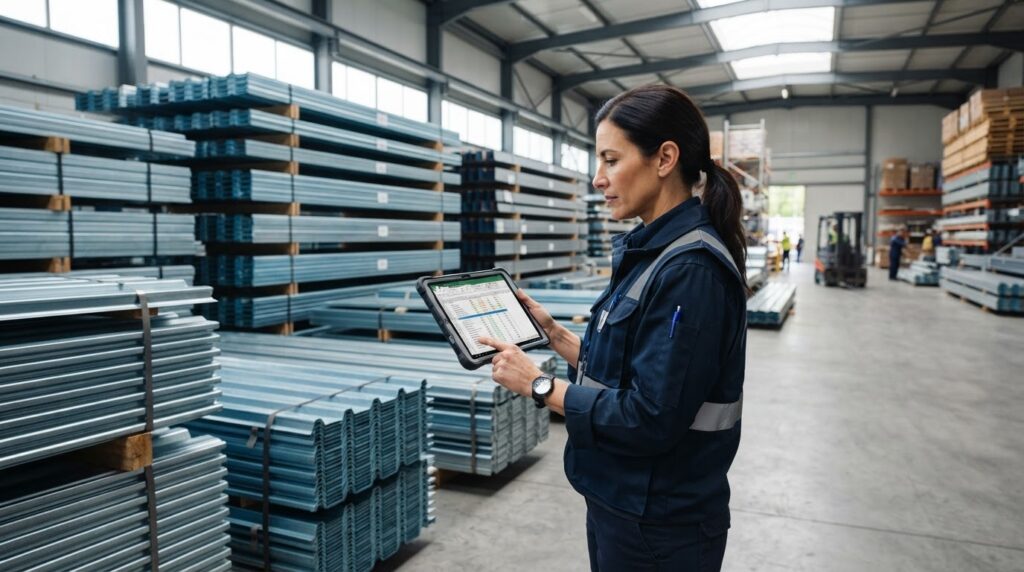
Buying steel, roofing components, and other heavy materials in volume can become a slow chain of calls, revised quotes, and separate freight arrangements. An online purchasing process can simplify that work when it gives buyers the specifications, pricing details, delivery information, and support they need before committing to an order.
This guide explains how to prepare a bulk-material order, compare the real cost of supplier quotes, plan delivery, and vet an online supplier before placing a large purchase.
What makes bulk material purchases easier online?
A useful online store should reduce uncertainty, not merely move the quote request to a web form. Buyers need clear product specifications, straightforward quantity and freight information, and a way to confirm the final order details in writing.
- Detailed specifications: Gauge, grade, dimensions, finish, and compatibility information help a buyer avoid ordering the wrong product.
- Quantity-based pricing: Volume breaks make it easier to see whether combining orders creates a meaningful saving.
- Itemized quotes: Material, freight, accessorial charges, taxes, and lead time should be distinguishable.
- Saved orders and reorder lists: Repeat buyers can rebuild a known-good order without re-entering every detail.
- Coordinated delivery: Grouping compatible items into one delivery may simplify receiving and reduce administrative work.
For example, a buyer sourcing metal roof decking in Utah can use detailed product information to compare gauge, profile, finish, length, and delivery requirements before asking a supplier to finalize a quote.
Prepare the order before requesting a quote
The fastest purchase process starts before anyone opens a cart or sends an email. Gather the information your supplier needs, then keep it in a single takeoff or purchasing sheet.
- Material type, grade, and required certifications
- Gauge or thickness
- Dimensions, lengths, profiles, and finishes
- Quantity from the project takeoff
- Accessories, fasteners, trims, or related components
- Jobsite address, unloading constraints, and requested arrival window
Check the drawings and engineer requirements before submitting the order. For structural products, a supplier listing is not a substitute for the project specifications. It is also sensible to allow for cuts, laps, handling damage, and any approved project overage, while avoiding a vague buffer that turns into expensive unused stock.
Ask for an itemized quote
A low material price does not necessarily mean a low final cost. Ask for a written quote that separates the parts of the purchase, especially when freight and unloading requirements are significant.
- Unit price and total material cost
- Freight, fuel, delivery, and any accessorial charges
- Estimated lead time and shipment date
- Minimum order requirements
- Quote-expiration date or price-hold period
- Unloading responsibilities and required equipment
- Return, cancellation, and damage-claim terms
Request written confirmation after any phone discussion. It gives both sides one record of the product, quantity, price, delivery terms, and next step. If mill test reports or other certifications are needed, request them before the shipment is released.
Compare landed cost, not just price per unit
Landed cost is the total amount required to get usable material to the jobsite. It includes the material itself, delivery, unloading or handling, expected waste, and the possible cost of a late or incomplete shipment. Comparing only sheet price can hide a quote that becomes more expensive after freight or split delivery charges are added.
| Approach | Potential advantage | Watch for |
|---|---|---|
| One consolidated order | Fewer purchase orders and coordinated delivery | Storage capacity, cash commitment, and unloading needs |
| Phased releases | Less material held on site at once | Extra freight runs and changing lead times |
| Local pickup | Direct control of collection timing | Vehicle capacity, loading, and jobsite transport |
There is no universal best choice. A fixed-scope project with space to receive material may benefit from a consolidated delivery. A constrained site may be better served by scheduled releases, provided the supplier confirms each release date and freight cost up front.
Plan delivery and storage
Heavy material deliveries can fail even when the product and price are correct. Before the shipment leaves, confirm who will receive it, where the truck can enter, whether a forklift or crane is available, and where material will be staged. Let the carrier know about gates, delivery-hour restrictions, overhead obstructions, or site-specific safety rules.
Inspect deliveries promptly. Compare the bill of lading and packing list to the order, photograph visible damage, and follow the supplier’s written damage-claim process. Store materials according to their manufacturer guidance and protect them from water, impact, or unstable stacking.
How to vet an online supplier
A reliable supplier makes key information easy to verify before payment. Look for complete product pages, reachable staff, consistent written terms, and quotes that answer the questions a purchasing team will actually need to approve an order.
- Clear product specifications and available documentation
- Transparent quote and freight process
- Stated lead times and inventory confirmation
- Written return, cancellation, and damage procedures
- A reachable sales or operations contact
- A practical method for tracking order status and delivery
For a first order with an unfamiliar supplier, a smaller purchase can be a practical test of quote accuracy, communication, packaging, and delivery performance. When the process works, save the confirmed specifications and order record so repeat purchases take less time.
Key takeaways
Online bulk purchasing works best when buyers prepare exact specifications, demand itemized quotes, compare total landed cost, and plan delivery before checkout. A supplier that makes those steps clear can reduce avoidable back-and-forth and help purchasing teams make better decisions.
Frequently asked questions
What should a bulk-material quote include?
It should identify the product and quantity, material price, freight and other charges, lead time, quote validity, delivery conditions, and any minimum-order or cancellation terms.
How can buyers reduce costly ordering mistakes?
Use a complete takeoff, verify the required specifications against the project documents, obtain a written itemized quote, and confirm delivery and unloading requirements before the order is released.
Is a consolidated shipment always cheaper?
Not always. It can reduce administrative work and freight duplication, but it may create storage, cash-flow, or unloading issues. Compare the complete cost and operational trade-offs of one delivery against phased releases.

Trevor Fenner is an ecommerce entrepreneur and world traveler from Seattle, Washington, and the founder of Ecommerce Paradise, a platform focused on helping entrepreneurs build and scale profitable high-ticket ecommerce and dropshipping businesses. With over a decade of hands-on experience, Trevor specializes in high-ticket dropshipping strategy, niche and product selection, supplier recruiting and onboarding, Google & Bing Shopping ads, ecommerce SEO, and systems-driven automation and scaling. Through Ecommerce Paradise, he provides free education via in-depth guides like How to Start High-Ticket Dropshipping, advanced training through the High-Ticket Dropshipping Masterclass, and fully done-for-you turnkey ecommerce services for entrepreneurs who want a faster, more hands-off path to growth. Trevor is known for emphasizing sustainable, real-world ecommerce models over hype-driven tactics, helping store owners build scalable, sellable, and location-independent brands.
He maintains homes in Seattle and Bali, spends most of the year overseas, and usually returns to Seattle for about a month each summer.


