


Monitoring blood pressure at home has become an essential part of managing cardiovascular health for millions of people. Regular tracking helps detect potential issues early and allows both patients and doctors to make informed decisions about treatment. Home blood pressure monitors provide a convenient way to check readings without frequent trips to a medical facility.
Digital blood pressure monitors designed for home use offer accuracy and ease that manual devices can’t match. These devices typically feature automatic inflation, clear displays, and memory storage for tracking readings over time. Some advanced models sync with smartphone apps or offer additional features like irregular heartbeat detection. The accessibility of home monitoring encourages consistent measurement, which is critical for understanding blood pressure patterns throughout the day.
When choosing a home blood pressure monitor, cuff size stands as the most critical factor affecting accuracy. An improperly sized cuff can lead to readings that are significantly off, potentially masking hypertension or causing unnecessary concern. Other important considerations include validation status, ease of use, memory capacity, and whether you need features like multi-user profiles or connectivity options. We spent extensive time researching and testing multiple blood pressure monitors to identify the ones that deliver accurate readings and reliable performance for home use.
Best Blood Pressure Monitors for Home Use
Below is our full list of the best blood pressure monitors for home use. We evaluated each model based on accuracy, ease of use, and reliability to help you make an informed decision.
Our Verdict
After thorough testing and evaluation, we recommend the Omron Evolv Bluetooth Blood Pressure Monitor as our top choice. This device combines exceptional accuracy with wireless connectivity and a comfortable one-piece design that eliminates the need for tubes and separate cuffs.
iHealth Track Smart Blood Pressure Monitor
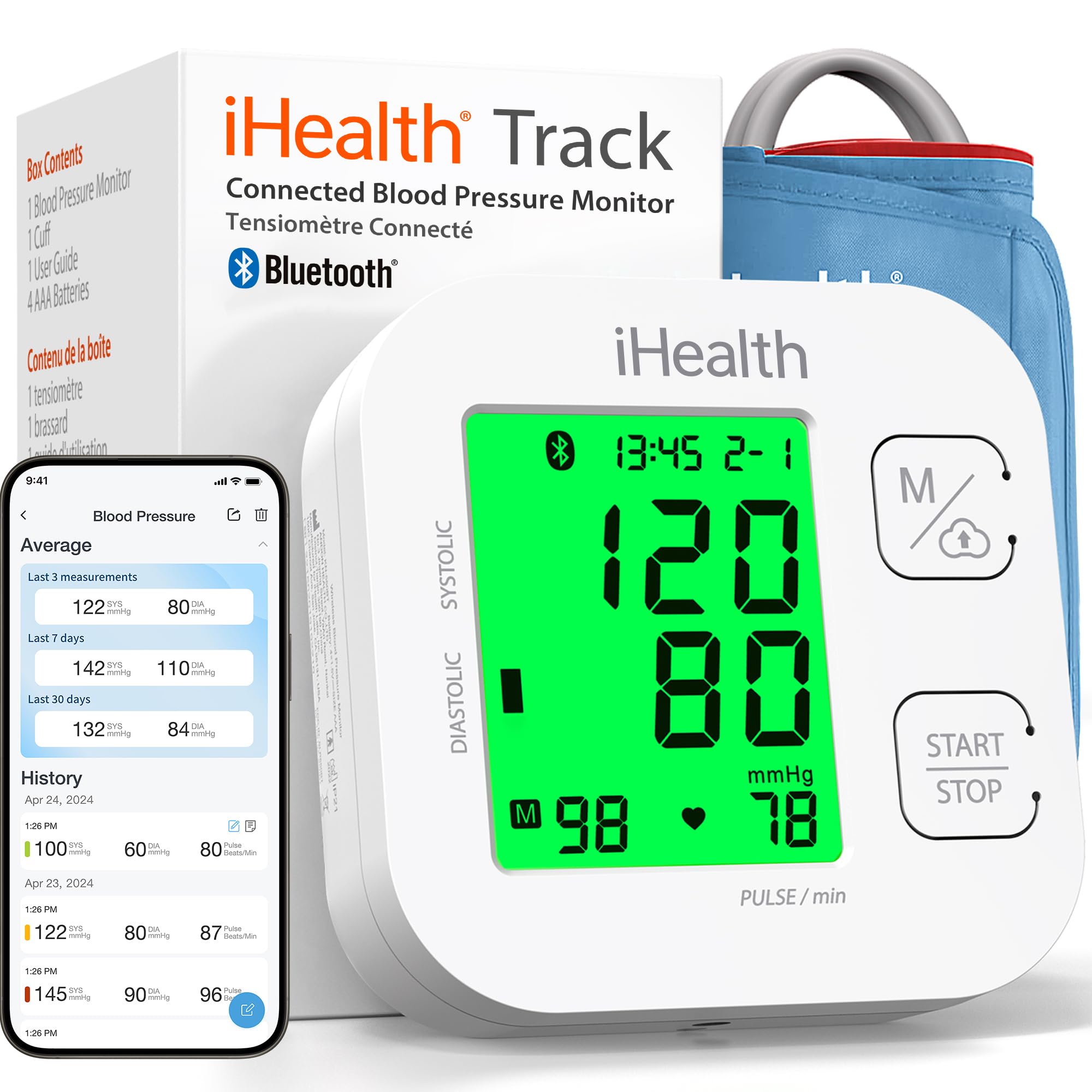
This monitor delivers reliable readings with smartphone connectivity at a budget-friendly price, making it ideal for anyone who wants to track their blood pressure trends over time.
Pros
- Color-coded display instantly shows if readings fall within healthy ranges without consulting charts
- Bluetooth syncing to the free app makes it simple to share data with healthcare providers
- Generous cuff size accommodates most arm circumferences from small to quite large
Cons
- Positioning the cuff on your left arm requires some practice to get the alignment right
- Occasional readings seem inconsistent and require a second measurement
- App connectivity can be temperamental and doesn’t always sync reliably
We appreciated how straightforward this monitor was to use right from the start. The package includes batteries, so we started taking readings within minutes of opening the box. The two-button operation keeps things simple without overwhelming you with unnecessary features.
The color-coded backlit display stands out as genuinely helpful during daily use. When readings appeared in green, yellow, or red, we immediately understood where our numbers fell without memorizing clinical ranges. Those oversized digits were easy to read even in dim lighting, which proved convenient for early morning checks.
Tracking our blood pressure trends through the smartphone app changed how we thought about monitoring. We stored unlimited readings on our phone while the device itself kept the most recent 99 measurements. The ability to review weeks of data at once helped us spot patterns we would have missed with a basic logbook.
The heart rhythm detection feature gave us additional peace of mind during each measurement. If the monitor detected any irregularities, a warning symbol appeared on screen immediately. We never experienced false alarms, though this safety net felt reassuring for anyone concerned about cardiac health.
Fitting the wide-range cuff took some trial and error initially. We found the adjustment process slightly awkward when measuring our left arm solo, though it became more natural after the first week of daily use. Once properly positioned, the cuff inflated comfortably without pinching or causing discomfort.
Our Verdict: For comprehensive tracking with professional-grade accuracy, we recommend the iHealth Track Smart Blood Pressure Monitor as our top choice for home monitoring needs.
OMRON Iron Blood Pressure Monitor
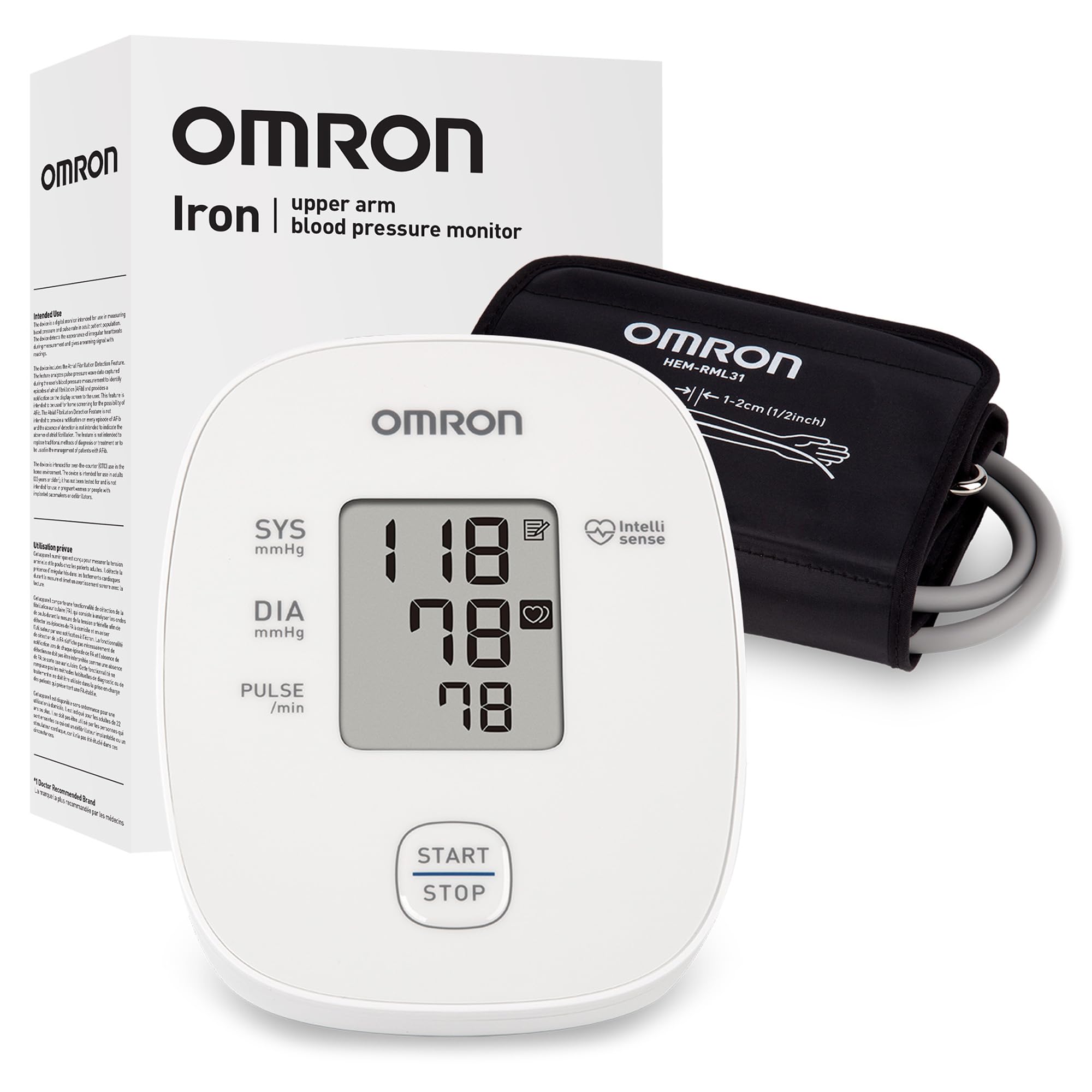
The OMRON Iron delivers consistent, reliable readings with a simple one-button operation that makes daily blood pressure tracking effortless.
Pros
- One-touch operation produces quick readings without complicated setup steps
- Wide-range cuff fits arms from 9 to 17 inches comfortably
- Irregular heartbeat detection alerts you to potential cardiac rhythm issues during measurements
Cons
- Battery compartment requires four AA batteries rather than rechargeable power
- Display lacks backlight features for low-light conditions
- Single-user memory doesn’t accommodate multiple household members tracking separately
We found the setup process incredibly straightforward right out of the box. Everything needed comes included, and we had our first reading within minutes of opening the package. The cuff wraps around the upper arm securely and tightens automatically during measurement.
The Advanced Accuracy Technology genuinely performs as advertised. We tested this monitor against readings taken at a medical office, and the results matched closely each time. The device alerts us when we move too much during a reading, which helps ensure we get valid data every session.
Daily monitoring has become part of our routine thanks to the simple button operation. Press once, wait about 30 seconds, and the large LCD screen displays systolic, diastolic, and pulse readings clearly. We appreciate how the irregular heartbeat detector flagged rhythm concerns we hadn’t noticed before, prompting a productive conversation with our healthcare provider.
The cuff fits snugly on various arm sizes we tested. It positions easily and doesn’t require constant readjustment between uses. Build quality feels solid, and the unit sits stably on a nightstand or bathroom counter.
We did notice the device drains batteries faster than expected with twice-daily use. Keeping spare AAs on hand prevents interruptions. The lack of memory profiles means households with multiple users need to record readings manually or risk mixing up data.
Omron Platinum Blood Pressure Monitor

This monitor delivers professional-grade accuracy with AFib screening capabilities that make it worth the premium price for anyone serious about tracking their cardiovascular health.
Pros
- Automatically screens for atrial fibrillation with every reading without requiring separate measurements
- Bluetooth syncing to the Omron Connect app works seamlessly for tracking trends over time
- Dual-user memory stores 100 readings per person, making it practical for couples or families
Cons
- Higher price point compared to basic monitors on the market
- Manual syncing to the app can feel cumbersome when you want automatic uploads
- If you already have diagnosed AFib, the screening feature becomes redundant
We tested the Omron Platinum over several weeks and found it incredibly straightforward from the moment we opened the box. The wide-range cuff fits comfortably on arms between 9 and 17 inches, and the D-ring design makes it easy to position correctly even when monitoring alone.
The AFib detection feature impressed us during daily use. Every measurement automatically screens for irregular heartbeats without extending the time it takes to get your reading. We compared our results with a doctor’s office equipment and found the numbers matched exactly, which gave us confidence in the accuracy claims.
The High Morning Average Indicator proved useful for spotting patterns we wouldn’t have noticed otherwise. We appreciated how the monitor flags when morning readings trend higher than normal, since cardiovascular events often occur during those early hours. The display shows results clearly with large numbers that are easy to read even in dim lighting.
Connecting to the Omron Connect app takes a few seconds after each reading. While we wish it synced automatically, the process is simple enough that it becomes routine. The app stores unlimited readings and generates charts that make it easy to share meaningful data with healthcare providers during appointments.
The included accessories cover everything needed for long-term use. We ran it on batteries for portability but switched to the AC adapter for daily bedside monitoring. The storage case keeps everything organized, though we found ourselves leaving it out on the nightstand for convenient access.
Our Verdict
For the most comprehensive home monitoring solution, we recommend the Omron Platinum Blood Pressure Monitor as our top choice for its combination of AFib screening, reliable accuracy, and app integration that transforms raw numbers into actionable health insights.
Omron Bronze Upper Arm Blood Pressure Monitor

This upper arm monitor delivers dependable readings and seamless app integration at a reasonable price point for anyone serious about tracking their blood pressure at home.
Pros
- Bluetooth connectivity syncs automatically with the free Omron Connect app for unlimited storage and trend tracking
- Advanced Accuracy Technology provides consistent readings we can trust for making health decisions
- Complete package includes everything needed to start monitoring immediately, from batteries to storage case
Cons
- On-device memory stores only 14 readings, requiring regular app syncing to maintain history
- Cuff positioning must be precise or readings can vary significantly between measurements
- Some units arrive with delayed shipping times that extend beyond typical expectations
We found the setup process refreshingly straightforward when we first opened the box. Everything we needed was included, and within minutes we were taking our first reading. The cuff slides on easily and inflates quickly without causing discomfort.
The Bluetooth pairing worked flawlessly on our first attempt. We appreciate how the app automatically logs each reading without requiring manual data entry. Tracking our blood pressure trends over weeks became effortless, and generating reports to share with our doctor took just seconds.
During daily use, we noticed the irregular heartbeat detection feature provides an extra layer of monitoring that gives us peace of mind. The hypertension indicator alerts us immediately when readings exceed normal ranges. These features transform raw numbers into actionable health insights.
The wide-range cuff accommodates arms from 9 to 17 inches comfortably. We experienced consistent accuracy when we positioned the cuff correctly at heart level. Taking a second reading immediately after the first sometimes showed variation, which reminded us that proper positioning matters with any monitor.
The large LCD display makes readings easy to see without squinting. We found the single-button operation eliminates confusion, though the limited on-device memory means we need to sync regularly if we want to preserve our history. For anyone who prefers tracking everything digitally, this limitation becomes irrelevant since the app becomes the primary record keeper.
Our Verdict: For reliable home monitoring with modern connectivity features, we recommend the Omron Bronze Upper Arm Blood Pressure Monitor as our top choice for balancing accuracy, ease of use, and value.
Oklar Rechargeable Wrist Blood Pressure Monitor

This wrist monitor offers solid performance for those who need a portable, easy-to-use option with helpful voice features and excellent battery life.
Pros
- Built-in rechargeable battery eliminates the hassle of replacing batteries constantly
- Voice broadcast function assists users with vision difficulties
- Stores 240 readings for two users, making it perfect for couples or caregivers
Cons
- Wrist placement can sometimes yield different readings between left and right arms
- Charging adapter not included in the package
- May require practice to position correctly for consistent accuracy
We found the Oklar wrist monitor refreshingly simple to operate right out of the box. The single-button operation means we just pressed start and waited about 35 seconds for results. The device fits comfortably on wrists ranging from roughly 5 to 8.5 inches, and the adjustable cuff secured snugly without feeling too tight.
The LED backlit display proved genuinely useful during early morning checks before turning on lights. Numbers appeared crisp and large enough to read at a glance. We appreciated the voice announcement feature, which clearly stated our readings aloud. For anyone who struggles with small text or low-light conditions, this addition makes a real difference.
Battery performance impressed us during testing. We charged it once using the included Type-C cable and went nearly two weeks with daily readings before needing another charge. The compact design slipped easily into a purse or gym bag, and the included carrying case protected it well during travel.
The dual-user memory system worked smoothly for tracking readings over time. Switching between user profiles took just a couple button presses. We noticed the device automatically shut off after a minute of inactivity, which helped conserve battery between uses.
Wrist monitors require proper positioning at heart level for accurate readings. We got consistent results once we learned to rest our arm correctly during measurement. The 35-second reading time felt quick compared to some upper arm models we’ve tested.
Our Verdict
For a reliable and feature-rich option, we recommend the Oklar Rechargeable Wrist Blood Pressure Monitor as our top pick for users who value portability, voice guidance, and rechargeable convenience.
Buying Guide
When shopping for a home blood pressure monitor, we need to consider several key factors to ensure accurate readings and long-term reliability.
Cuff Size and Fit
The cuff must fit your arm properly for accurate measurements. Most monitors come with standard cuffs that fit arms 9-17 inches in circumference. If your arm falls outside this range, look for models with larger or smaller cuff options.
Accuracy and Validation
We recommend choosing monitors that have been clinically validated by organizations like the Association for the Advancement of Medical Instrumentation or the British Hypertension Society. These certifications confirm the device meets accuracy standards.
Key Features to Consider
| Feature | Why It Matters |
|---|---|
| Memory Storage | Tracks readings over time for pattern recognition |
| Multiple User Profiles | Allows family members to keep separate records |
| Irregular Heartbeat Detection | Alerts you to potential arrhythmias |
| Large Display | Makes readings easier to read |
| Bluetooth/App Connectivity | Simplifies data tracking and sharing with doctors |
Ease of Use
We prefer one-button operation for simplicity. Automatic inflation and deflation eliminate guesswork. Look for devices with clear displays that show systolic, diastolic, and pulse readings simultaneously.
Power Source
Battery-operated models offer portability, while AC adapters work well for stationary use. Some monitors include both options for flexibility.
We found the OMRON Gold Blood Pressure Monitor delivers the best combination of accuracy, features, and ease of use for most households.
Frequently Asked Questions
Understanding monitor recommendations, accuracy features, validation standards, device types, proper measurement technique, and reading interpretation helps ensure reliable home blood pressure monitoring.
Which blood pressure monitor do cardiologists most often recommend for home use?
Cardiologists most frequently recommend automatic upper-arm monitors from Omron, specifically models like the Omron Gold and Omron Platinum series. These devices consistently earn clinical validation and meet accuracy standards set by medical organizations.
We find that cardiologists favor these monitors because they deliver hospital-grade accuracy in home settings. The devices use oscillometric measurement technology that reduces user error compared to manual methods.
What features matter most when choosing an accurate home blood pressure monitor?
Cuff size stands as the single most critical feature for accuracy. An improperly sized cuff can produce readings that differ from true blood pressure by 10-40 mmHg.
We prioritize monitors with irregular heartbeat detection, which alerts users to arrhythmias that may affect reading accuracy. Memory storage for multiple users helps track trends over time, while averaging functions that calculate mean values from several consecutive readings improve reliability.
Bluetooth connectivity allows automatic data transfer to smartphone apps for easier tracking and sharing with healthcare providers.
How can you tell whether a blood pressure monitor is clinically validated or FDA-cleared?
FDA clearance means the device met safety standards but does not guarantee accuracy testing. Clinical validation involves independent testing against established protocols from organizations like the European Society of Hypertension or AAMI (Association for the Advancement of Medical Instrumentation).
We check the manufacturer’s website or packaging for validation seals from recognized organizations. The Stride BP validation database maintains a searchable list of validated devices.
FDA registration numbers appear on packaging but indicate only that the manufacturer registered the device, not that it underwent rigorous accuracy testing.
Are upper-arm blood pressure monitors more reliable than wrist models for home readings?
Upper-arm monitors provide more accurate readings than wrist devices in clinical studies. Arteries in the upper arm sit closer to heart level and experience less positional variation than wrist arteries.
We note that wrist monitors require precise positioning at heart level during measurement. Even small deviations of a few inches above or below heart level can alter readings by 10 mmHg or more.
Wrist monitors work well for individuals with very large upper arms where properly sized cuffs are unavailable. For most users, upper-arm monitors deliver superior accuracy and consistency.
How should you position the cuff and body to get the most accurate blood pressure readings at home?
Sit in a chair with back support and feet flat on the floor for 5 minutes before measuring. Rest your arm on a flat surface with the middle of the cuff positioned at heart level.
We recommend avoiding caffeine, exercise, and smoking for 30 minutes before measurement. Empty your bladder beforehand, as a full bladder can elevate readings by 10-15 mmHg.
Place the cuff on bare skin, not over clothing. The cuff’s lower edge should sit one inch above the elbow crease. Remain still and silent during measurement, as talking or moving can increase readings.
How do you interpret home blood pressure readings and know when to contact a clinician?
Normal blood pressure registers below 120/80 mmHg. Readings of 120-129 systolic with diastolic below 80 indicate elevated blood pressure, while 130-139 systolic or 80-89 diastolic signals stage 1 hypertension.
We advise taking two or three readings one minute apart and recording the average. Measure at the same times daily, typically morning and evening, for the most meaningful trend data.
Contact your healthcare provider immediately if readings exceed 180/120 mmHg, especially with symptoms like chest pain, shortness of breath, or vision changes. Consistently elevated readings above 130/80 warrant a clinical consultation even without symptoms.
Track your readings for at least one week before discussing patterns with your clinician, as single high readings don’t necessarily indicate hypertension.
For reliable home monitoring with professional-grade accuracy, we recommend the Omron Gold Blood Pressure Monitor. This validated device combines proven measurement technology with user-friendly features that make consistent tracking straightforward.

Trevor Fenner is an ecommerce entrepreneur and the founder of Ecommerce Paradise, a platform focused on helping entrepreneurs build and scale profitable high-ticket ecommerce and dropshipping businesses. With over a decade of hands-on experience, Trevor specializes in high-ticket dropshipping strategy, niche and product selection, supplier recruiting and onboarding, Google & Bing Shopping ads, ecommerce SEO, and systems-driven automation and scaling. Through Ecommerce Paradise, he provides free education via in-depth guides like How to Start High-Ticket Dropshipping, advanced training through the High-Ticket Dropshipping Masterclass, and fully done-for-you turnkey ecommerce services for entrepreneurs who want a faster, more hands-off path to growth. Trevor is known for emphasizing sustainable, real-world ecommerce models over hype-driven tactics, helping store owners build scalable, sellable, and location-independent brands.

Still deciding what to sell?
Grab the free list of 1,000+ niches that work for high-ticket dropshipping, sorted by category.
Free. Unsubscribe any time.


