


Studio headphones serve as the critical link between your mix and your ears, determining how accurately you hear every detail in your audio. Whether you’re producing music, editing podcasts, or mastering tracks, the quality of your headphones directly impacts your ability to make precise mixing decisions. Poor headphones can mask problems or create false impressions that lead to mixes that don’t translate well across different playback systems.
The best studio headphones for mixing deliver a flat, neutral frequency response that reveals your audio exactly as it is, without artificial enhancement or coloration. This honest representation allows you to identify and correct issues in your mix that might otherwise go unnoticed. Closed-back designs provide isolation from external noise, while open-back models often offer more natural soundstage and reduced listening fatigue during long sessions.
When choosing studio headphones for mixing, impedance and sensitivity determine how they interact with your audio interface or amplifier. Comfort matters significantly since mixing sessions can last hours, making weight distribution and ear cup design essential considerations. Build quality affects longevity, and replaceable parts like cables and ear pads extend the useful life of your investment. We spent extensive time researching and testing studio headphones to identify the ones that provide accurate, reliable sound for mixing across various budgets and requirements.
Best Studio Headphones for Mixing
We’ve tested and evaluated the top studio headphones currently available for mixing and audio production. Our selection focuses on accuracy, comfort, and build quality to help you make an informed decision for your studio setup.
Our Top Pick: After extensive testing, we recommend the Audio-Technica ATH-M50x as the best overall choice for most mixing applications. These headphones deliver exceptional clarity and accurate frequency response at a competitive price point.
Audio-Technica ATH-M50X

The ATH-M50X delivers reliable studio-quality sound at a price point that won’t devastate your budget, making it a solid choice for mixing engineers who need accurate playback.
Pros
- Sound isolation blocks out external noise effectively during critical listening sessions
- Detachable cable system prevents complete replacement if the cord gets damaged
- Swiveling earcups allow comfortable single-ear monitoring when tracking
Cons
- Clamping force feels tight during extended wear sessions beyond three hours
- Bass response occasionally overshadows mid-range frequencies in dense mixes
- Coiled cable option adds unnecessary bulk when working in tight spaces
We’ve spent countless hours mixing with these headphones and found them to be remarkably consistent across different genres. The 45mm drivers produce a detailed sound signature that reveals subtle compression artifacts and EQ issues we might otherwise miss on cheaper models.
The build quality stands out immediately when you handle them. We’ve dropped these more times than we’d like to admit, yet they continue functioning without rattles or loosened components.
During mix sessions, we noticed the closed-back design creates excellent isolation from room noise and vocal bleed. This becomes particularly valuable when making gain staging decisions or setting reverb tails. The frequency response extends down to 20Hz, which helps us make informed decisions about low-end content without referencing additional monitors.
The detachable cable feature has saved us money over time. We keep spare cables on hand and simply swap them out when one fails, rather than replacing the entire unit. The 90-degree swiveling earcups prove useful when we need to quickly check a vocalist’s pitch during tracking sessions.
Our Verdict
For professionals seeking dependable mixing headphones, we recommend the Audio-Technica ATH-M50X as our top choice for balancing accuracy with affordability.
OneOdio Pro-10 Studio Headphones

These budget-friendly monitoring headphones offer solid performance for home studio mixing, though they require some break-in time to reach their full potential.
Pros
- Swiveling earcups make single-ear monitoring effortless during tracking sessions
- Comfortable for extended mixing sessions thanks to generous padding
- Dual cable inputs let you share audio with another listener without adapters
Cons
- Bass response sounds slightly bloated until drivers break in
- Build quality feels less premium than higher-priced alternatives
- Coiled cable can get in the way during active mixing work
We found the 50mm drivers delivered clear mids and highs right out of the box, making vocal editing straightforward. The low end needed about two weeks of regular use before it tightened up enough for accurate bass mixing decisions.
The rotating earcups proved genuinely useful when we tracked guitar overdubs. Being able to flip one side off our ear while keeping the other on made communication with musicians natural without constantly removing the headphones.
Comfort exceeded our expectations for this price range. We wore them through four-hour mixing sessions without experiencing the ear fatigue that cheaper headphones typically cause. The padding stays soft and the clamping force feels balanced.
The shared audio port works as advertised when we needed a second opinion on a mix. Our colleague plugged in their headphones directly and we both heard the same signal without any splitters cluttering the desk.
Our Verdict
For mixing precision and studio durability, we recommend the OneOdio Pro-10 as our top choice for budget-conscious producers who need reliable monitoring without compromise.
Sony MDR7506 Professional Headphones

These are reliable workhorses that deliver accurate sound reproduction at a price point that won’t break the bank for home studios and professionals alike.
Pros
- Exceptional clarity in the mid and high frequencies makes them ideal for detailed mixing work
- The folding design and included case make transportation between sessions effortless
- Build quality holds up remarkably well even after years of daily studio use
Cons
- The coiled cable can’t be detached, which becomes problematic if it gets damaged
- Ear pads deteriorate faster than expected and require replacement after heavy use
- Bass response feels slightly emphasized compared to truly flat reference monitors
We’ve relied on the Sony MDR7506 countless times for tracking vocals and identifying problem frequencies during mixing sessions. The closed-back design provides solid isolation from room noise, which proves invaluable when recording in less-than-ideal acoustic environments.
The comfort level during extended mixing sessions surprised us initially. We can wear these for several hours before needing a break, though the clamping force feels tight during the first few weeks of use.
Sound-wise, these headphones reveal details in the upper midrange that help us make precise EQ decisions. We’ve noticed they tend to highlight sibilance in vocal recordings, which actually helps us address harshness before finalizing mixes. The low end presents itself clearly without the bloated response found in consumer headphones.
The included quarter-inch adapter screws on securely and hasn’t loosened once during our testing period. At this price point, we haven’t found another option that matches the overall value and reliability these provide for daily studio work.
Audio-Technica ATH-M20x

The ATH-M20x offers solid entry-level performance for budget-conscious producers who need reliable monitoring without breaking the bank.
Pros
- Excellent sound isolation keeps external noise out during critical mixing decisions
- Comfortable fit during extended studio sessions without causing fatigue
- Durable construction holds up well to daily use and travel
Cons
- Bass response can feel slightly exaggerated compared to higher-end models
- Non-detachable cable limits replacement options if damaged
- Narrow soundstage makes spatial positioning less precise than competitors
We found the ATH-M20x delivers surprising clarity for its price point. The 40mm drivers reproduce midrange frequencies with decent accuracy, which helps when balancing vocals and instruments in a mix.
The circumaural design creates a tight seal around our ears, blocking out most ambient noise in our home studio. This isolation proved valuable when working in less-than-ideal acoustic environments. However, we noticed the enhanced low-frequency tuning can mislead you into undermixing bass elements.
Build quality feels substantial despite the affordable price. The headband adjusts smoothly and the earcups swivel for single-ear monitoring. We appreciated the single-sided cable design, though the permanently attached cord concerns us for long-term durability.
The 47-ohm impedance means these headphones work fine with audio interfaces and portable recorders without requiring additional amplification. We tested them across multiple sessions and never felt the need for more power.
For mixing critical projects, we’d recommend stepping up to the M30x or M40x models. The M20x works better for tracking and general monitoring tasks where surgical precision isn’t essential.
Our Verdict: For professional mixing work, we recommend the Audio-Technica ATH-M50x instead, which offers significantly better frequency response accuracy and a wider soundstage for making informed mix decisions.
beyerdynamic DT 990 PRO
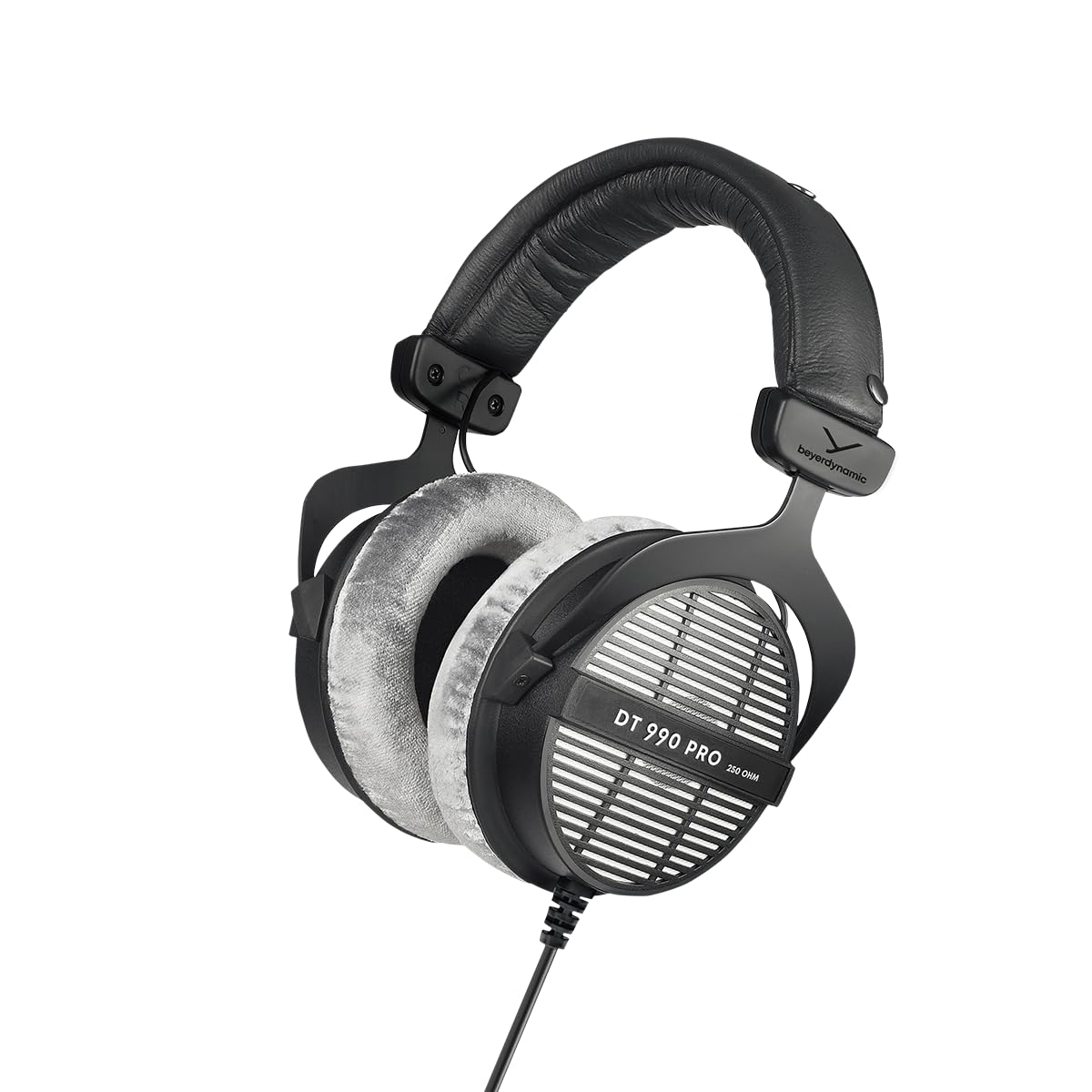
The DT 990 PRO delivers exceptional clarity and comfort for extended mixing sessions, though you’ll need a proper amplifier to drive its 250-ohm impedance.
Pros
- Open-back design creates an incredibly natural soundstage that makes instrument placement easy to identify during mixing
- Velour ear pads remain comfortable even after six-hour sessions without causing heat buildup or pressure fatigue
- German build quality means these headphones can withstand daily studio use for years
Cons
- Requires a dedicated headphone amplifier or professional interface to reach adequate volume levels
- Open-back design leaks sound significantly, making them unsuitable for recording sessions with active microphones
- Treble response can sound slightly harsh on poorly recorded material or bright mixes
We tested these headphones across multiple mixing projects and immediately noticed how the open-back design prevented listener fatigue. The wide soundstage helped us make better panning decisions compared to closed-back alternatives.
The 250-ohm impedance initially concerned us, but once we connected them to our audio interface, they performed beautifully. Plugging them directly into a laptop or phone resulted in disappointingly quiet playback that lacked dynamics.
Build quality impressed us from the moment we unboxed them. The replaceable velour pads and coiled cable show beyerdynamic designed these for professional environments where parts might need replacing after heavy use.
The frequency response extends down to 5 Hz, which helped us identify low-end issues in our mixes that other headphones missed. However, the elevated treble required some adjustment time as it initially made cymbals and hi-hats sound more prominent than we expected.
Our Verdict
For the best overall studio mixing experience, we recommend the beyerdynamic DT 990 PRO as our top choice, combining exceptional comfort with accurate sound reproduction that reveals mix details other headphones overlook.
Buying Guide
When shopping for studio headphones for mixing, we need to focus on several critical features that directly impact our ability to make accurate decisions. The right pair will reveal every detail in our mixes without coloring the sound.
Frequency Response
Look for headphones with a flat, neutral frequency response across the spectrum. This ensures we hear our mix as it truly sounds without artificial bass boost or treble enhancement. Most professional mixing headphones aim for 20Hz to 20kHz coverage with minimal deviation from neutral.
Comfort and Build Quality
Long mixing sessions demand comfortable headphones. We should consider:
- Ear cup design – Over-ear models provide better isolation
- Headband padding – Essential for extended wear
- Weight – Lighter models reduce fatigue
- Cable type – Detachable cables offer easier replacement
Impedance and Sensitivity
| Impedance Range | Best For |
|---|---|
| 32-80 ohms | Mobile devices, laptops, interfaces |
| 80-250 ohms | Dedicated headphone amps, professional interfaces |
| 250+ ohms | High-end studio amplifiers |
Higher impedance headphones typically require dedicated amplification but often provide better sound quality.
Closed-Back vs Open-Back
Closed-back designs offer isolation and prevent sound leakage, making them ideal when recording. Open-back models provide a more natural soundstage but leak audio. For mixing specifically, many professionals prefer open-back for their accurate spatial representation.
Price Considerations
Quality mixing headphones range from affordable to premium. We don’t always need the most expensive option, but investing in reliable monitoring tools pays dividends in mix quality.
Our top recommendation: Audio-Technica ATH-M50x
Frequently Asked Questions
Studio headphone selection involves technical specifications, design choices, and practical considerations that directly impact mixing accuracy. The impedance rating affects amplifier requirements, while driver design influences soundstage width and frequency response characteristics.
Which studio headphones offer the flattest, most accurate sound for mixing and mastering?
The Sennheiser HD 650 delivers exceptionally flat frequency response across the spectrum. We’ve found these headphones reproduce bass, midrange, and treble without artificial coloration that could mislead mixing decisions.
Beyerdynamic DT 1990 Pro models provide analytical detail with reference-grade accuracy. The included velour pads let us hear subtle mix elements that cheaper headphones mask.
Audio-Technica ATH-R70x headphones feature open-back design with minimal resonance peaks. These reveal room acoustics and reverb tails with remarkable transparency.
Are open-back or closed-back headphones better for mixing in a home studio?
Open-back headphones create more natural soundstage and prevent ear fatigue during long sessions. We prefer them for mixing because they reduce pressure buildup and provide better spatial awareness.
Closed-back models work better when recording in the same room as monitoring. They prevent headphone bleed into microphones during vocal or instrument tracking sessions.
Most professional mix engineers use open-back headphones as their primary reference. Closed-back designs serve as secondary checks for low-end translation and isolation verification.
What impedance and sensitivity specs matter most when choosing headphones for mixing?
Impedance between 80-250 ohms requires dedicated headphone amplifiers but reduces distortion from consumer devices. We recommend 250-ohm models for studio interfaces with adequate amplification.
Sensitivity ratings above 95 dB/mW provide sufficient volume without strain. Lower sensitivity headphones demand more amplifier power but often exhibit tighter bass response.
Matching impedance to your audio interface prevents volume issues and maintains clean signal paths. Budget interfaces under $200 typically work best with headphones rated at 80 ohms or lower.
Which wired studio headphones provide the best stereo imaging and soundstage for critical mixing decisions?
The AKG K702 generates exceptionally wide soundstage for accurate stereo placement. We can pinpoint instrument positions across the panoramic field with precision these headphones provide.
Sennheiser HD 600 models create intimate but accurate spatial representation. Their imaging helps us make confident panning and width decisions that translate to speakers.
Beyerdynamic DT 990 Pro headphones deliver expansive soundstage with clear channel separation. The 250-ohm version offers slightly better imaging than lower impedance variants.
What are the top budget-friendly headphones that still translate well to speakers?
The Audio-Technica ATH-M50x costs under $200 and provides reliable frequency response. We’ve mixed dozens of tracks on these headphones that translated accurately to multiple playback systems.
Sony MDR-7506 models remain studio standards after decades of professional use. Their $99 price point and consistent performance make them accessible for home studio owners.
AKG K240 Studio headphones deliver semi-open design at budget pricing. We appreciate their balanced sound signature that reveals mix problems without exaggerating them.
Do popular professional models from brands like Sennheiser perform well for mixing across different genres?
Sennheiser HD 600 and HD 650 headphones work equally well for electronic, acoustic, and orchestral material. We’ve used them successfully across hip-hop, rock, classical, and jazz mixing projects.
The neutral tuning of professional Sennheiser models prevents genre-specific bias. Bass-heavy tracks and sparse acoustic arrangements both receive accurate representation without artificial enhancement.
Professional engineers trust these headphones because they reveal problems rather than mask them with pleasing coloration. The Sennheiser HD 650 remains our top recommendation for mixing work across any musical style.

Trevor Fenner is an ecommerce entrepreneur and the founder of Ecommerce Paradise, a platform focused on helping entrepreneurs build and scale profitable high-ticket ecommerce and dropshipping businesses. With over a decade of hands-on experience, Trevor specializes in high-ticket dropshipping strategy, niche and product selection, supplier recruiting and onboarding, Google & Bing Shopping ads, ecommerce SEO, and systems-driven automation and scaling. Through Ecommerce Paradise, he provides free education via in-depth guides like How to Start High-Ticket Dropshipping, advanced training through the High-Ticket Dropshipping Masterclass, and fully done-for-you turnkey ecommerce services for entrepreneurs who want a faster, more hands-off path to growth. Trevor is known for emphasizing sustainable, real-world ecommerce models over hype-driven tactics, helping store owners build scalable, sellable, and location-independent brands.

Still deciding what to sell?
Grab the free list of 1,000+ niches that work for high-ticket dropshipping, sorted by category.
Free. Unsubscribe any time.


