

When a retail business is small, replenishment is manageable by hand. The owner knows which products sell, glances at the shelves, and places orders with a few suppliers. As the business grows, with more stores, more products and often an online channel alongside physical locations, that approach stops working. Orders take longer to prepare, mistakes become more expensive, and stock levels drift out of line with what customers actually buy.
AI-powered replenishment tools are built to solve this problem. They forecast demand for each product, calculate how much to order and when, and automate much of the purchasing process. For a growing retailer, the right tool can keep shelves full without piling up excess stock, and free the team from hours of manual ordering each week.
Below, we look at five AI inventory replenishment tools worth considering, what each does well, and which kind of business it suits best.
On E-Commerce Paradise, I look at tools through the lens of the operator who has to live with the result. A forecasting dashboard is only useful when it helps you make a better purchasing decision, protect cash flow, and keep a customer from seeing an out-of-stock page.
The stakes are not getting smaller. The U.S. Census Bureau’s quarterly ecommerce report put seasonally adjusted retail ecommerce sales at $340.2 billion for the second quarter of 2026. More sales channels and more SKUs mean that a spreadsheet can become a weak point long before the business feels large.
That is also why I would not treat AI as a replacement for supplier relationships or a solid operating model. If you run a product-led store, my guide to what high-ticket dropshipping actually involves gives useful context for deciding when to stock products, when to work with suppliers, and when to keep the model lean.
For a wider view of the software category, see my roundup of AI inventory management tools for ecommerce. If you want to understand the planning logic before choosing a platform, my guide to AI inventory forecasting and demand planning is a practical next read.
What to look for in a replenishment tool
Before comparing individual tools, it helps to know which capabilities matter most for a growing retail business.
- Demand forecasting accuracy. Replenishment is only as good as the forecast behind it. Look for tools that account for seasonality, promotions and trends, not just historical averages.
- Automated order suggestions. The tool should generate purchase orders or order proposals that planners can review and approve quickly.
- Multi-location support. If you run several stores, a warehouse, or both, the tool needs to plan stock for each location and ideally balance inventory across them.
- Integrations. Replenishment tools depend on data from your POS, ERP or ecommerce platform. Pre-built integrations save time and reduce errors.
- Room to scale. A tool that fits 5 stores should still work at 50. Consider how pricing, performance, and features change as you grow.
My practical rule is simple: do not buy a tool because its forecast looks impressive in a demo. Ask which data it needs, who owns the exceptions, and whether it can handle the supplier lead times, minimum order quantities, bundle logic, and sales channels that make your business different.
1. LEAFIO AI
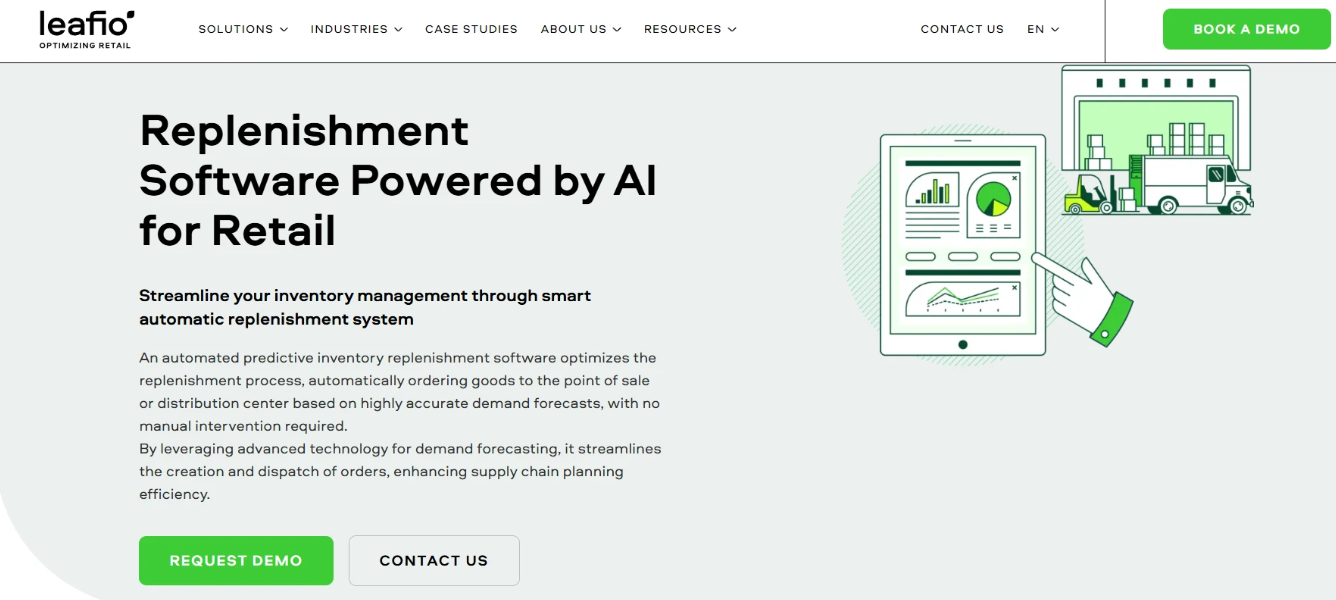
LEAFIO AI is a retail-focused platform that covers inventory replenishment, demand forecasting, shelf management and store operations. It’s designed for physical retail chains in sectors such as grocery, pharmacy, DIY, fashion and specialty retail, and it works at both store and distribution centre level.
For businesses that have outgrown spreadsheets and min-max rules, LEAFIO AI offers AI-based inventory replenishment software that calculates order quantities for every product in every store, taking into account forecast demand, shelf capacity, delivery schedules and supplier constraints. Orders are generated automatically, and planners work mainly with exceptions rather than building orders line by line.
Key features:
- AI demand forecasting at product and store level, including promotions and seasonality
- Automated ordering for stores and distribution centres in one system
- Consideration of shelf capacity and planograms when calculating orders
- Support for perishable goods and shelf life constraints
- Stock rebalancing between locations
Best for: Growing retail chains with physical stores, particularly those with a distribution centre or plans to add one. It is especially relevant for retailers dealing with fresh or fast-moving products, where ordering precision has a direct effect on waste.
Things to consider: LEAFIO AI is built for brick-and-mortar retail. Businesses that sell only online may find tools built specifically around ecommerce platforms a closer fit.
2. Netstock
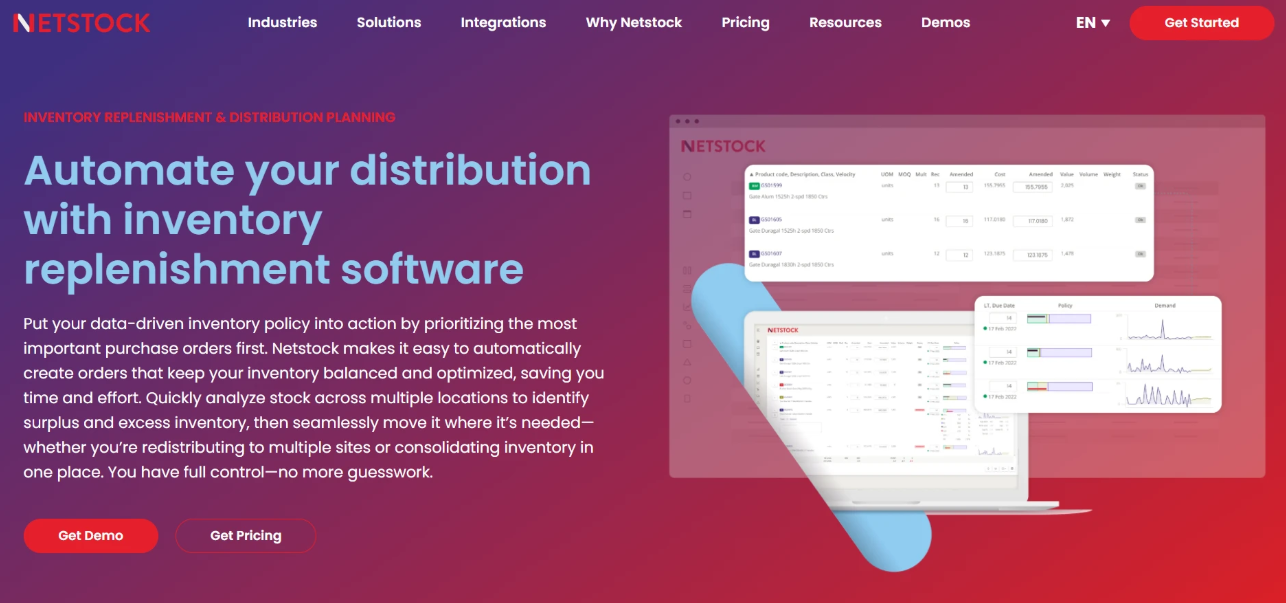
Netstock is an inventory planning and optimization tool aimed at small and mid-sized businesses. It connects to popular ERP systems and adds forecasting, replenishment recommendations and inventory analytics on top of them.
Its main strength is accessibility. Netstock is designed to be set up relatively quickly and used by teams without dedicated supply chain specialists. Its dashboards classify products by performance, highlight excess and shortage risks, and suggest order quantities based on forecast demand.
Key features:
- Demand forecasting with automatic model selection
- Replenishment recommendations and purchase order suggestions
- Inventory classification and health dashboards
- Integrations with a range of ERP systems
Best for: Small and mid-sized businesses, including retailers and distributors, that already use a supported ERP and want to add planning capabilities without a large implementation project.
Things to consider: Netstock is a general inventory planning tool rather than a retail-specific one, so store-level features such as shelf capacity or planogram awareness are not its focus.
3. Inventory Planner by Sage
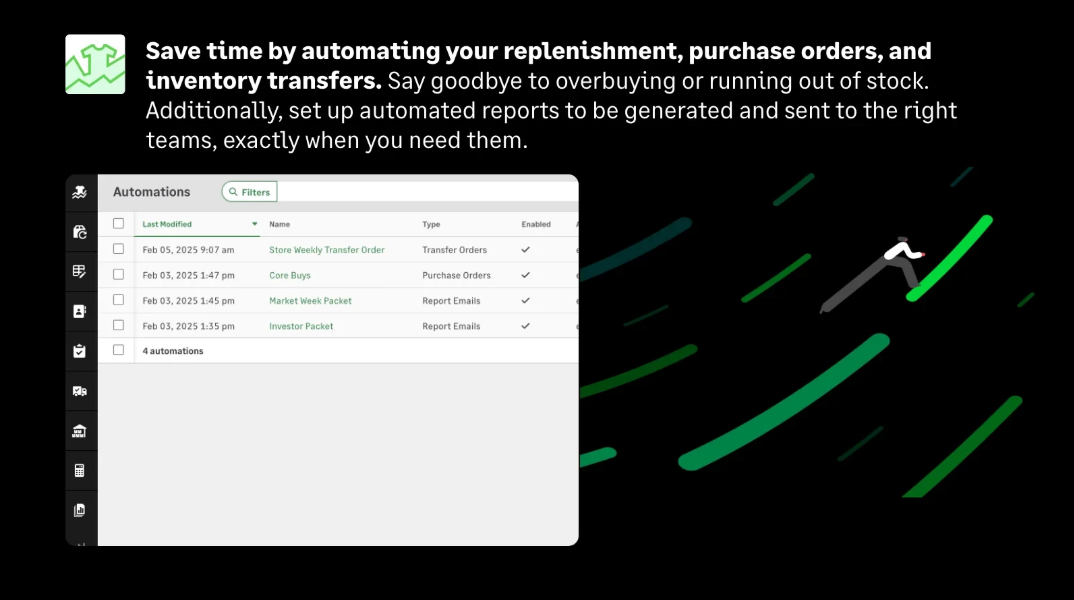
Inventory Planner, now part of Sage, is a forecasting and replenishment tool built for ecommerce and omnichannel brands. It integrates closely with platforms such as Shopify and other online sales channels, pulling in sales data to forecast demand and recommend what to reorder.
Inventory Planner by Sage: The tool is popular with direct-to-consumer brands and online retailers that need to plan purchases from suppliers, manage lead times and avoid running out of bestsellers. It generates purchase orders directly and helps plan stock for new products and seasonal ranges.
Key features:
- Sales forecasting based on ecommerce channel data
- Reorder recommendations and purchase order creation
- Support for multiple warehouses and sales channels
- Planning tools for seasonal and new products
Best for: Ecommerce and omnichannel retailers, especially those running on Shopify or similar platforms, that buy stock from suppliers and hold it in one or several warehouses.
Things to consider: Its strengths lie in online and warehouse-based inventory. Retailers with large physical store networks that need store-by-store replenishment may need a more store-focused solution.
4. GMDH Streamline
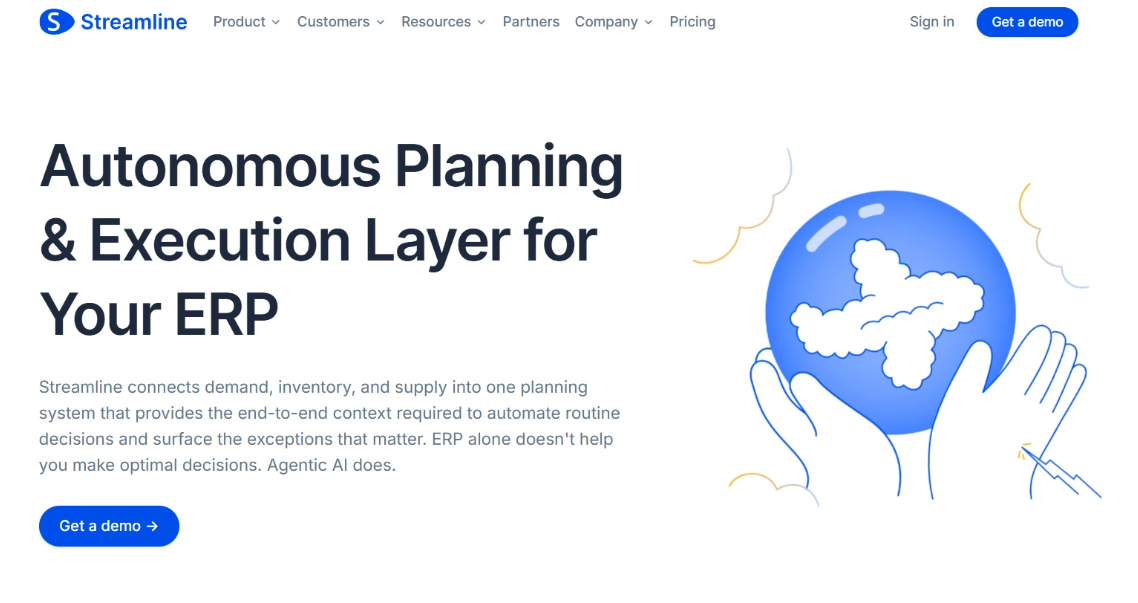
GMDH Streamline is a demand planning and inventory replenishment tool used by small and mid-sized companies across retail, wholesale and manufacturing. It connects to ERP and accounting systems, as well as spreadsheets, making it a practical step up for businesses currently planning in Excel.
Streamline produces statistical and AI-supported forecasts, calculates reorder points and safety stock, and generates purchase plans. It also offers scenario planning so teams can see how changes in demand or lead times might affect stock.
Key features:
- Demand forecasting with seasonality and trend detection
- Inventory replenishment planning and purchase order generation
- Safety stock and reorder point calculation
- Integrations with ERP, accounting systems and spreadsheets
Best for: Growing businesses that currently plan inventory in spreadsheets and want a structured, affordable tool for forecasting and purchasing.
Things to consider: Like Netstock, Streamline is designed to serve many industries, so some retail-specific functions, such as store-level shelf management, are outside its main scope.
5. RELEX Solutions
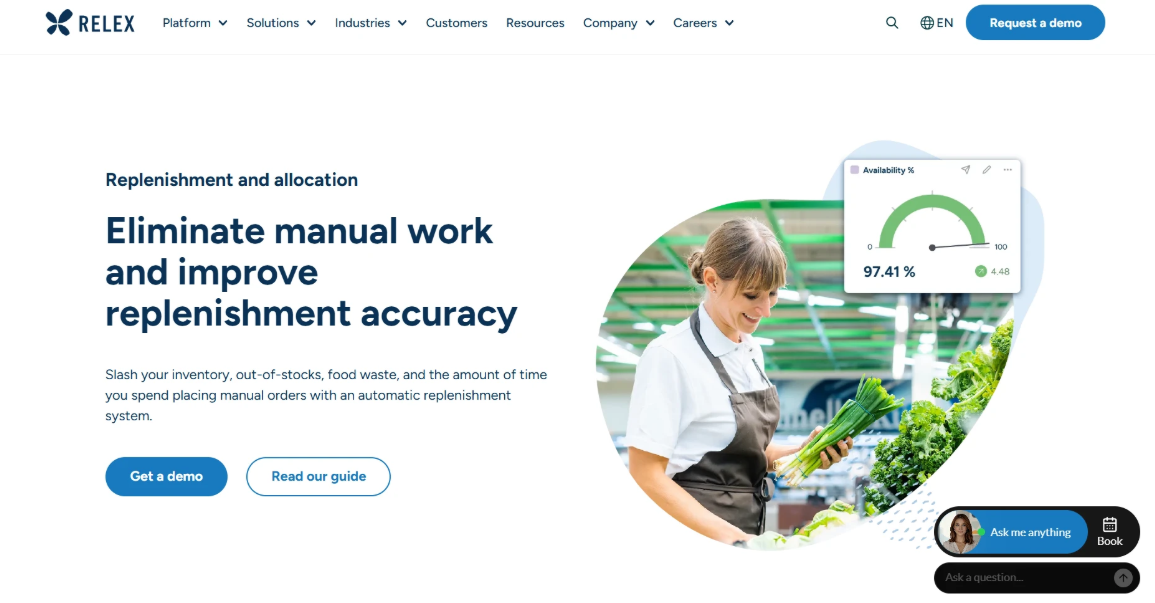
RELEX Solutions is a unified supply chain and retail planning platform used by many large retailers and consumer goods companies. It covers demand forecasting, replenishment, allocation, assortment and space planning, and workforce planning.
For a growing retailer, RELEX is best viewed as an option for the later stages of expansion. It offers a wide range of capabilities and handles complex supply chains with many locations, channels and product categories.
Key features:
- Machine learning-based demand forecasting
- Automated replenishment across stores, distribution centres and online channels
- Planning for promotions, fresh products and allocation
- Broad coverage of related retail planning functions
Best for: Retailers that are already operating at considerable scale or expect to reach it soon, and need an extensive, enterprise-level planning platform.
Things to consider: The breadth of the platform means implementation typically involves more time and resources than lighter tools. Smaller retailers may find it more than they need at their current stage.
Quick comparison
| Tool | Main focus | Best suited for |
|---|---|---|
| LEAFIO AI | Retail replenishment for stores and DCs | Growing physical retail chains |
| Netstock | Inventory planning on top of ERP | SMBs with a supported ERP |
| Inventory Planner by Sage | Ecommerce forecasting and purchasing | Online and omnichannel brands |
| GMDH Streamline | Forecasting and purchase planning | Businesses moving off spreadsheets |
| RELEX Solutions | Enterprise retail and supply chain planning | Large or rapidly scaling retailers |
How to choose the right tool
The best choice depends less on which tool has the longest feature list and more on how well it matches your business model and stage of growth.
Start by defining where your stock lives. Retailers with physical stores need a tool that plans at store level and understands shelf space and delivery schedules. Online-only brands need strong integration with their ecommerce platforms and warehouse planning.
Next, consider your current systems. A tool that connects easily to your POS, ERP or online store will be faster to implement and more reliable to run.
Finally, think a few years ahead. Switching replenishment systems is disruptive, so it pays to choose one that can support the number of stores, products and channels you expect to have, not just the ones you have today. Most vendors offer demos or pilots, and testing a tool on a sample of your own data is the most reliable way to see how it performs.
For growing retail businesses, manual replenishment quickly becomes a bottleneck. AI-powered tools remove much of that burden, improving forecast accuracy, automating orders and helping keep stock in line with real demand. Whether you run a handful of stores, an online shop or a mix of both, investing in the right replenishment tool is one of the most practical steps you can take to support growth without losing control of your inventory.
How AI replenishment works in a real ecommerce operation
For an online seller, replenishment begins with a reliable view of what has sold, what is on hand, what is already on the way, and what customers have committed to buy. That is why I would sort out the storefront and inventory connection before chasing more advanced forecasting. My roundup of Shopify inventory management apps for dropshipping is useful if that is the part of the stack you are still building.
A replenishment tool takes those inputs and produces a recommendation rather than a magic answer. A platform such as StockSync can help keep supplier feeds and store inventory aligned. My step-by-step guide on setting up StockSync for multi-channel inventory shows the operational side of that connection.
The most useful output is an exception list. It should flag the products that will stock out before the next delivery, the items that have enough coverage to delay a purchase, and the forecasts that need a human review because a promotion, a product launch, or a supplier delay changed the picture.
Forecasts make recommendations, but people still make the decisions
I would be cautious with any vendor pitch that makes replenishment sound completely hands-off. A model cannot know that a supplier is about to discontinue a product, that a competitor’s promotion changed demand, or that a bad batch needs to be held back. The right setup gives your buyer or operations person a clear recommendation, the assumptions behind it, and room to override it.
That distinction matters most with new products. Historical sales are thin, so the system has less evidence to work with. Start with a small initial order, set a review date, and update the forecast after you have real conversion, cancellation, and return data. It is better to learn from a controlled test than to lock cash into a large order because a dashboard looked confident.
The quality of the data sets the ceiling
Before you judge an AI forecast, audit the basics: product variants, units of measure, supplier lead times, minimum order quantities, current stock, open purchase orders, and warehouse transfers. If a supplier normally delivers in 30 days but your system says 10, the order suggestion can look sophisticated and still be wrong.
For businesses that pull products or availability from supplier networks, Inventory Source is worth considering when you need a more structured supplier-data workflow. You should still vet the vendors and terms behind that feed, which is why I keep a separate guide to finding and vetting high-ticket suppliers.
A practical rollout plan for a replenishment platform
1. Clean the data before you import it
Do not start with every SKU just because the software can import every SKU. Begin by cleaning the active products that matter most to revenue and customer experience. I would separate discontinued products, duplicated variants, bundles, seasonal lines, and slow-moving items so the first forecast is based on a usable catalogue.
Then compare what the platform thinks you have against what your store, warehouse, and suppliers say you have. My guide to inventory management software for small ecommerce businesses can help you identify the foundational tools that should agree before forecasting begins.
Cash flow deserves the same attention as inventory count. Finaloop can be a useful choice for sellers who want tighter ecommerce accounting around inventory purchases and margin data. For a broader software decision, see my comparison of ecommerce accounting software ranked by where inventory starts.
2. Run a narrow pilot instead of a full switch
Choose one product family, one warehouse, or a manageable group of stores. Run the new recommendations alongside your existing process for a few order cycles. Track stockouts, excess inventory, expedited freight, and how much time the team spends reviewing suggestions.
This approach gives you a clean answer to the question that matters: did the tool improve the decision? It also helps the team learn where the forecast needs an override. A small pilot makes it much easier to adjust lead-time assumptions and service-level targets without creating a company-wide mess.
3. Map the supplier setup, not just the sales channel
If your business sources from multiple vendors, make sure each vendor’s order minimums, pack sizes, lead times, and shipping calendar are visible in the process. Spocket is a practical option for sellers who want to evaluate a marketplace of supplier products with faster-shipping options. Wholesale2B can suit a seller testing a broad supplier catalogue across channels.
Those catalogues are not a replacement for purchasing discipline. If you stock products yourself, a system such as Finale Inventory can be worth evaluating alongside the forecasting platform. Brands with multiple warehouses should also review the right warehouse management system for omnichannel retail before trying to automate every purchasing decision.
4. Keep a human review loop for exceptions
Set a clear cadence for reviewing recommendations. For fast-moving products that might be daily. For slower, high-ticket products, it might be weekly or tied to a supplier order cycle. The person approving an order should be able to see demand, inventory coverage, incoming stock, and the reason a recommendation changed.
Also agree on the conditions that require a manual override. Promotions, supply disruptions, seasonal launches, new product tests, and unusually high return rates are normal business events. A strong replenishment process gives people a disciplined way to handle them instead of pretending they do not exist.
Where these tools fit for high-ticket dropshipping
Not every high-ticket dropshipping store needs an enterprise replenishment platform. If your suppliers ship directly to the customer and expose reliable availability data, your immediate job may be inventory synchronization, supplier communication, and an honest availability promise on the storefront. My Shopify order fulfillment guide for high-ticket dropshipping covers the customer-facing side of that process.
Once you carry stock, operate a warehouse, or sell across several channels, replenishment becomes much more central. Start by choosing product categories with buying patterns and margins you understand. My high-ticket niches list is a good place to pressure-test whether a category has the supplier depth and economics to support a more serious inventory operation.
It also pays to get the business basics in place before inventory commitments grow. My business formation checklist for high-ticket dropshipping walks through the legal and financial foundation that should sit underneath supplier agreements, purchase orders, and cash-flow planning.
Final take
The best AI inventory replenishment tool is not the one with the biggest feature list. It is the one that fits your real operating complexity, works with your data, and helps your team make better purchasing decisions without giving up control. Start with clean inputs, pilot on a limited group of products, and measure whether the result improves availability, cash flow, and the time your team spends on repetitive ordering.
For a growing ecommerce brand, that is the real win. You are not buying AI for its own sake. You are building an operating system that lets you grow without turning inventory into a constant fire drill.
Related Articles
If you found this useful, these guides go deeper on related topics:
- Best AI Inventory Management Tools for Ecommerce in 2026
- How to Use AI for Ecommerce Inventory Forecasting and Demand Planning
- Best Shopify Inventory Management Apps for Dropshipping in 2026
- Best Warehouse Management Systems for Omnichannel Retail Brands in 2026
- How to Find and Vet High-Ticket Dropshipping Suppliers

Trevor Fenner is an ecommerce entrepreneur and the founder of Ecommerce Paradise, a platform focused on helping entrepreneurs build and scale profitable high-ticket ecommerce and dropshipping businesses. With over a decade of hands-on experience, Trevor specializes in high-ticket dropshipping strategy, niche and product selection, supplier recruiting and onboarding, Google & Bing Shopping ads, ecommerce SEO, and systems-driven automation and scaling. Through Ecommerce Paradise, he provides free education via in-depth guides like How to Start High-Ticket Dropshipping, advanced training through the High-Ticket Dropshipping Masterclass, and fully done-for-you turnkey ecommerce services for entrepreneurs who want a faster, more hands-off path to growth. Trevor is known for emphasizing sustainable, real-world ecommerce models over hype-driven tactics, helping store owners build scalable, sellable, and location-independent brands.


