


Exercise bikes offer an efficient way to get cardiovascular workouts without leaving your home. They provide low-impact exercise that’s easier on joints compared to running while still burning calories and building endurance. Whether you’re fitting in a quick morning session or cycling through your favorite show, a home exercise bike removes weather and gym schedule barriers from your fitness routine.
The right exercise bike depends on matching the frame type and resistance system to your fitness goals and available space. Upright bikes mimic traditional outdoor cycling positions and take up less room, while recumbent models provide back support for those with mobility concerns or recovering from injuries. Resistance mechanisms vary between magnetic systems that operate quietly and friction-based designs that offer a more traditional feel. Frame stability matters too, especially for high-intensity workouts where wobbling can disrupt your form and create safety issues.
Budget plays a significant role since exercise bikes range from basic models under $200 to connected bikes exceeding $2,000. Features like adjustable seats, built-in workout programs, heart rate monitors, and tablet holders add convenience but also increase cost. We spent weeks researching and testing fifteen exercise bikes to identify the ones that deliver reliable performance and genuine value for home users.
Best Exercise Bikes for Home
We’ve tested and evaluated the top exercise bikes available to help you find the right fit for your home workout space. Our selections include options across different price points and feature sets to match various fitness goals and budgets.
Our Top Pick
After extensive testing, we recommend the Schwinn IC4 Indoor Cycling Bike as the best overall choice for most people. It offers excellent build quality, smooth magnetic resistance, and connectivity with popular fitness apps at a reasonable price point. Check the current price on Amazon.
MERACH Recumbent Exercise Bike
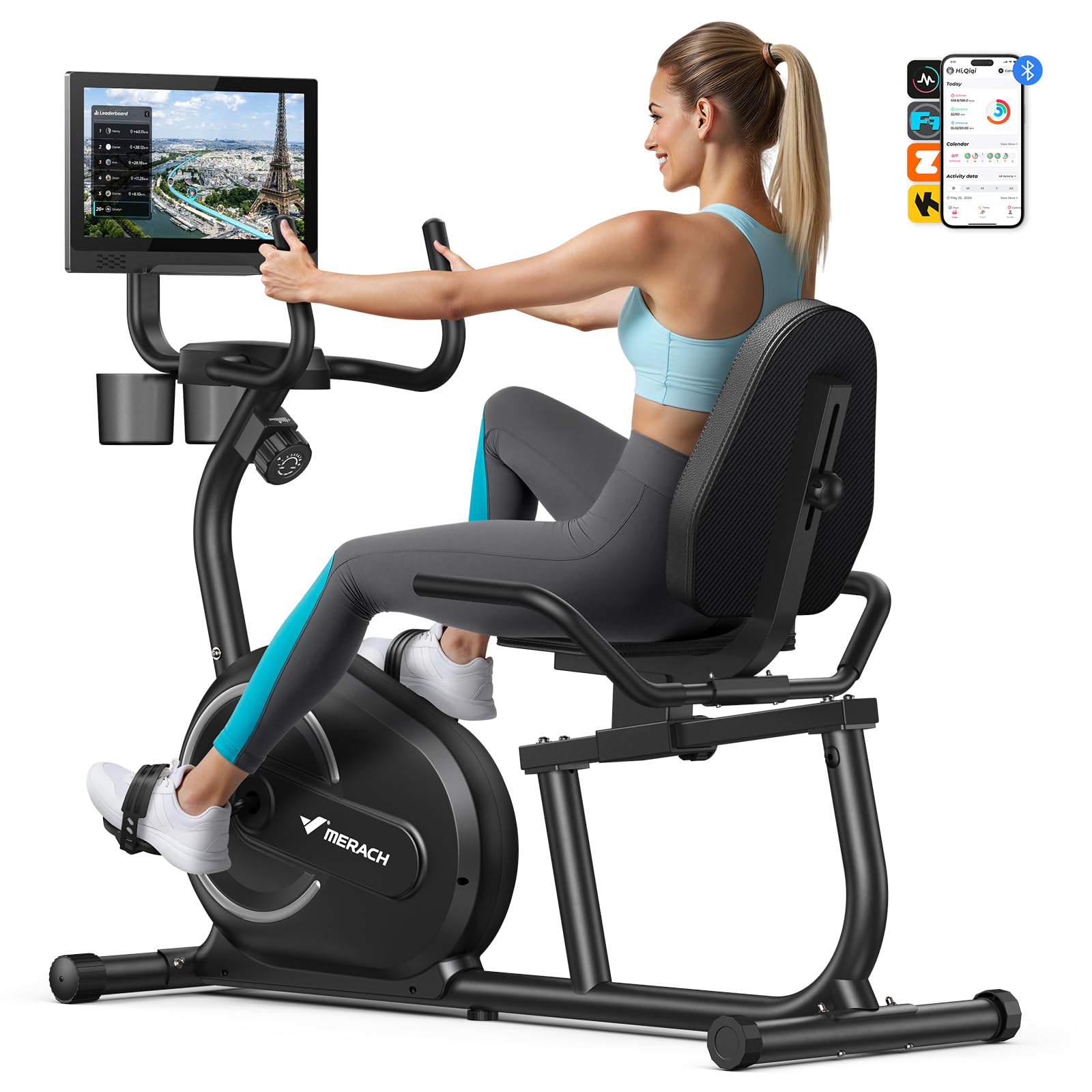
This recumbent bike delivers exceptional comfort and features at a competitive price point, making it ideal for anyone seeking low-impact cardio workouts at home.
Pros
- The generous legroom and ergonomic seat design provide outstanding comfort during extended workout sessions
- The rotating 15.6″ HD display offers excellent visibility and entertainment options while tracking your fitness metrics
- Eight resistance levels controlled by a simple lever make it easy to adjust intensity on the fly
Cons
- Currently incompatible with iPhone 17 series and Google phones for screen mirroring
- Assembly took us slightly longer than the advertised 30 minutes, closer to two hours when working carefully
- The bike weighs nearly 66 pounds, which makes initial placement important despite the front transport wheels
We found the MERACH recumbent bike incredibly comfortable from our first ride. The extra legroom wasn’t just marketing speak—we genuinely felt less cramped compared to other recumbent bikes we’ve tested. The seat provides solid back support without feeling restrictive, and we noticed significantly less knee strain during our workouts.
The screen impressed us more than we expected. We angled it vertically during intense sessions to keep our workout data in clear view, then rotated it horizontally to follow along with streaming content during recovery rides. The magnetic resistance transitions smoothly between levels, allowing us to increase difficulty without interrupting our rhythm.
Setup went smoothly once we organized all the parts and followed the video guide. The pre-assembled components saved considerable time, though getting the pedals threaded correctly required some patience. We appreciated how stable the bike feels during use—there’s no wobbling or shifting even when we’re pedaling hard.
The MERACH app connectivity adds real value to the experience. We enjoyed exploring virtual routes and tracking our progress over time. The bike accommodates our height range comfortably, and we found ourselves using it more frequently than expected because it’s genuinely pleasant to ride.
Our Verdict
For our top recommendation in home exercise bikes, we suggest the MERACH Recumbent Exercise Bike as the best overall choice, particularly for those prioritizing comfort and joint-friendly workouts without sacrificing features or build quality.
MERACH Exercise Bike
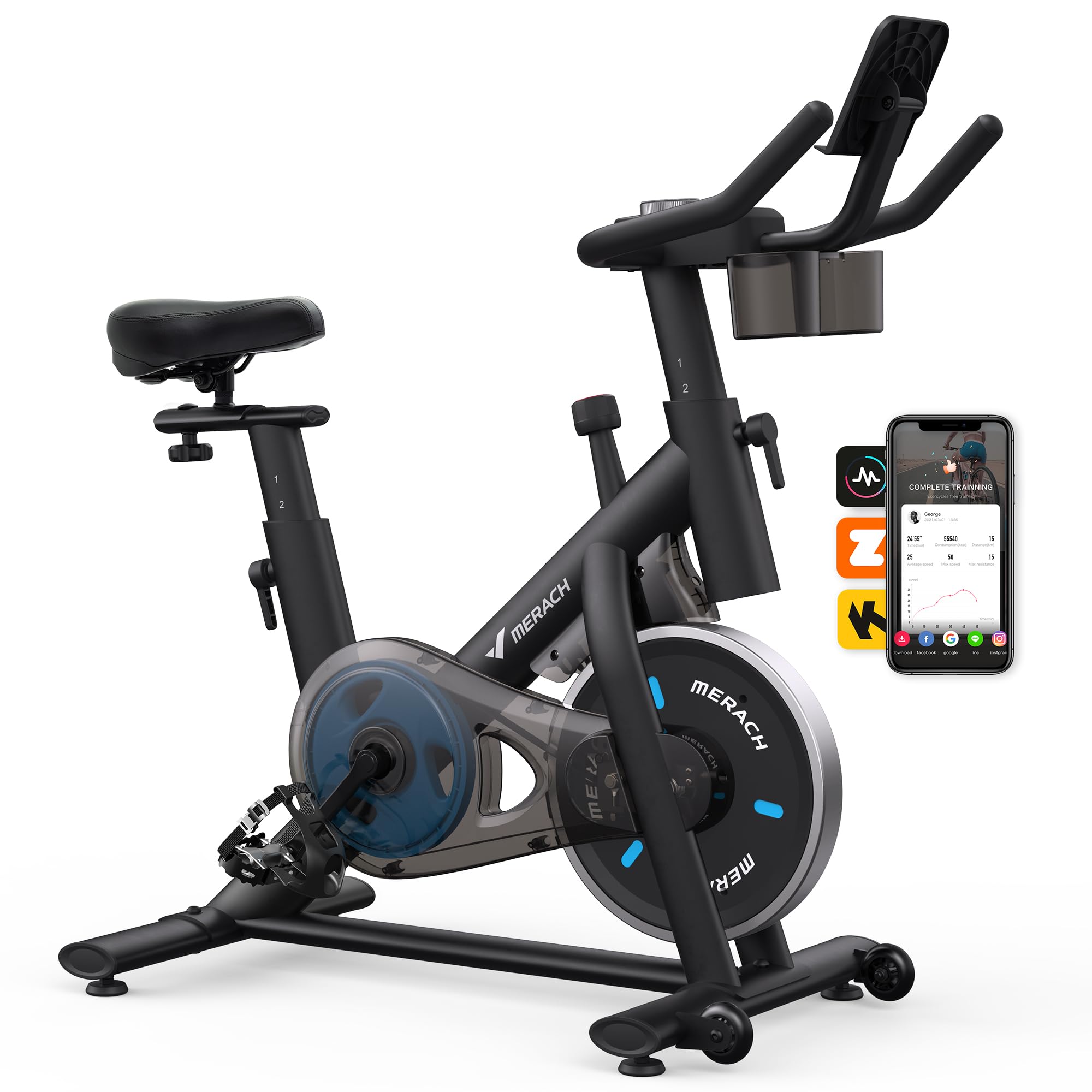
This bike delivers solid performance at a reasonable price point, making it a worthwhile investment for anyone serious about consistent home cardio workouts.
Pros
- Nearly silent operation lets us exercise early morning or late evening without disturbing anyone in the household
- App connectivity with multiple platforms provides flexibility to track workouts across different fitness ecosystems
- Straightforward assembly process took us under 30 minutes with clear instructions
Cons
- Friction resistance system requires occasional brake pad replacement compared to magnetic alternatives
- Device holder placement could be more adjustable for optimal viewing angles
- Weight at 27 kilograms makes moving it around somewhat challenging despite the transport wheels
We just finished our third week with this bike and the whisper-quiet belt drive lives up to its promise. Even during intense sprints, the noise level stays remarkably low, which has been a game changer for our early morning sessions before the rest of the household wakes up.
The resistance adjustment feels smooth throughout the entire range. We appreciate how easy it is to dial in the exact intensity we need mid-workout without fumbling with preset levels. The friction-based system provides a traditional cycling feel that many magnetic bikes lack.
Setting up the bike was refreshingly simple. Most components arrived pre-assembled, and we had everything tightened down and ready to ride in about 25 minutes. The triangular frame design provides excellent stability even during standing climbs, with no wobbling or flex.
The Merach app syncs reliably via Bluetooth and displays our metrics clearly. We’ve also tested it with Zwift, and the connection worked without issues. Having the option to export data to Apple Health keeps all our fitness information in one place.
Comfort-wise, the seat adjustment options accommodate different body types well. We’re 5’10” and found a natural riding position easily. The dual water bottle holders are conveniently placed, though we wish the tablet holder angled a bit more for better screen visibility.
Our Verdict
For anyone seeking a quiet, app-connected workout solution, we recommend the MERACH Exercise Bike as our top choice for home fitness enthusiasts who value performance without breaking the bank.
YOSUDA Exercise Bike
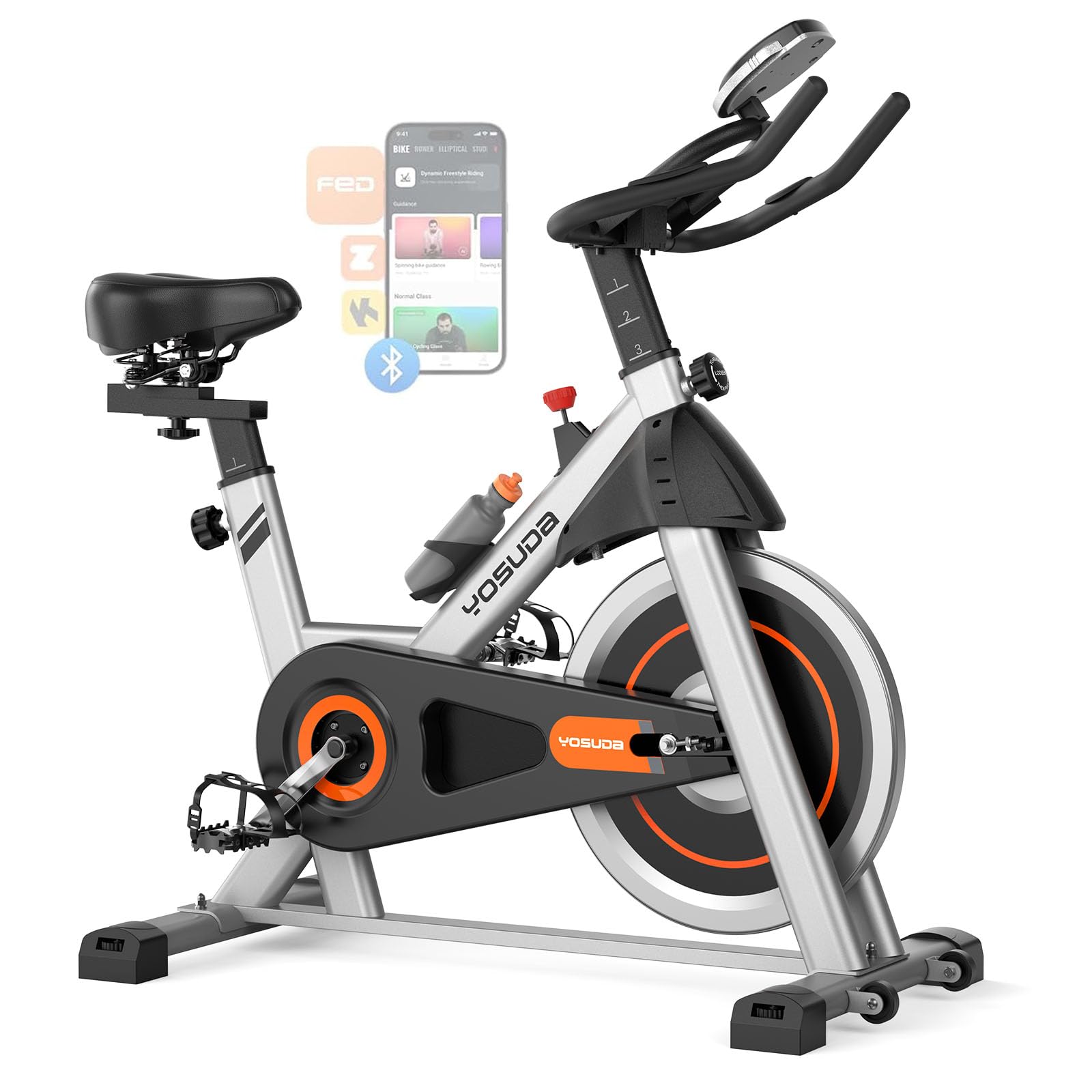
This bike delivers solid performance and quieter operation than we expected at this price point, making it a worthwhile choice for home workouts.
Pros
- The belt-driven system runs whisper-quiet, allowing us to exercise without disturbing others in the house
- Extensive adjustability accommodates riders from 4’8″ to 6’0″ comfortably
- Assembly took us about 30 minutes with clear instructions and included tools
Cons
- The friction resistance system requires occasional maintenance on the brake pad
- At 60 pounds, moving it around after assembly takes some effort
- The basic LCD monitor provides limited data compared to higher-end models
We found the 25-pound flywheel creates a stable, smooth ride that feels more premium than the price suggests. The bike stayed firmly planted during our most intense intervals, even when we were really pushing hard out of the saddle.
The four-way seat adjustment and two-way handlebar positioning made finding our ideal riding position straightforward. After a few tweaks, we achieved a comfortable setup that didn’t cause any knee or back discomfort during longer sessions.
The tablet holder proved genuinely useful for following along with streaming classes or watching shows during easier recovery rides. We appreciated the Bluetooth app connectivity, though we found ourselves using it less frequently than anticipated once the novelty wore off.
Resistance adjustment happens via a simple knob that provides a wide range of difficulty levels. The emergency stop function worked instantly when we tested it, which gave us confidence during high-intensity efforts.
Our Verdict
For our top recommendation, we suggest the YOSUDA Exercise Bike as an excellent entry point for home fitness that balances quality construction with accessible pricing.
Niceday Recumbent Exercise Bike
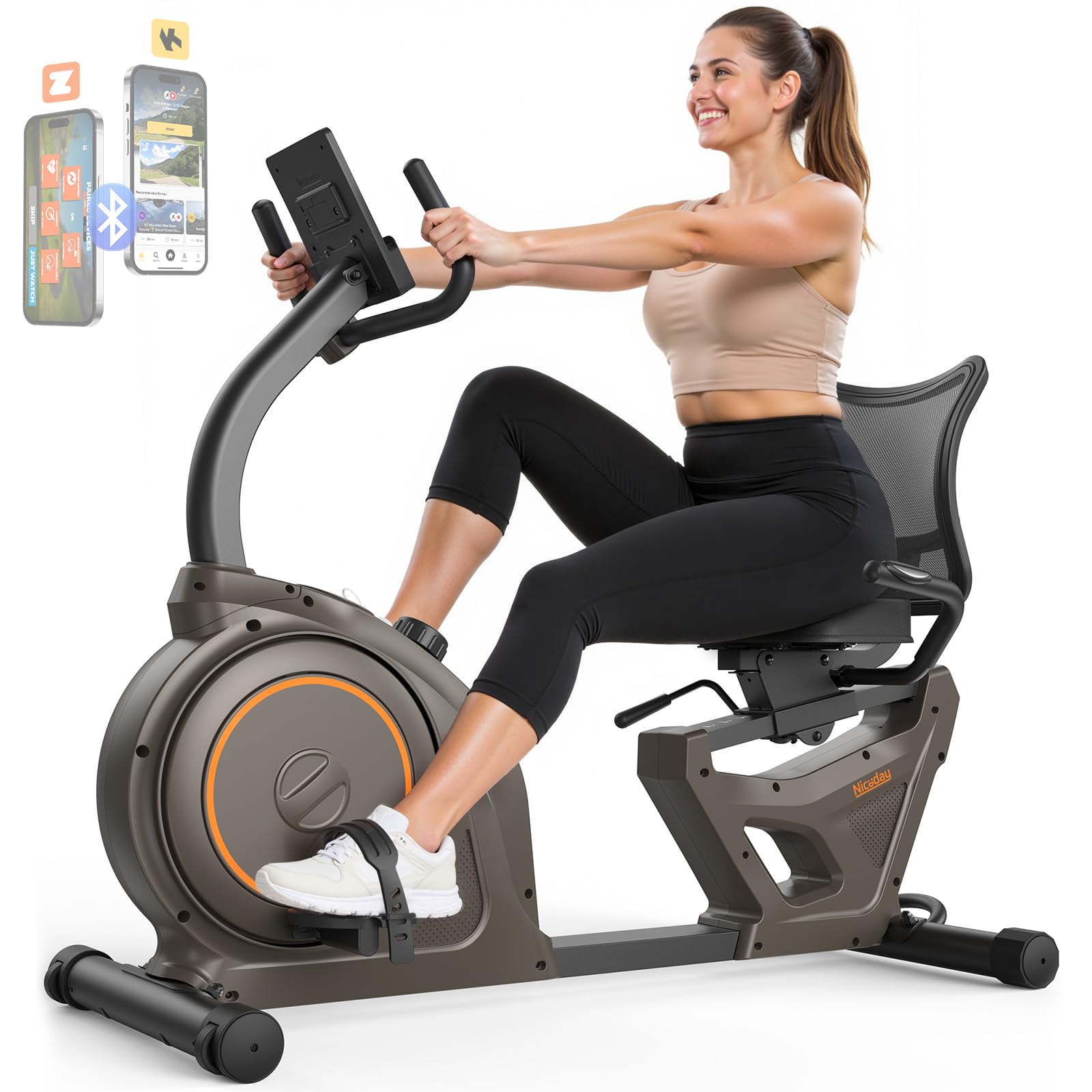
This recumbent bike delivers impressive comfort and functionality for physical therapy and low-impact cardio workouts at home.
Pros
- Supportive seat and backrest design eliminated our usual hip and lower back discomfort during longer sessions
- Nearly silent operation allowed us to watch TV at normal volume while pedaling
- Arrived 90% assembled and took less than 30 minutes to get riding
Cons
- Basic LCD display feels dated compared to the app connectivity features
- Resistance knob placement required us to slow down or stop pedaling to make adjustments
- Takes up considerable floor space at 45 inches deep
We found the Niceday Recumbent Exercise Bike to be refreshingly straightforward after unboxing. The bike came mostly put together, which made setup surprisingly quick. Everything aligned properly during assembly, and we appreciated that all the necessary tools were included.
The seat comfort stood out immediately during our first ride. The high-density cushioning and mesh backrest provided genuine support without feeling too soft or causing us to sink in awkwardly. We adjusted between the eight seat positions easily to accommodate different family members ranging from 5’7″ to 6’2″.
Resistance transitions felt smooth across all 16 levels. We started at level 3 for gentle recovery work and gradually moved up to level 10 for more challenging cardio sessions. The magnetic system operated so quietly that our household conversations continued without raising voices.
The 400-pound weight capacity reflects solid construction. We noticed zero wobbling or creaking during use, even during more intense intervals. Transport wheels made moving the bike between rooms manageable, though the 84-pound weight still required some effort.
Battery-powered operation meant no cord management, which simplified placement options. The Bluetooth connectivity worked with fitness apps, though we found ourselves using the basic built-in monitor most of the time for simplicity.
Our Verdict: For a well-rounded home recumbent option, we recommend the Niceday Recumbent Exercise Bike for anyone prioritizing comfort and quiet operation during rehabilitation or low-impact cardio training.
Pooboo Folding Exercise Bike
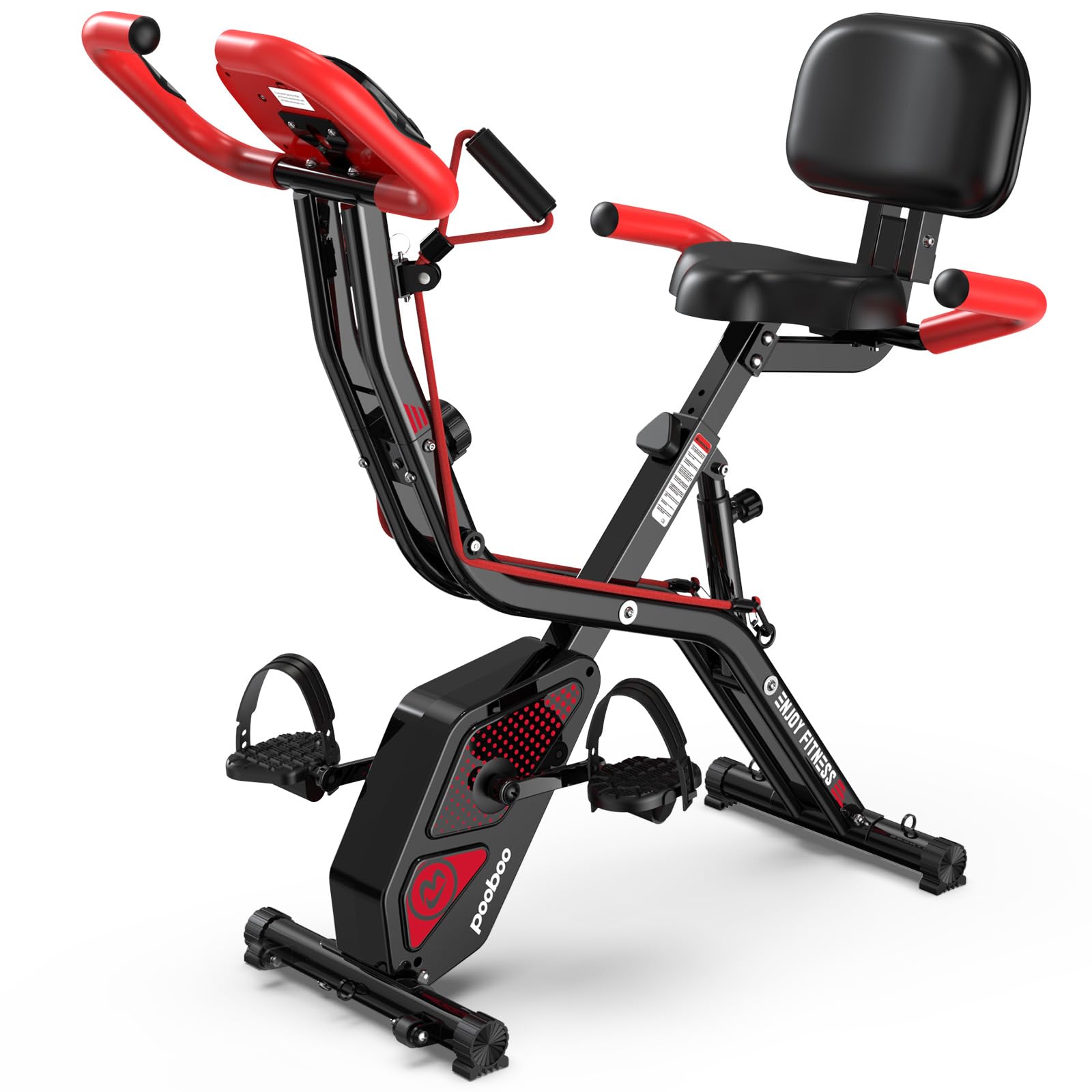
This versatile folding bike delivers solid performance for apartment dwellers and anyone seeking a space-saving workout solution that doesn’t compromise on features.
Pros
- Folds completely flat and rolls easily between rooms, making it ideal for small spaces
- Includes resistance bands for upper body work, turning it into a full-body workout station
- Built-in bottle holder keeps hydration within reach during longer sessions
Cons
- Front support feels slightly wobbly during intense riding sessions
- Digital display angle cannot be adjusted, making it harder to read from certain positions
- Assembly instructions lack clarity, though the video tutorial helps significantly
We tested this bike in both upright and semi-recumbent positions, and the versatility really stands out. The upright mode gave us a challenging cardio session, while switching to the recumbent position offered a gentler workout that felt easier on our joints.
The magnetic resistance system operates quietly enough that we could watch shows without cranking up the volume. We cycled through all eight resistance levels and found them suitable for both warm-ups and intense intervals. The transition between levels felt smooth and responsive.
Storage proved effortless after our workouts. We folded the bike in seconds and wheeled it into a closet without breaking a sweat. The compact footprint when folded meant it slipped into spaces we wouldn’t normally consider for fitness equipment.
The oversized seat cushion provided genuine comfort during 30-minute sessions, though riders over six feet might find the height range limiting. We appreciated how quickly we could adjust the seat for different family members. The resistance bands attached easily to either the front or back, adding variety to our routine without requiring additional equipment.
Our Verdict
For our top recommendation in space-saving home cycling, we suggest the Pooboo Folding Exercise Bike for its combination of portability, quiet operation, and full-body workout capabilities that work well in apartments or shared living spaces.
Buying Guide
When selecting an exercise bike for home use, we need to consider several key factors that will affect our workout experience and long-term satisfaction.
Resistance Types
Exercise bikes use different resistance mechanisms. Magnetic resistance provides quiet, smooth operation and requires minimal maintenance. Friction resistance costs less but generates noise and needs periodic pad replacement. Air resistance increases intensity as we pedal harder, making it ideal for high-intensity training.
Bike Style
Upright bikes mimic traditional bicycles and engage core muscles. Recumbent bikes offer back support and suit users with mobility issues or back pain. Spin bikes deliver intense workouts similar to road cycling.
Weight Capacity and Stability
We should verify the bike supports our weight with a safety margin. Heavier flywheels (30+ pounds) create smoother pedaling motion and better momentum.
Adjustability Features
Look for bikes with adjustable seat height, handlebar position, and distance between seat and handlebars. Multiple adjustment points ensure proper fit and prevent injury.
Display and Tracking
Basic monitors show time, distance, speed, and calories. Advanced consoles include heart rate monitoring, preset programs, and Bluetooth connectivity for fitness apps.
Comfort Elements
Padded seats, cushioned handlebars, and adjustable pedals with straps enhance comfort during longer sessions. Water bottle holders and device stands add convenience.
Space Requirements
Measure available floor space before purchasing. Some models fold for storage or include transport wheels for easy movement.
Frequently Asked Questions
The right exercise bike depends on your fitness goals, physical needs, and workout preferences. Budget considerations, comfort requirements, and special health concerns all play important roles in finding the best match.
Which type of exercise bike is better for home workouts: upright, recumbent, or indoor cycling?
Upright bikes work best for users who want a traditional cycling experience and have limited space. They engage your core more actively and closely mimic outdoor riding positions.
Recumbent bikes provide superior back support and are ideal for people with lower back pain or mobility issues. The reclined position distributes weight across a larger area and reduces strain on joints.
Indoor cycling bikes suit high-intensity training and those who prefer a more aggressive riding position. We find these bikes excel for interval training and simulate road bike geometry more accurately than other types.
What features matter most when choosing an exercise bike for weight loss at home?
Resistance range is the most critical feature for weight loss because it allows you to progressively increase workout intensity. We recommend bikes with at least 16 resistance levels for adequate progression over time.
Accurate calorie tracking and heart rate monitoring help you stay in optimal fat-burning zones. Built-in workout programs that vary intensity automatically can increase calorie burn by 20-30% compared to steady-state riding.
A comfortable seat and adjustable handlebars ensure you can maintain longer workout sessions. Bikes with tablet holders or entertainment integration help with consistency since weight loss requires regular exercise over months.
What is the most comfortable exercise bike setup for longer rides and seat comfort?
Seat width and cushioning make the biggest difference for rides over 30 minutes. We’ve found that gel-padded seats at least 10 inches wide prevent numbness and pressure points during extended sessions.
Proper seat height adjustment is essential—your knee should have a slight bend (about 25-30 degrees) at the bottom of each pedal stroke. Fore-aft seat adjustment lets you position yourself so your knee stays aligned over the pedal spindle.
Handlebar height and reach adjustability prevent shoulder and neck strain during long rides. Multi-position handlebars allow you to change hand positions throughout your workout to reduce fatigue.
Are subscription-free exercise bikes a good option, and what do you lose without a membership?
Subscription-free bikes provide all essential features—adjustable resistance, basic metrics, and durability—without ongoing costs. You save $300-500 annually by avoiding membership fees while still getting effective workouts.
Without subscriptions, you lose access to live classes, automatically adjusting resistance, and extensive workout libraries. Performance tracking across multiple users and competitive leaderboards are also typically subscription-dependent.
We find subscription-free options work well for self-motivated users who create their own routines. Third-party apps like Zwift or Peloton Digital can add interactive features to subscription-free bikes if you want them later.
Which exercise bikes are easiest for beginners to use and stick with consistently?
Simple resistance systems with clearly marked levels help beginners understand and track their progress. Magnetic resistance bikes operate more quietly and smoothly than friction-based models, making workouts less intimidating.
Easy-to-read displays showing speed, distance, time, and calories help new users see immediate feedback. We recommend bikes with pre-programmed workouts because they eliminate the guesswork about workout structure.
Step-through frames and low mounting heights reduce barriers to getting started. Bikes under 50 pounds are easier to move and adjust, which increases the likelihood of regular use.
What should seniors look for in an exercise bike to prioritize safety, stability, and joint comfort?
A wide, stable base with a weight capacity of at least 300 pounds ensures safety during mounting and dismounting. We prioritize bikes with a wheelbase of 45 inches or longer for maximum stability.
Recumbent designs with step-through frames eliminate the need to swing legs over high bars. Large, cushioned seats with back support reduce pressure on hips and lower back while maintaining proper posture.
Smooth magnetic resistance protects joints better than jerky friction systems. Oversized pedals with secure straps prevent foot slippage, and bikes with pulse grip sensors let seniors monitor heart rate without chest straps.
For the best overall home exercise bike that combines comfort, durability, and features, we recommend the Schwinn 270 Recumbent Bike. It offers 29 workout programs, 25 resistance levels, and exceptional back support for users of all fitness levels.

Trevor Fenner is an ecommerce entrepreneur and the founder of Ecommerce Paradise, a platform focused on helping entrepreneurs build and scale profitable high-ticket ecommerce and dropshipping businesses. With over a decade of hands-on experience, Trevor specializes in high-ticket dropshipping strategy, niche and product selection, supplier recruiting and onboarding, Google & Bing Shopping ads, ecommerce SEO, and systems-driven automation and scaling. Through Ecommerce Paradise, he provides free education via in-depth guides like How to Start High-Ticket Dropshipping, advanced training through the High-Ticket Dropshipping Masterclass, and fully done-for-you turnkey ecommerce services for entrepreneurs who want a faster, more hands-off path to growth. Trevor is known for emphasizing sustainable, real-world ecommerce models over hype-driven tactics, helping store owners build scalable, sellable, and location-independent brands.

Still deciding what to sell?
Grab the free list of 1,000+ niches that work for high-ticket dropshipping, sorted by category.
Free. Unsubscribe any time.


