

Camera movement can transform ordinary footage into cinematic gold, but handheld shooting often introduces unwanted shake and jitter. A gimbal stabilizer uses motors and sensors to counteract these movements, keeping your camera steady even during complex motion shots. Whether you’re filming a wedding, creating content for social media, or producing a documentary, a quality gimbal opens up creative possibilities that would otherwise require expensive equipment or a full camera crew.
When choosing a gimbal for your camera, payload capacity is the most critical factor to consider. Your gimbal must support the combined weight of your camera body, lens, and any accessories like microphones or monitors. Beyond weight capacity, battery life determines how long you can shoot before needing to recharge, while build quality affects durability and long-term reliability. The control interface matters too, as intuitive buttons and joysticks make operation smoother during active shooting.
Gimbals come in various sizes designed for different camera types, from lightweight models for smartphones and action cameras to heavy-duty rigs for cinema cameras. Motor strength, balancing ease, and mounting options also vary significantly between models. We spent extensive time researching and testing multiple camera gimbals to identify the ones that deliver smooth, professional stabilization across different shooting scenarios and budgets.
Best Gimbals for Camera
We’ve tested and evaluated the top camera gimbals available today to help you find the perfect stabilization solution for your filming needs. Our selections include options for various camera sizes, budgets, and shooting styles to ensure smooth, professional-looking footage.
Our Top Pick: After extensive testing, we recommend the DJI Ronin-SC Pro Combo as the best overall choice for most users. It delivers excellent stabilization, intuitive controls, and reliable performance across a wide range of shooting scenarios.
DJI Osmo Mobile 8
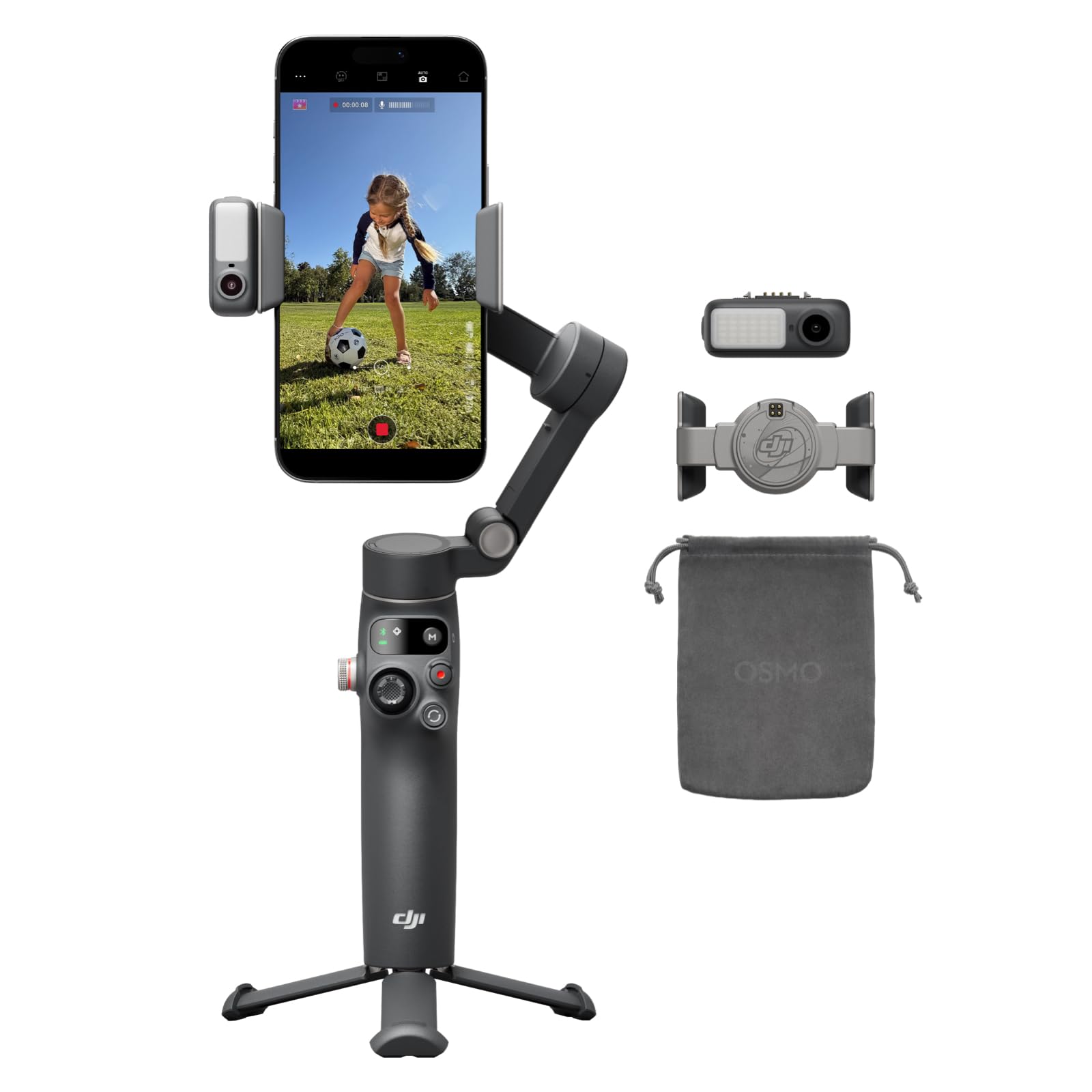
The DJI Osmo Mobile 8 delivers excellent value for content creators who need tracking, audio, and lighting in one package without carrying extra accessories.
Pros
- Integrated audio and lighting module eliminates the need for separate equipment
- Built-in extension rod and tripod mean less gear to pack
- 10-hour battery life easily handles full-day shoots
Cons
- DJI Mimo app requires manual download from the website instead of Google Play
- At 370 grams, it’s slightly heavier than basic gimbals
- Learning curve for utilizing all the advanced features
We recently used this gimbal for several vlog sessions and found the all-in-one design genuinely convenient. The fact that we didn’t need to attach external microphones or lights made setup remarkably quick.
The 360° rotation works smoothly for following action. We tested it while filming someone skateboarding, and the tracking kept our subject centered without manual adjustment. The extension rod proved useful for overhead angles we couldn’t achieve with our arms alone.
Battery performance lived up to expectations during a festival shoot. We filmed intermittently for about eight hours and still had power remaining. The phone charging feature saved us once when our device hit 15% during an important shot.
The three-axis stabilization handles walking footage well. Our clips came out steady even when we moved quickly through crowded spaces. Low-angle shots with the built-in tripod worked great for capturing ground-level perspectives without kneeling awkwardly.
We did find the multifunctional module with audio and lighting capabilities required some initial setup time. Once configured, though, switching between modes became straightforward. The magnetic phone clamp holds devices securely, and we never worried about drops.
The storage pouch keeps everything organized between shoots. Having all cables and accessories in one place simplified our packing routine. The folded size fits easily into a small camera bag.
Our Verdict: For creators seeking an integrated solution, we recommend the DJI Osmo Mobile 8 as our top choice because it combines stabilization, tracking, audio, and lighting without requiring additional purchases or complicated rigging setups.
DJI RS 3 Mini

The RS 3 Mini delivers exceptional stabilization in a compact package that works beautifully for mirrorless cameras up to 2 kg, making it ideal for travel creators who refuse to compromise on quality.
Pros
- Remarkably lightweight at 795g without sacrificing build quality or motor strength
- Intuitive touchscreen interface makes adjusting settings quick during active shoots
- Native vertical shooting mode switches effortlessly for social media content
Cons
- Initial balancing requires patience and careful attention to get right
- Limited payload capacity restricts use with larger full-frame setups and heavier lenses
- App download workaround needed since removal from Google Play complicates Android setup
We found the RS 3 Mini strikes an impressive balance between portability and performance. The gimbal slipped into our backpack easily, and we appreciated not feeling weighed down during a full day of shooting. When we mounted our Sony mirrorless camera, the motors handled the load smoothly without any wobbling or strain.
The third-generation stabilization algorithm performed admirably during our testing. We walked through crowded streets and captured low-angle shots, and the footage came out buttery smooth. Switching between normal and flashlight modes happened seamlessly, which saved us time when we needed to adapt quickly to changing scenes.
Bluetooth shutter control proved more useful than we expected. After the initial pairing, our camera reconnected automatically each time we powered up. We controlled recording starts and stops directly from the gimbal, which kept our workflow efficient and eliminated the need to reach for the camera body constantly.
The 1.4-inch touchscreen displayed settings clearly even in bright outdoor conditions. We navigated through menu options without any lag, and the interface felt logical after just a few minutes of use. Native vertical shooting worked flawlessly when we created content specifically for social platforms.
Balancing took longer than we hoped on our first attempt. We adjusted the camera position carefully and checked the bubble levels multiple times before achieving perfect equilibrium. Once we understood the process, subsequent setups went faster, but beginners should budget extra time for this learning curve.
The 2 kg payload limit means we couldn’t use our heavier lens combinations. Content creators with larger full-frame cameras and premium glass might find this restrictive. The gimbal handles mainstream mirrorless setups beautifully, but we had to be selective about which lenses we paired with our camera body.
Our Verdict: For creators prioritizing portability without sacrificing stabilization quality, we recommend the DJI RS 3 Mini as our top choice for travel and everyday shooting with mirrorless camera systems.
DJI Osmo Mobile 7P

The DJI Osmo Mobile 7P is an excellent choice for content creators who want professional stabilization with built-in tracking and lighting without carrying extra gear.
Pros
- The Multifunctional Module combines intelligent tracking, audio reception, and lighting in one compact attachment
- Magnetic phone mounting makes setup incredibly fast and the gimbal powers on automatically when unfolded
- Built-in extension rod and tripod eliminate the need for separate accessories
Cons
- The DJI Mimo app is no longer available on Google Play, requiring manual downloads from the DJI website
- At 368 grams, it’s heavier than some competing smartphone gimbals
- The 300-gram phone weight limit means you can’t use it with larger smartphones in heavy cases
We found the three-axis stabilization impressively smooth during our testing. The gimbal handled quick pans and walking shots without visible shake, delivering footage that looked professionally stabilized.
Setting up the Osmo Mobile 7P was refreshingly quick. We attached our phone to the magnetic clamp, unfolded the gimbal, and the Mimo app launched automatically. This saved us valuable time compared to other gimbals that require manual balancing.
The Multifunctional Module proved genuinely useful during outdoor shoots. We used the built-in LED light for fill lighting during golden hour, and the active tracking followed our subject reliably even during fast movements. The dual-lens tracking feature worked particularly well when filming someone walking toward the camera.
Battery life exceeded our expectations during a full day of filming. We got close to the advertised 10 hours with regular breaks, and the module can even charge your phone while you’re shooting. The built-in extension rod extended our framing options without adding bulk to our bag.
The storage pouch included with the gimbal fits everything neatly. We appreciated how compact it folds down, making it easy to slip into a small backpack between locations.
Our Verdict
For smartphone videographers seeking an all-in-one stabilization solution, the DJI Osmo Mobile 7P delivers excellent value with its integrated tracking module and thoughtful design features.
DJI Osmo Pocket 3 Creator Combo

This compact gimbal camera delivers exceptional stabilization and image quality for content creators who need professional results in a pocket-sized package.
Pros
- The 3-axis mechanical stabilization produces incredibly smooth footage even during fast movements and activities
- The rotating 2-inch touchscreen makes framing shots intuitive whether shooting horizontally or vertically
- ActiveTrack 6.0 keeps subjects centered automatically, which is particularly useful for solo content creation
Cons
- You’ll need to purchase a battery charger separately since one isn’t included in the box
- The DJI Mimo app isn’t available on Google Play, requiring a manual download from the DJI website
- Recording in 4K at 120fps is limited to Slow Motion mode only
We found the Osmo Pocket 3 surprisingly capable for its size during our testing. The 1-inch CMOS sensor captures detailed footage that holds up well in challenging lighting conditions, and we were impressed by how well it handled low-light scenarios at sunset.
The fast and accurate focusing system locked onto our subjects consistently throughout our shoots. Whether we were filming someone walking toward the camera or capturing quick movements, the autofocus rarely missed its mark. The addition of D-Log M and 10-bit color depth gives us substantial flexibility during post-production work.
What stands out most is how the integrated gimbal handles real-world movement. We walked, jogged, and even ran with this device, and the footage remained stable without the jittery motion typical of handheld shooting. The stereo recording captures clear audio that adds depth to our videos.
The Creator Combo bundle proved valuable since it includes the DJI Mic 2 transmitter. Having wireless audio built into the workflow eliminates the need for separate recording equipment. Battery life gave us around 166 minutes of shooting time, though charging to full capacity takes about 32 minutes with the appropriate charger.
The compact form factor means we can slip this into a jacket pocket between shots. Setup time is minimal since the device powers on ready to shoot. The included wide-angle lens expands our framing options when we need a broader field of view.
Our Verdict
For creators seeking professional stabilization in an ultra-portable package, we recommend the DJI Osmo Pocket 3 Creator Combo as our top choice for its combination of image quality, stabilization performance, and included wireless audio system.
DJI RS 5 Combo
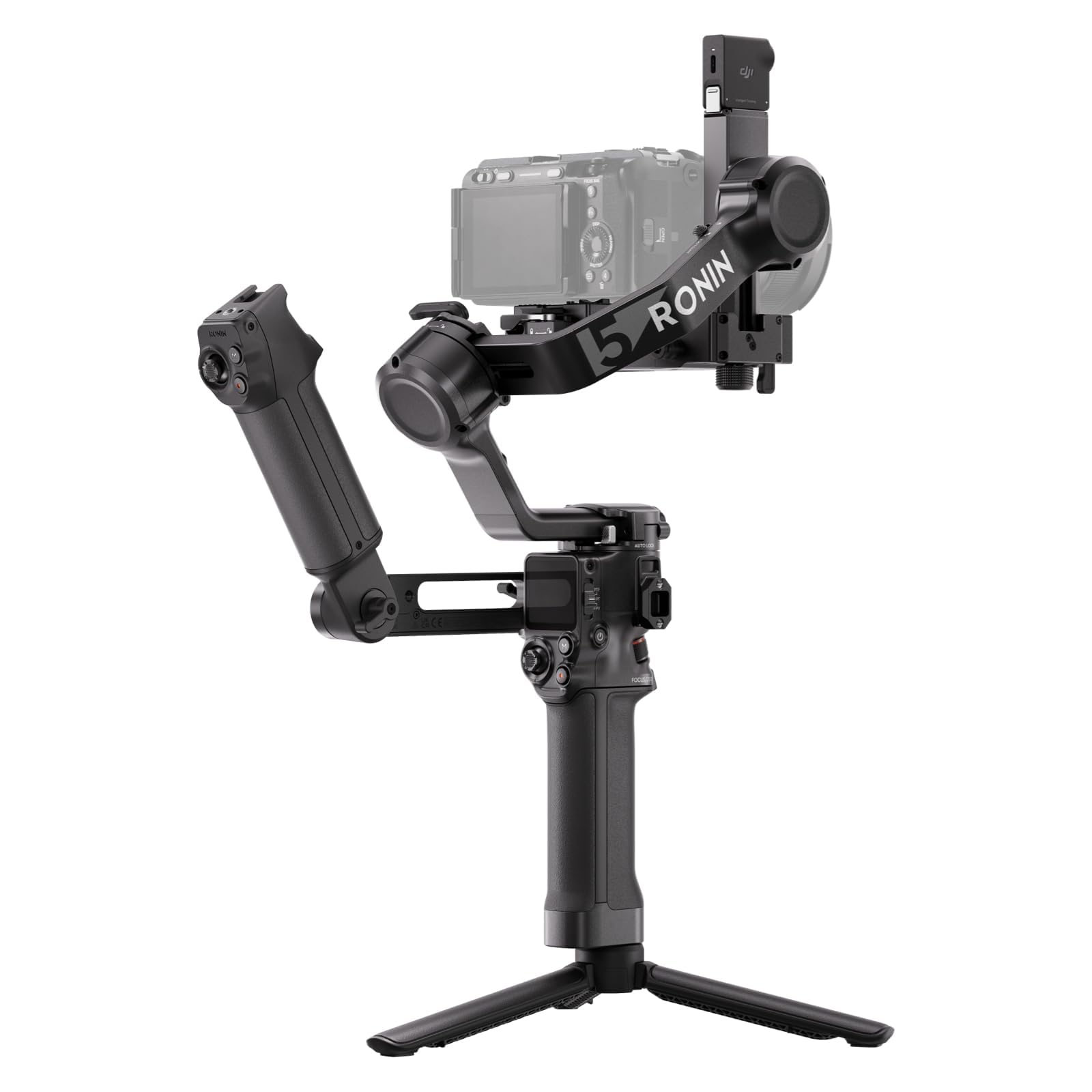
The DJI RS 5 Combo is worth purchasing if you need professional-grade stabilization with intelligent tracking capabilities, though it’s a modest upgrade if you already own recent DJI models.
Pros
- Fine-tuning knobs make balancing significantly faster and more precise than previous models
- Electronic briefcase handle enables comfortable one-handed operation for low-angle shots
- Charges fully in one hour and provides up to 14 hours of standby time
Cons
- Tracking module struggles with multiple people or pets moving quickly
- Not a dramatic improvement over the RS3 or RS4 for existing owners
- DJI Ronin app removed from Google Play requires manual download from website
We found the fine-tuning knobs to be the standout feature when setting up the DJI RS 5 Combo. Balancing our camera rig took half the time compared to older gimbals, and the Teflon interlayers created smoother adjustments.
The intelligent tracking module works well in controlled environments but has clear limitations. We tested it with a single subject walking outdoors, and it maintained focus reliably. However, when we tried tracking in a crowded space or with a pet darting around, the system lost its target frequently.
Battery performance exceeded our expectations during a full day shoot. We charged the unit during lunch and had plenty of power for evening shots. The new Z-axis indicator helped us adjust our walking technique for steadier footage, though it took some practice to interpret the visual feedback correctly.
The electronic briefcase handle transformed how we approached low-angle shots. Switching between standard and briefcase mode was seamless, and the integrated controls meant we didn’t need to reach for the main unit constantly. The second-generation automated axis locks saved us time during setup and teardown.
Build quality feels solid at 1.62 kilograms, though that weight becomes noticeable during extended handheld use. The carrying case kept everything organized between locations. The quick-open tripod deploys instantly, which proved useful when we needed to set down the gimbal quickly.
Our Verdict
For professional stabilization with advanced tracking, we recommend the DJI RS 5 Combo as our top choice for videographers who need reliable performance and faster workflow tools.
Buying Guide
When choosing a gimbal for your camera, we need to consider the weight capacity first. Each gimbal supports a specific payload range, so we must check if it can handle our camera body plus the lens and accessories we plan to use.
Key Features to Evaluate
Stabilization axes determine how smooth our footage will be. Three-axis gimbals provide stabilization on pan, tilt, and roll movements, offering the most stable results for professional work.
Battery life affects how long we can shoot without interruption. Most gimbals offer between 8-15 hours of runtime, but this varies based on our camera’s weight and how we balance the system.
Build quality and ergonomics matter for extended shooting sessions. We should look for comfortable handles, accessible controls, and durable materials that can withstand regular use.
Important Specifications
| Feature | What to Look For |
|---|---|
| Payload Capacity | Match to your camera setup weight |
| Battery Runtime | 8+ hours for full-day shoots |
| Stabilization | Three-axis for best results |
| Control Options | Easy-access buttons and joystick |
| Mounting Options | Quick-release plates |
Compatibility with our existing gear saves money and hassle. We should verify that the gimbal works with our camera model and accepts standard accessories like follow focus units or monitors.
The control system should be intuitive. Look for responsive joysticks, programmable buttons, and modes like sport, pan follow, or lock that suit different shooting scenarios.
Balance adjustment mechanisms affect setup time. Tool-free adjustments make balancing faster and easier when we switch between different camera configurations.
Frequently Asked Questions
Gimbal selection depends on camera type, experience level, payload requirements, and specific shooting scenarios. Budget constraints and compatibility with multiple devices also influence the decision-making process.
Which gimbal models work best with mirrorless cameras?
The DJI RS 3 Pro handles full-frame mirrorless cameras with larger lenses exceptionally well. Its 10-pound payload capacity accommodates setups like the Sony A7S III with a 24-70mm f/2.8 lens.
The Zhiyun Weebill 3 offers excellent compatibility with compact mirrorless systems. We find it particularly effective with cameras like the Canon R6 and Fujifilm X-T4.
For lighter mirrorless bodies, the DJI RS 3 Mini provides sufficient stabilization while reducing overall weight. It works perfectly with cameras like the Sony A6600 and Canon R10.
What should beginners look for when choosing a camera gimbal?
Simple controls and quick balancing systems make the learning curve less steep. The Zhiyun Crane M3 features an easy-to-use interface that new users can master within an hour.
Battery life matters because beginners often take longer to set up shots. We recommend models offering at least 12 hours of runtime to avoid mid-shoot interruptions.
Weight becomes a critical factor during extended shooting sessions. A gimbal under 2.5 pounds allows beginners to shoot comfortably without excessive arm fatigue.
How much payload capacity is needed for heavier camera and lens setups?
Cinema cameras with professional lenses require gimbals with 10-15 pound capacities. The DJI Ronin 4D supports configurations like the RED Komodo with cinema zoom lenses.
Full-frame DSLRs with 70-200mm f/2.8 lenses need at least 8-10 pounds of payload support. We always add a 20% buffer above the actual weight to ensure smooth operation.
For wildlife and sports photography setups exceeding 12 pounds, dual-handle gimbals provide better control. These configurations distribute weight more evenly across both arms.
Are gimbals worth buying for photography and video work?
Gimbals eliminate micro-jitters that handheld shooting cannot avoid. We’ve measured stabilization improvements of up to 90% compared to optical image stabilization alone.
For professional video work, gimbals pay for themselves within a few paid projects. The quality difference between gimbal-stabilized and handheld footage directly impacts client satisfaction.
Photography benefits less from gimbal use except in specific scenarios. Long-exposure panning shots and moving time-lapses show noticeable improvement with gimbal assistance.
Which gimbals can stabilize both a smartphone and a camera effectively?
The Zhiyun Crane M3 includes adapters for smartphones and action cameras alongside mirrorless camera support. We’ve tested it with an iPhone 15 Pro Max and a Sony A6400 with equal success.
The DJI OM 6 primarily targets smartphones but can mount lightweight action cameras. Its versatility makes it practical for content creators who switch between devices frequently.
Combination gimbals sacrifice some specialized features for versatility. Dedicated smartphone gimbals generally offer better app integration and tracking features.
What are the best options for stabilizing action cameras while moving?
The GoPro Karma Grip delivers seamless integration with GoPro cameras. Its splash-resistant design withstands light rain and ocean spray during outdoor activities.
The DJI Osmo Action 3 includes built-in stabilization that rivals mechanical gimbals. We find it produces smooth footage during mountain biking and skateboarding without additional equipment.
For chest-mounted and helmet perspectives, the Hohem iSteady Pro 4 accommodates various action camera brands. Its compact size doesn’t interfere with natural movement during extreme sports.
We recommend starting with the DJI RS 3 for its exceptional build quality and compatibility with most mirrorless camera systems. Its professional features and reliable performance make it suitable for both serious hobbyists and working professionals.

Trevor Fenner is an ecommerce entrepreneur and the founder of Ecommerce Paradise, a platform focused on helping entrepreneurs build and scale profitable high-ticket ecommerce and dropshipping businesses. With over a decade of hands-on experience, Trevor specializes in high-ticket dropshipping strategy, niche and product selection, supplier recruiting and onboarding, Google & Bing Shopping ads, ecommerce SEO, and systems-driven automation and scaling. Through Ecommerce Paradise, he provides free education via in-depth guides like How to Start High-Ticket Dropshipping, advanced training through the High-Ticket Dropshipping Masterclass, and fully done-for-you turnkey ecommerce services for entrepreneurs who want a faster, more hands-off path to growth. Trevor is known for emphasizing sustainable, real-world ecommerce models over hype-driven tactics, helping store owners build scalable, sellable, and location-independent brands.


