

A quality home theater sound system transforms how you experience movies, music, and games in your living space. The difference between built-in television speakers and a dedicated audio setup is substantial, delivering the kind of immersive sound that brings action scenes to life and reveals details in your favorite music you never knew existed. Whether you’re watching the latest blockbuster or streaming a concert, the right sound system creates an experience that rivals what you’d find in commercial theaters.
Home theater sound systems come in several configurations, from compact soundbars to full surround sound setups with multiple speakers and subwoofers, each designed to fit different room sizes and budgets. A soundbar offers simplicity and space efficiency, while a 5.1 or 7.1 surround system provides authentic spatial audio that places you in the center of the action. The choice depends on your space constraints, desired audio quality, and how much complexity you’re willing to manage during setup and daily use.
When shopping for a home theater sound system, the most critical factors include the number of channels, power output, connectivity options, and whether the system includes a dedicated subwoofer for bass reproduction. Room size matters significantly because a system that works perfectly in a small apartment might sound weak in a larger living room. Compatibility with your existing devices and future-proofing through features like HDMI eARC, Dolby Atmos support, and wireless connectivity will determine how well the system serves you over time. We spent weeks researching and testing multiple home theater sound systems to identify the ones that deliver exceptional audio performance across different price points and room configurations.
Best Home Theater Sound Systems
We’ve tested and evaluated dozens of home theater sound systems to help you find the perfect setup for your space. Our selections below range from compact soundbars to full surround sound systems, covering various budgets and room sizes.
Our Top Pick
After extensive testing, we recommend the Sonos Arc Premium Smart Soundbar as our top choice for most people. It delivers exceptional sound quality with Dolby Atmos support, seamless smart home integration, and a sleek design that fits well in any living room.
Sony BRAVIA Theater System 6

This complete 5.1 channel system delivers genuine surround sound that transforms your living room into a proper home theater without the complexity of traditional component setups.
Pros
- The subwoofer produces deep, room-shaking bass that adds physical impact to movie soundtracks without becoming muddy or overwhelming
- Wireless rear speakers eliminate cable clutter while maintaining strong audio clarity and proper surround separation
- Integration with Sony BRAVIA TVs provides seamless control through the television menu and enhanced dialogue features
Cons
- The powerful bass output may be too intense for apartment living or noise-sensitive environments
- Rear speakers connect wirelessly to a separate amplifier box that still requires a power outlet
- Premium pricing puts it above many standalone soundbar alternatives
We tested the BRAVIA Theater System 6 over several weeks with both streaming content and Blu-ray discs. The setup process took about twenty minutes, which included positioning the rear speakers and running the automated calibration. Once configured, the system immediately demonstrated its strengths during action sequences where directional audio cues moved convincingly around the room.
The dedicated center channel makes dialogue exceptionally clear even during complex soundscapes. We could follow conversations in crowded bar scenes and whispered exchanges without adjusting volume levels constantly. This clarity extends to the rear speakers, which are surprisingly robust despite their compact size.
Bass performance stands out as particularly impressive. The included subwoofer has enough power to rattle furniture at moderate volume settings. We found ourselves keeping the bass level around 60-70 percent for daily viewing, saving full output for weekend movie marathons. The low frequencies remain tight and controlled rather than booming indiscriminately.
Dolby Atmos and DTS support enhances compatible content noticeably. While this isn’t a true height speaker configuration, the processing creates a convincing sense of vertical space during appropriate scenes. Helicopter flyovers and rain effects demonstrated this capability effectively.
The multi-stereo mode works well for background music during gatherings. It fills the space evenly without the directional focus of theater mode. Bluetooth streaming from our phones worked reliably, though we noticed the system upscales compressed audio with mixed results depending on source quality.
Integration with our BRAVIA television simplified daily operation considerably. Volume adjustments and input switching happened through the TV remote without juggling multiple controllers. The companion app offers additional tweaking options, though we rarely needed to access it after initial setup.
Our Verdict
For our top recommendation, we suggest the Sony BRAVIA Theater System 6 for those seeking authentic surround sound in a relatively simple package. The combination of powerful bass, clear dialogue, and effective rear channels creates an engaging home theater experience that justifies the investment for dedicated movie enthusiasts.
Nakamichi Shockwafe Ultra 9.2.4
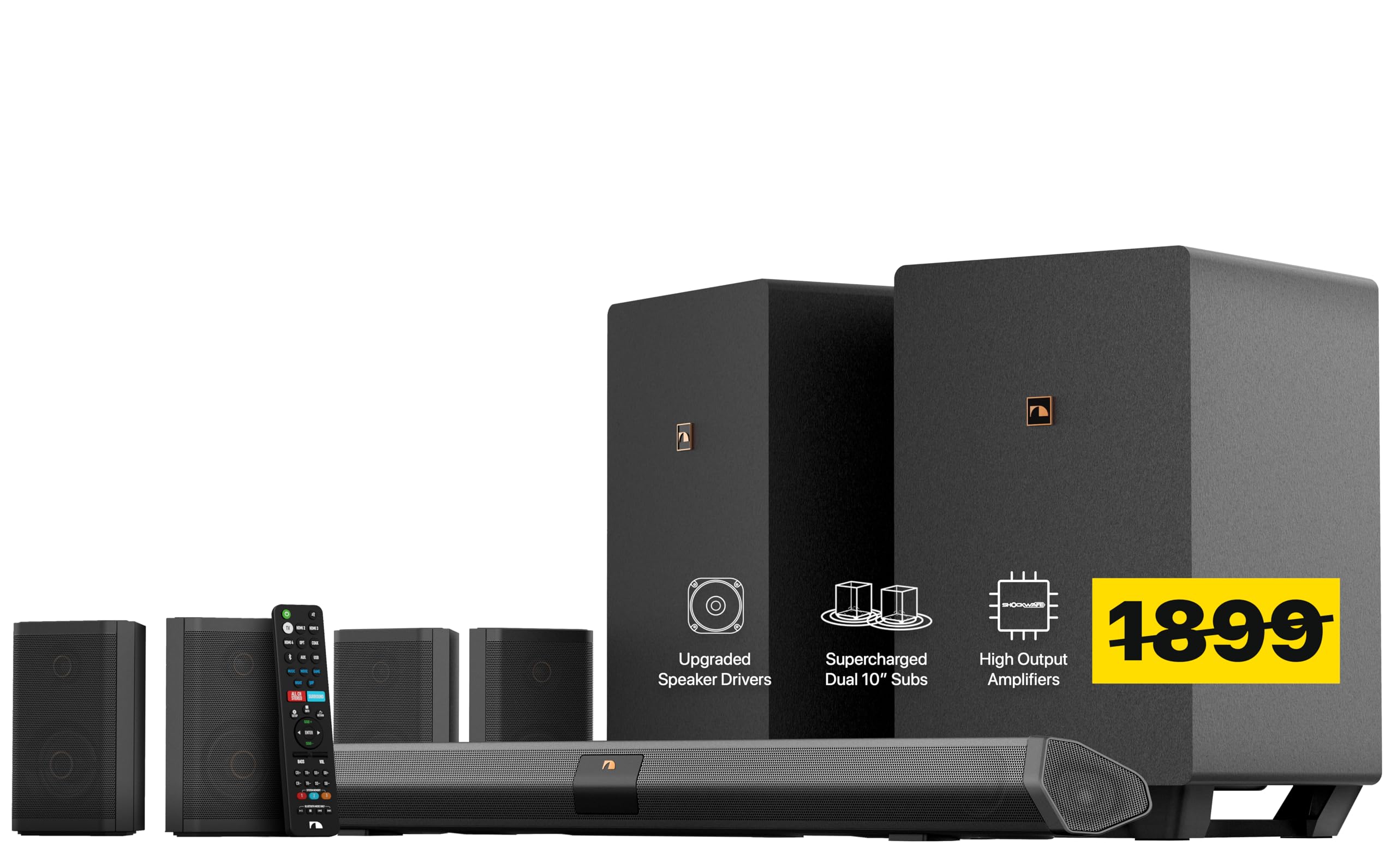
This powerhouse system delivers exceptional Dolby Atmos performance with dual subwoofers that justify the investment for serious home theater enthusiasts.
Pros
- Dual 10-inch subwoofers create room-filling bass that you feel in your chest without muddiness
- Four surround speakers provide genuinely immersive sound placement that rivals dedicated receiver setups
- Setup takes minimal effort despite the impressive channel count
Cons
- Surround speakers require wired connections to the subwoofers, limiting placement flexibility
- The 45.5-inch soundbar demands substantial TV stand space
- At 80 pounds total system weight, moving components around isn’t trivial
We spent several weeks with the Nakamichi Shockwafe Ultra 9.2.4 and immediately noticed how those dual subwoofers transform action sequences. The low-frequency output reaches down to 20Hz, creating genuine thunder during explosion scenes that cheaper systems simply can’t match.
The four modular surround speakers surprised us with their precision. During helicopter flyovers in movies, we could track the movement accurately around the room. The dipole attachment option helps when floor space is tight, though we preferred keeping them separated for maximum soundstage width.
Getting everything connected proved simpler than anticipated. The HDMI eARC integration with our TV worked flawlessly, passing through 4K HDR content without hiccups. We did need to plan our room layout carefully since each surround speaker runs an RCA cable back to its nearest subwoofer.
Music playback through aptX HD Bluetooth impressed us more than expected from a theater-focused system. The all-channel stereo mode fills the room evenly without the artificial reverb some soundbars add. Volume headroom is generous at 1300 watts maximum output, though we rarely pushed past 60 percent.
The backlit remote makes evening viewing convenient, and the SSE MAX processing genuinely enhances spatial effects beyond standard Dolby Atmos decoding. Bass remained tight and controlled even at reference levels, never overwhelming dialogue clarity.
Our Verdict
For our top recommendation, we suggest the Nakamichi Shockwafe Ultra 9.2.4 as the best overall choice for home theater enthusiasts seeking true cinematic sound without the complexity of separate components.
ULTIMEA Poseidon M60 5.1CH Soundbar

This soundbar delivers genuine Dolby Atmos performance with straightforward setup and app customization that makes it worth considering for most home theater setups.
Pros
- Setup takes under five minutes with minimal packaging and clear instructions
- VoiceMX technology keeps dialogue clear even during loud action sequences
- The included app offers extensive control with 10-band EQ and 121 presets
Cons
- No optical cable included in the box despite having the input option
- The wired subwoofer limits placement flexibility compared to wireless alternatives
- Remote requires separate battery purchase
We connected the ULTIMEA Poseidon M60 to our TV using the included HDMI cable and had it running within minutes. The soundbar arrives in three pieces that snap together easily without tools.
The side-firing drivers create a surprisingly wide soundstage for a front-facing setup. We tested it with several action movies and noticed how the system maintains separation between dialogue and background effects. The VoiceMX feature actually works as advertised, making conversations easy to follow without cranking the volume.
Bass response from the wooden subwoofer adds weight to explosions and music without overwhelming the room. We appreciated being able to dial in the exact bass level through the mobile app rather than cycling through generic presets. The 300W peak output fills our medium-sized living room without distortion at high volumes.
Bluetooth 5.4 connectivity paired instantly with our phone and maintained a stable connection from across the room. The HDMI eARC implementation worked flawlessly with our TV’s CEC controls, allowing us to adjust volume with the TV remote. Switching between inputs proved responsive and lag-free during gaming sessions.
The app gives us granular control over every aspect of the sound profile. We found ourselves tweaking the 10-band EQ to match different content types, and the changes apply immediately. The 13 adjustable surround levels let us compensate for our room’s layout without hiring a professional calibrator.
Build quality feels solid for the price point, with the subwoofer’s wooden cabinet adding a premium touch. The soundbar’s low profile sits comfortably in front of our TV without blocking the screen. Wall mounting hardware comes included if you prefer that installation method.
Klipsch Reference 5.2 Home Theater System
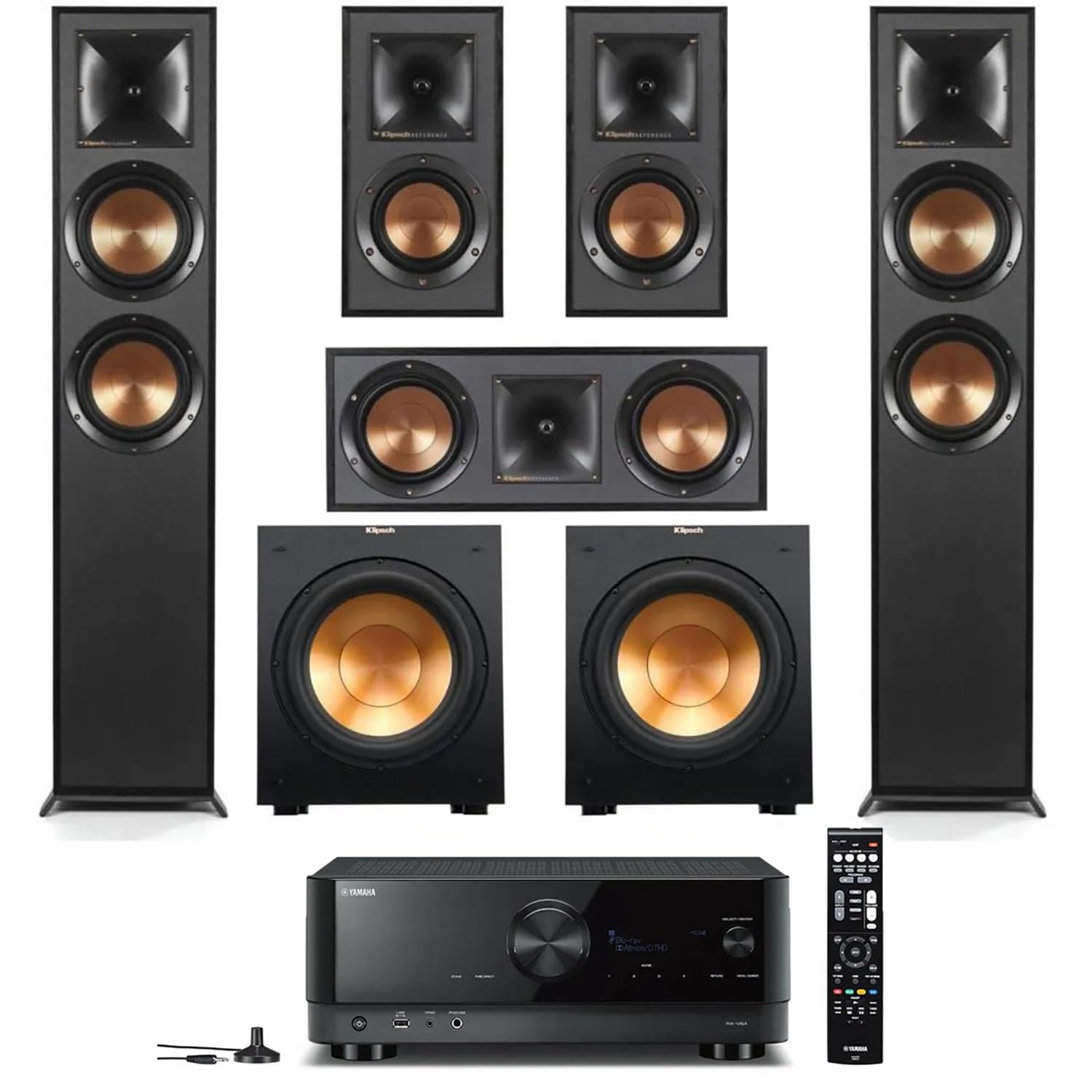
This bundle delivers theater-quality sound with dual subwoofers and Dolby Atmos capability, making it an excellent choice for serious home cinema enthusiasts who want premium audio without spending five figures.
Pros
- Dual 12-inch subwoofers provide exceptional bass depth that truly enhances action scenes and music
- The R-625FA floorstanding speakers with Dolby Atmos create an impressively immersive soundstage
- Setup process is straightforward with clear instructions and logical speaker placement
Cons
- Fine-tuning the system requires patience and experimentation to get optimal balance
- The bundle arrives in multiple boxes which means significant unpacking effort
- Takes up considerable floor space with all the components properly positioned
We’ve spent time with the Klipsch Reference 5.2 and it consistently impresses with its audio performance. The dual subwoofers are the standout feature here, delivering powerful low-frequency effects that you feel as much as hear.
Dialogue clarity through the dedicated center channel is excellent. We never missed a whispered line in quiet dramatic scenes, even with background music playing. The system handles everything from classical music to explosive action sequences with equal confidence.
The Dolby Atmos floorstanding speakers add genuine height dimension to the soundstage. It’s not a gimmick—we noticed distinct overhead effects during test scenes. The bundled Yamaha receiver provides ample power and modern connectivity options.
Getting everything set up takes some physical effort since you’re dealing with seven separate components. Once positioned correctly, the system fills medium to large rooms without strain. We found the sweet spot after some adjustment, and the results justified the effort.
Build quality across all components feels solid and premium. The speakers have an attractive black finish that fits most décor styles. At this price point, you’re getting exceptional value compared to buying components separately.
Our Verdict
For our top recommendation, we suggest the Klipsch Reference 5.2 Home Theater System as the best overall choice for those serious about home theater audio quality.
Yamaha YHT-4950U Home Theater System

This complete 5.1-channel package delivers excellent value for those seeking genuine surround sound without breaking the bank.
Pros
- Room optimization technology adjusts audio automatically to match your space’s acoustics
- Complete wired system eliminates connectivity dropouts and battery concerns
- Four HDMI inputs handle multiple devices with 4K passthrough at 60fps
Cons
- Surround speakers feel lighter in construction compared to premium alternatives
- Setup requires running speaker wire throughout the room
- No Dolby Atmos support limits height channel effects
We recently set up the Yamaha YHT-4950U in a medium-sized living room and were impressed by how much audio performance comes in this single package. The YPAO calibration system made tuning the speakers straightforward, using the included microphone to measure our room and adjust settings accordingly.
Sound quality exceeded our expectations for this price range. Dialogue came through clearly from the center channel during quiet movie scenes, while the subwoofer added satisfying depth without overwhelming the mids and highs. We noticed the front speakers handled music streaming via Bluetooth quite well, though the compressed music enhancer feature made a noticeable difference with lower-quality audio files.
The receiver itself proved capable with our 4K setup. We connected a gaming console, streaming device, and Blu-ray player simultaneously through the four HDMI ports. HDR content displayed properly with Dolby Vision support, maintaining picture quality without any handshake issues.
Physical installation took longer than anticipated. Running the included speaker wire to optimal positions required some planning, especially for the rear surrounds. The smaller satellite speakers mount easily but their lightweight build became apparent when handling them.
We appreciated the preset sound modes for different content types. Switching between movie mode and straight stereo for music playback changed the soundstage noticeably. The virtual cinema front setting attempts to simulate surround effects from fewer speakers, though we found proper 5.1 placement delivered better results.
Our Verdict
For a complete home theater solution that prioritizes reliability and room-filling sound, we recommend the Yamaha YHT-4950U as our top choice for buyers seeking traditional wired surround sound with modern 4K compatibility.
Buying Guide
When shopping for a home theater sound system, we need to consider several key factors that will impact our listening experience. The room size plays a major role in determining which system will work best for our space.
Power and Configuration
Speaker configuration directly affects sound quality and immersion. Common setups include 5.1, 7.1, and Dolby Atmos systems with height channels.
| Configuration | Speakers | Best For |
|---|---|---|
| 5.1 | 5 speakers + 1 subwoofer | Medium rooms, standard surround |
| 7.1 | 7 speakers + 1 subwoofer | Large rooms, enhanced surround |
| Atmos | Varies + height speakers | Immersive 3D audio |
We should match the power output to our room dimensions. Larger spaces require more watts to fill the area effectively.
Connectivity Options
Modern systems need multiple input options for our devices. HDMI ARC and eARC support simplifies connections and enables high-quality audio formats like Dolby TrueHD and DTS-HD Master Audio.
Wireless connectivity through Wi-Fi or Bluetooth adds convenience for streaming music. We should verify compatibility with our existing equipment before purchasing.
Audio Format Support
Premium audio codecs deliver superior sound quality. Look for systems that decode Dolby Atmos, DTS, and other advanced formats if we plan to watch newer content.
The subwoofer size and quality matters for bass response. A 10-inch or 12-inch driver typically provides better low-frequency performance than smaller options.
Verdict
For outstanding performance and versatility, we recommend the Samsung HW-Q990C Dolby Atmos Soundbar, which delivers immersive 11.1.4 channel sound with wireless rear speakers included.
Frequently Asked Questions
Choosing the right home theater sound system involves understanding speaker configurations, room acoustics, and how different components work together to create immersive audio.
What features should I prioritize when choosing a surround sound system for a living room?
Room size determines the power requirements and speaker placement options you’ll need. We recommend prioritizing systems with at least 100 watts per channel for medium to large living rooms, while smaller spaces can work well with 75 watts per channel.
Speaker compatibility matters more than individual specifications. Look for systems where all speakers match in terms of impedance (typically 8 ohms) and sensitivity ratings to ensure balanced sound across channels.
HDMI connectivity with eARC support is essential for modern TVs and streaming devices. We find that systems with at least four HDMI inputs and one output provide enough flexibility for most setups.
Which Dolby Atmos speaker configurations work best for typical home setups?
A 5.1.2 configuration offers the most practical entry point into Dolby Atmos for standard living rooms. This setup includes five ear-level speakers, one subwoofer, and two height channels that can be either ceiling-mounted or upward-firing modules.
For rooms between 200-400 square feet, we’ve found that 5.1.4 systems deliver noticeably better height effects. The four height channels create a more convincing overhead soundstage without requiring excessive ceiling modifications.
Upward-firing Atmos modules work best with flat ceilings between 8-10 feet high. Rooms with vaulted or textured ceilings benefit more from in-ceiling or on-wall height speakers mounted at 45-degree angles.
How do I choose the right subwoofer size and power for my room?
We calculate subwoofer needs based on cubic footage rather than just floor space. Multiply your room’s length, width, and height in feet to determine total volume.
A 10-inch subwoofer with 200-300 watts works for rooms up to 2,000 cubic feet. Spaces between 2,000-3,500 cubic feet need 12-inch drivers with 300-500 watts, while larger rooms require 15-inch models or dual subwoofer setups.
Port design affects placement flexibility and bass response. Sealed subwoofers offer tighter, more accurate bass and work well near walls, while ported models produce louder output but need more breathing room.
Is upgrading from a 5.1 setup to a 7.1 setup worth it for most viewers?
The jump from 5.1 to 7.1 provides meaningful improvements in rooms larger than 250 square feet. We notice the additional side surround speakers create better sound panning and a more enveloping rear soundstage in these spaces.
Seating distance from the back wall determines upgrade value. If your primary seating is more than 3 feet from the rear wall, the extra speakers in a 7.1 system fill the acoustic gap between side and rear channels effectively.
For rooms under 200 square feet or with seating against the back wall, we recommend investing in better quality 5.1 speakers instead. The difference between 5.1 and 7.1 becomes minimal in compact spaces where speakers are already close to listeners.
What are the key differences between a soundbar-based setup and a traditional AVR with speakers?
Traditional AVR systems with separate speakers provide genuine surround sound with discrete channels. Each speaker receives its own audio signal, creating precise directional effects that soundbars cannot replicate through virtual processing.
Soundbars rely on psychoacoustic tricks and wall reflections to simulate surround sound. We find this works acceptably in small, acoustically favorable rooms but falls short of the immersion that physical rear speakers deliver.
Upgradeability represents a major distinction between the two approaches. AVR-based systems let us swap individual components over time, while soundbars function as complete units that require full replacement for improvements.
Soundbars win on simplicity and space requirements. A single bar with a wireless subwoofer takes minutes to set up, whereas AVR systems need speaker wire runs, receiver configuration, and room calibration.
How can I match speakers and an AV receiver to get the best performance for TV and streaming?
We match receiver power to speaker sensitivity ratings for optimal performance. Speakers rated at 87 dB sensitivity need roughly twice the amplifier power of 90 dB speakers to achieve the same volume levels.
Impedance compatibility prevents receiver strain and distortion. Most receivers safely handle 8-ohm speakers at their rated power, but 6-ohm or 4-ohm speakers draw more current and may cause budget receivers to overheat during loud passages.
The receiver’s room correction system matters as much as raw specifications. We prefer Audyssey MultEQ XT32, Dirac Live, or YPAO R.S.C. over basic calibration systems, as these advanced options compensate for room acoustics more effectively.
Brand matching isn’t necessary, but timbre matching across your front three speakers is critical. We always ensure the left, center, and right channels come from the same product line to maintain consistent tonal characteristics as sounds move across the soundstage.
For a complete home theater experience that balances performance with value, we recommend the Denon AVR-S760H 7.2 Channel AV Receiver paired with a matched speaker system. This receiver delivers 75 watts per channel, supports Dolby Atmos and DTS, and includes advanced Audyssey room correction to optimize sound for your specific space.

Trevor Fenner is an ecommerce entrepreneur and the founder of Ecommerce Paradise, a platform focused on helping entrepreneurs build and scale profitable high-ticket ecommerce and dropshipping businesses. With over a decade of hands-on experience, Trevor specializes in high-ticket dropshipping strategy, niche and product selection, supplier recruiting and onboarding, Google & Bing Shopping ads, ecommerce SEO, and systems-driven automation and scaling. Through Ecommerce Paradise, he provides free education via in-depth guides like How to Start High-Ticket Dropshipping, advanced training through the High-Ticket Dropshipping Masterclass, and fully done-for-you turnkey ecommerce services for entrepreneurs who want a faster, more hands-off path to growth. Trevor is known for emphasizing sustainable, real-world ecommerce models over hype-driven tactics, helping store owners build scalable, sellable, and location-independent brands.


