



Running a high-ticket dropshipping business does not require a dedicated office. A lot of the work, supplier calls, ad account checks, customer service replies, happens from whatever corner of the apartment or spare bedroom has room for a laptop. On Ecommerce Paradise I mostly write about the business side of that. If you are still working out the model itself, my complete guide to high-ticket dropshipping is the place to start. This guide is about the physical setup: small desks that fit apartments, bedrooms, or compact home offices without overwhelming the space.
Small desks offer a practical solution for creating a dedicated workspace when you don’t have a spare room to convert into an office. These space-efficient pieces provide enough surface area for your laptop and essentials while leaving room to move around comfortably.
When selecting a small desk, the dimensions matter most. You need to measure your available floor space and consider what you’ll place on the desk surface. A desk that’s too shallow won’t accommodate your monitor at a comfortable viewing distance, while one that’s too narrow might not fit your keyboard and mouse properly. Material quality also plays a role in durability and stability, especially if you plan to use the desk daily for work.
I spent weeks researching and testing fifteen small desks to identify the ones that maximize functionality without sacrificing valuable floor space.
This post contains affiliate links, including Amazon Associate links. If you purchase through them, I may earn a commission at no extra cost to you.
Build a Workspace That Matches the Business You’re Building
A small desk is a small piece of a much bigger setup. Get the free niches list to lock down what you’ll actually be selling from that desk.
Best Small Desks for Home Office
I’ve tested and evaluated dozens of compact desks to find options that maximize functionality without sacrificing valuable floor space. My selections below include desks suitable for tight corners, small apartments, and home offices where every square foot counts.
DUMOS 47 Inch Computer Desk
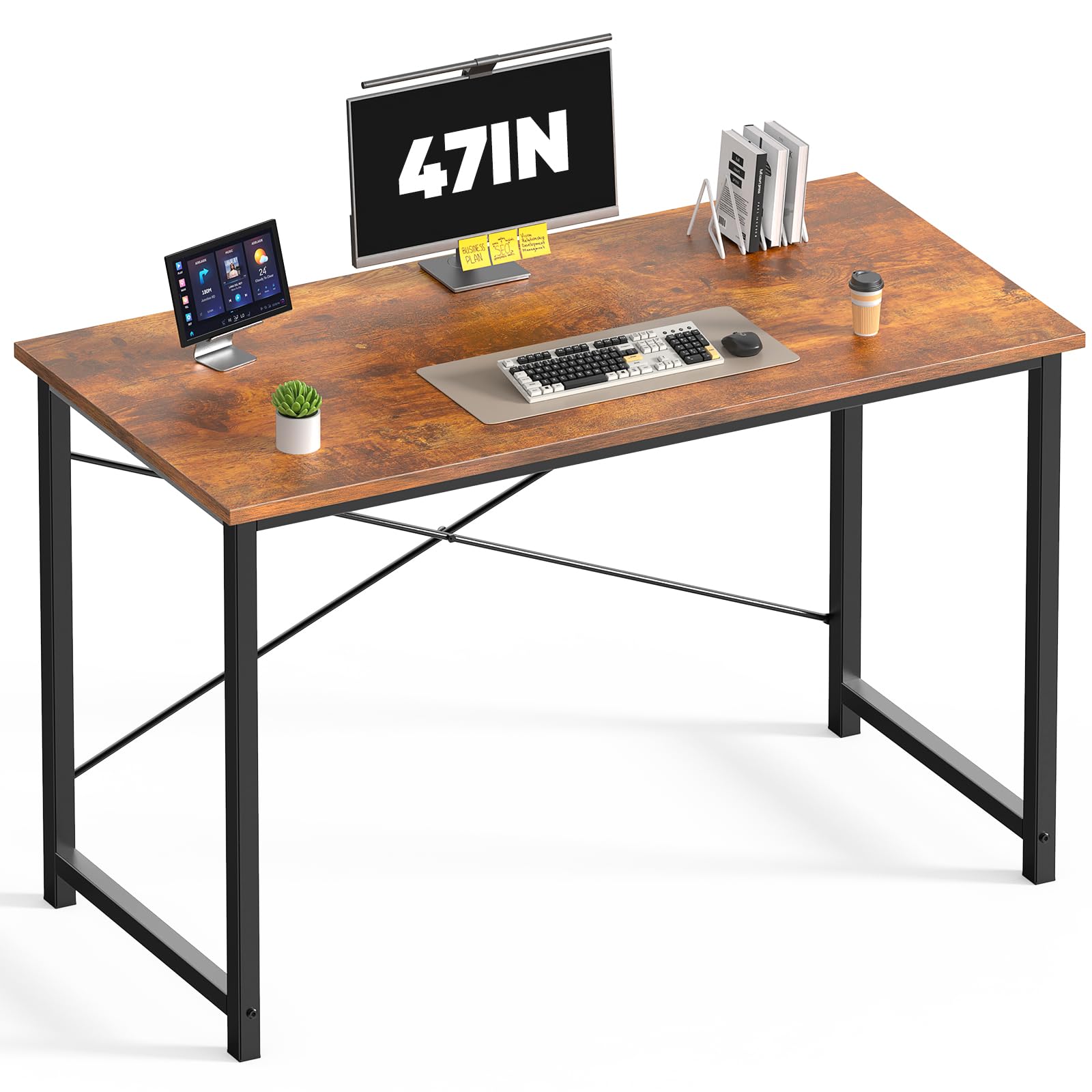
This desk delivers solid value for anyone needing a reliable workspace without spending a fortune.
Pros
- The X-shaped center brace eliminates wobbling and keeps the surface stable during typing or writing
- Assembly takes only minutes with all necessary tools included in the package
- The water-resistant surface handles accidental coffee spills without damage
Cons
- The narrow 19.69-inch depth feels cramped when using a full-sized monitor with additional desk accessories
- Instructions could be more detailed, though assembly remains straightforward
- Not ideal for dual monitor setups or anyone who needs extra workspace for spreading out materials
I found the DUMOS 47 Inch Computer Desk impressively stable once assembled. The X-brace reinforcement makes a noticeable difference compared to cheaper desks I’ve tested that develop annoying wobbles after a few weeks of use.
The wood brown finish looks polished and modern without appearing cheap. I appreciated how the metal frame supports heavier equipment comfortably, whether that’s a desktop computer or stacked reference materials.
Assembly was genuinely quick. Everything lined up properly, and I had the desk ready in about 15 minutes. The included wrench worked fine, though I switched to my own screwdriver halfway through purely out of preference.
The 47-inch length provides adequate room for a laptop and some paperwork, but the shallow depth became limiting when I tried adding a desk lamp and storage containers. I had to be selective about what stayed on the surface. For basic laptop work or a single monitor setup, the dimensions work well enough for compact home offices or bedrooms.
Huuger Folding Desk

This desk delivers excellent value if you need a workspace that disappears when not in use, though you’ll need to spend about 20 minutes assembling it first.
Pros
- Collapses to just 2.76 inches thick for storage behind doors or under beds
- The 18.9-inch depth provides enough room for a laptop and notebooks without feeling cramped
- Weighs little enough that moving it between rooms takes minimal effort
Cons
- Arrives unassembled rather than pre-built and folded
- Assembly process requires manual dexterity with screws and bolts
- The lightweight construction may feel less substantial than permanent desk options
I found the Huuger Folding Desk surprisingly functional for its compact footprint. The desktop gives me enough space to work comfortably without overwhelming a small bedroom or apartment corner. When I tested the folding mechanism, it operated smoothly and the desk slid easily into storage.
The X-frame support system kept my workspace stable during typing and writing tasks. I appreciated the curved desktop edges, which made extended work sessions more comfortable on my wrists. The rustic brown finish looks decent and matches various decor styles without calling too much attention to itself.
Setup took me about 25 minutes using the included tools and instructions. While I wish it had arrived pre-assembled, the process wasn’t overly complicated. The desk holds my laptop, a notebook, and a coffee mug without wobbling or feeling crowded, which covers my basic home office needs.
Sweetcrispy 32-Inch Computer Desk
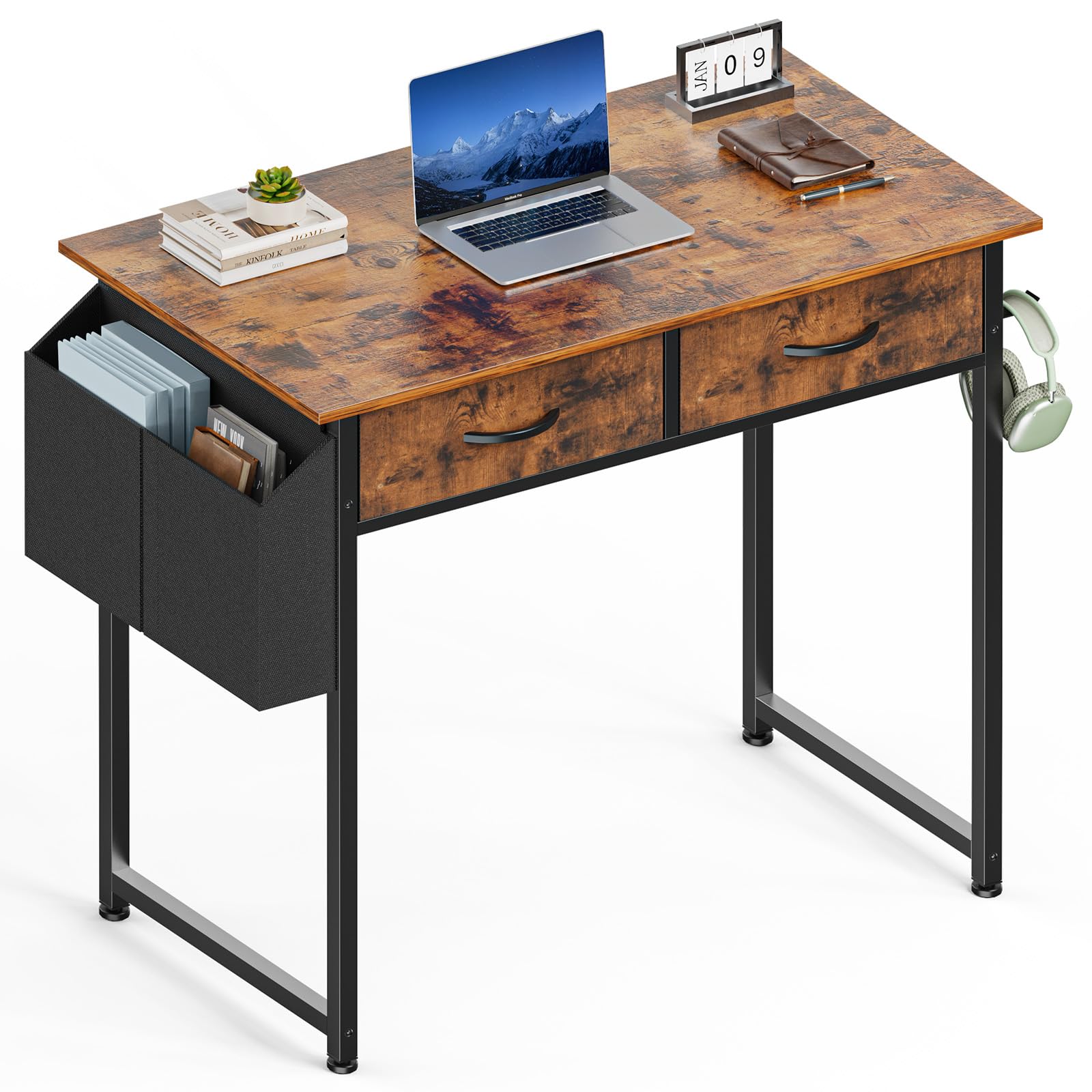
This compact desk offers solid value for tight spaces, combining practical storage with a surprisingly sturdy build at an affordable price point.
Pros
- Assembly process takes around 30 minutes with clear instructions and all tools included
- Fabric drawers and side accessories keep small items organized without taking up desktop space
- Metal frame provides excellent stability despite the compact footprint
Cons
- Surface area limits multi-monitor setups or extensive spreading of materials
- Fabric drawers feel less premium compared to the solid metal and wood construction
- Quality control issues occasionally result in damaged corners upon delivery
I found the Sweetcrispy 32-Inch Computer Desk to be impressively stable for its size. The metal legs don’t wobble during typing, and the desk holds my monitor and laptop without any concerns about weight distribution.
The fabric drawers slide in and out smoothly enough for daily use. I appreciated having dedicated spots for headphones and cables rather than cluttering the work surface. The side bag hook adds another layer of functionality that genuinely helps with organization.
At just over 32 inches wide, this desk fits perfectly in dorm rooms, small bedrooms, or corner office spaces. The rustic brown finish looks more expensive than the price suggests, though I noticed the wood-look surface shows fingerprints easily. Regular wiping keeps it looking fresh.
The 15.7-inch depth means you’ll need to position your monitor carefully to maintain comfortable viewing distance. I managed fine with a single 24-inch display, but dual monitors would require creative mounting solutions. The compact dimensions work well for focused tasks like writing or gaming with a laptop setup.
Assembly went smoothly with one person completing it in about half an hour. Everything lined up properly, and the included hardware fit without forcing anything. The adjustable feet came in handy for leveling on my slightly uneven floor.
HUANUO 32″ Electric Standing Desk
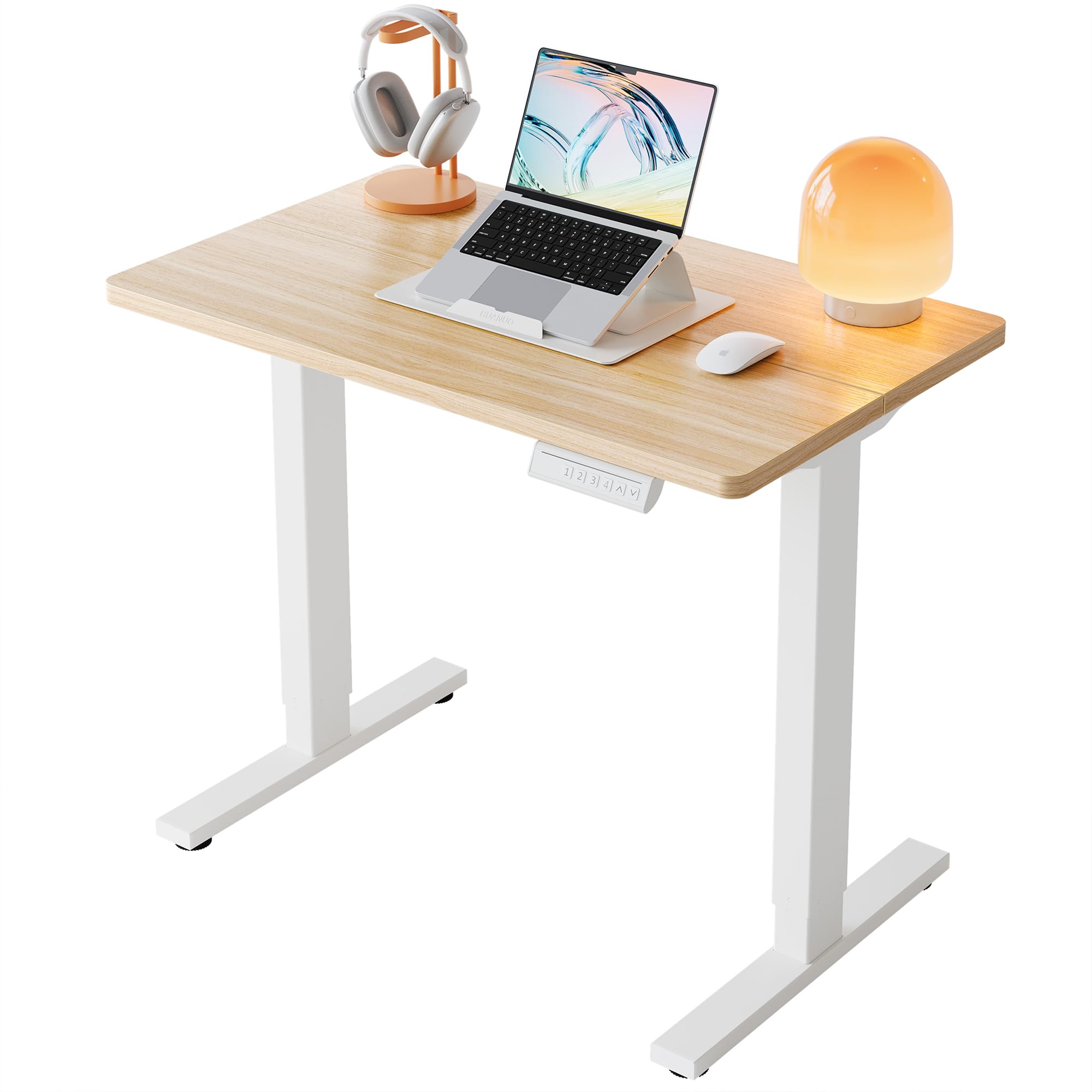
This compact electric standing desk works well for tight home office spaces where you need sit-stand functionality without sacrificing too much floor space.
Pros
- Electric height adjustment with four programmable presets eliminates manual cranking and remembers your preferred positions
- Compact 32″ x 19″ footprint fits into small rooms and corners without overwhelming the space
- Assembly process is straightforward with clear instructions and minimal heavy lifting required
Cons
- Two-piece desktop construction creates a visible seam down the middle that you can feel when writing
- Stability decreases noticeably at standing height, especially on carpeted floors where wobbling becomes apparent
- Desktop thickness of 0.5 inches feels thin compared to premium standing desks and may flex under heavier loads
I appreciated how quickly the desk transitions between sitting and standing positions. The motor operates quietly, and the four memory presets genuinely save time throughout the workday when switching positions. Tapping a button beats manually adjusting the height every single time.
The 32-inch width provides just enough surface area for a laptop and monitor without feeling cramped. I found it worked well for single-monitor setups, though dual monitors would push the limits. The light walnut finish looks modern and blends nicely with most home office decor.
Assembly took me about 30 minutes working alone. The instructions were clear, though the motor calibration step felt unclear at first. Everything functioned properly once I completed setup, and the desk handled daily use without issues.
The two-piece desktop surprised me initially. The seam runs horizontally across the middle, and while it doesn’t affect keyboard use, I noticed it when taking notes by hand. A desk mat covers this completely if the gap bothers you.
At standing height on carpet, the desk wobbles when I type aggressively or lean on it. Hard floors provide much better stability. The steel frame feels solid overall, but the physics of elevation and surface interaction create movement. I tested it with a monitor arm and 27-inch display, which it supported without excessive shaking on hard flooring.
The 154-pound weight capacity handles typical home office equipment comfortably. I loaded it with a desktop computer, two monitors, and accessories without concern. The scratch-resistant surface held up well against daily wear during my testing period.
QZMDSM Portable Rolling Desk
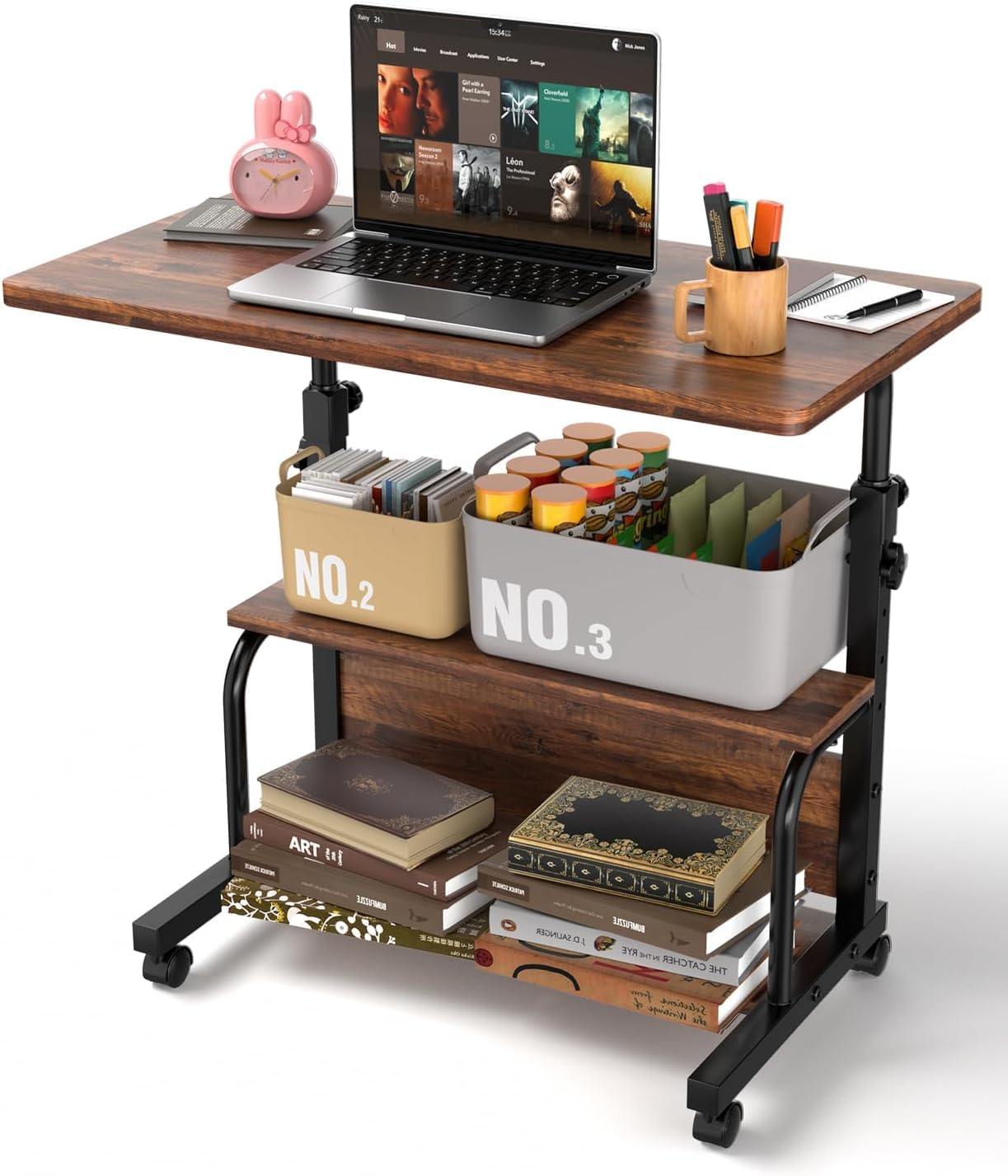
This compact rolling desk delivers solid value for anyone needing a mobile workspace in tight quarters, though build quality requires careful assembly.
Pros
- Height adjustment from 28 to 35.4 inches lets me work sitting or standing without buying separate furniture
- Rolling casters make repositioning effortless at just 15 pounds total weight
- Three-tier shelving provides surprising storage capacity for books and office supplies in a small footprint
Cons
- Wood material feels less premium than I’d prefer and requires gentle handling during assembly
- Screws need precise tightening since over-torquing causes the frame to creak
- Stability decreases noticeably when adjusted to maximum height with heavier items on top
I assembled the QZMDSM Portable Rolling Desk in my home office and found the process genuinely quick. The included tools worked fine, and I had everything together in under ten minutes. The rustic brown finish matched my existing furniture better than expected for a budget option.
The adjustable height feature became my favorite aspect during daily use. I cranked it up when my back needed a break from sitting, then lowered it back down for focused typing sessions. Moving between rooms was simple thanks to the smooth-rolling wheels, which didn’t scratch my hardwood floors.
Storage proved more useful than I anticipated. The three shelves held my reference books, a small printer, and various office supplies without sagging. I appreciated having everything within arm’s reach instead of scattered across multiple surfaces.
The 31.5-inch width accommodates a laptop and mouse comfortably but feels cramped with a full-sized keyboard and monitor. I noticed some wobble at the highest setting, especially when typing vigorously. The waterproof surface cleaned easily with a damp cloth after coffee spills.
For the price point, this desk serves small spaces well. I wouldn’t recommend it for heavy-duty work with multiple monitors, but it handles everyday laptop tasks without issue.
Buying Guide
When selecting a small desk for your home office, dimensions are your starting point. Measure your available space carefully and leave at least 30 inches of clearance around the desk for comfortable movement.
Size and Space Requirements
Small desks typically range from 30 to 48 inches wide. Consider your work setup before buying. A desk that’s 36 inches wide accommodates a laptop and notebook, while 48 inches fits a monitor, keyboard, and additional accessories.
Essential Features to Consider
| Feature | What to Look For |
|---|---|
| Desktop Surface | Minimum 24 inches deep for comfortable workspace |
| Weight Capacity | At least 50 pounds for standard office equipment |
| Height | 28-30 inches for proper ergonomics, per OSHA’s computer workstation guidance |
| Storage | Drawers or shelves based on your needs |
Material quality affects durability and aesthetics. Solid wood offers longevity but costs more. Engineered wood provides good stability at lower prices. Metal frames add strength and modern appeal. Mayo Clinic’s office ergonomics guide is worth a read before you buy, since desk height and depth affect posture far more than finish or material.
Assembly and Stability
I recommend checking assembly requirements before purchase. Some desks arrive fully assembled, while others require 30-60 minutes of setup. Look for models with adjustable feet to compensate for uneven floors.
Cable management features keep your workspace tidy. Built-in grommets or clips help route power cords and charging cables efficiently.
Price Considerations
Budget desks start around $80 but may lack durability. Mid-range options ($150-$300) offer better construction and features. Consider your daily usage when deciding how much to invest.
Storage needs vary by profession. Writers need minimal space, while designers require room for supplies and equipment.
Running the Business That Works From This Desk
A small desk solves the physical setup problem, but it will not build the business for you. If you are still deciding what to sell, grab the free high-ticket niches list before you invest in furniture. Once you have a niche, the next question is where your products come from, and my guide to finding suppliers for high-ticket dropshipping walks through that process step by step.
Before you write off a desk and the rest of your home setup as a business expense, form the LLC first. My complete guide to business formation for high-ticket dropshipping covers the formation sequence so your equipment is a deductible cost from day one.
New to high-ticket dropshipping and want the full picture before you spend on a workspace? Grab the free Ecommerce Paradise beginner guide →
Frequently Asked Questions
Desk dimensions, storage features, and material quality directly impact functionality in limited square footage. Budget constraints and floor type also influence the best choice for your specific setup.
What desk size works best for a small home office setup?
I recommend desks between 36 and 48 inches wide for most small home offices. This range provides adequate workspace without overwhelming the room.
A depth of 20 to 24 inches works well for standard computer work and writing tasks. Anything deeper often wastes space in compact rooms.
Height matters too, with standard 29 to 30 inches suiting most users. Adjustable-height models accommodate sitting and standing positions.
Which features should you prioritize in a compact desk for everyday work?
Surface area ranks as the top priority since you need room for a monitor, keyboard, and notebook. I consider 36 inches the minimum width for comfortable daily use.
Cable management systems keep cords organized without taking up valuable desktop space. Grommets or built-in channels prevent tangled wires from cluttering your work area.
Stability matters more than extra features in small desks. A wobbly desk disrupts productivity regardless of how many bells and whistles it offers.
Are desks with built-in drawers worth it for small-space organization?
Built-in drawers maximize vertical space when floor area is limited. I find them particularly valuable for storing office supplies and documents within arm’s reach.
The trade-off involves reduced legroom and potentially higher costs. Desks with drawers typically run $50 to $150 more than basic models.
I recommend drawer units for dedicated home offices where storage needs justify the investment. For occasional work, separate storage solutions often provide more flexibility.
What are the best storage solutions for a desk in a tight workspace?
Vertical shelving units mounted above or beside the desk utilize wall space effectively. I prefer floating shelves that don’t consume floor area.
Desktop organizers and drawer dividers keep supplies accessible without requiring additional furniture. Stackable trays and pencil holders work well for daily essentials.
Under-desk rolling carts provide mobile storage that tucks away when not needed. These work especially well in multi-purpose rooms where the desk serves occasional rather than full-time use.
How do you choose a sturdy small desk that won’t wobble on carpet or hard floors?
Frame construction determines stability more than size. I look for desks with metal frames or solid wood legs rather than particle board supports.
Four-legged designs distribute weight better than center pedestal styles on uneven surfaces. Cross-bracing between legs adds significant rigidity.
For carpet, wider leg bases prevent sinking and reduce wobble. Hard floors require adjustable leveling feet to compensate for slight surface irregularities.
What materials and finishes hold up best for a modern home office desk in a small space?
Solid wood and metal frames outlast particle board or MDF construction by years. I’ve found that desks with metal frames and laminate tops offer the best durability-to-cost ratio.
Powder-coated steel resists scratches and moisture better than painted finishes. This matters for desks that see daily use with coffee cups and writing implements.
Laminate and melamine surfaces clean easily and resist staining from spills. Natural wood requires more maintenance but develops character over time.
For the best combination of durability and space efficiency, I recommend the FlexiSpot 40″ Home Office Desk with its steel frame and scratch-resistant surface.

Trevor Fenner is an ecommerce entrepreneur and the founder of Ecommerce Paradise, a platform focused on helping entrepreneurs build and scale profitable high-ticket ecommerce and dropshipping businesses. With over a decade of hands-on experience, Trevor specializes in high-ticket dropshipping strategy, niche and product selection, supplier recruiting and onboarding, Google & Bing Shopping ads, ecommerce SEO, and systems-driven automation and scaling. Through Ecommerce Paradise, he provides free education via in-depth guides like How to Start High-Ticket Dropshipping, advanced training through the High-Ticket Dropshipping Masterclass, and fully done-for-you turnkey ecommerce services for entrepreneurs who want a faster, more hands-off path to growth. Trevor is known for emphasizing sustainable, real-world ecommerce models over hype-driven tactics, helping store owners build scalable, sellable, and location-independent brands.

Still deciding what to sell?
Grab the free list of 1,000+ niches that work for high-ticket dropshipping, sorted by category.
Free. Unsubscribe any time.


