


The interruption is often tiny: “Do you have a minute?” The answer may be yes, but the timing is the problem. You might be listening to a customer who is about to spend $3,000, working through a supplier issue, or finishing the part of a quote that actually moves the sale forward. By the time you turn back to the screen, the useful part of that thought can be gone.
For the ecommerce operators I work with, this is not really an office etiquette problem. It is an operations problem. A small team can have a phone call, a live chat, an order exception, a supplier follow-up, and a customer email all happening at once. If everyone has to guess whether it is okay to interrupt, the owner becomes the traffic controller instead of working on the store.
At E-Commerce Paradise, I am always looking for simple systems that remove repeat questions without making a small team feel corporate or rigid. A visual status display gives people another option. With busy tags, you can show a message, an image, or a light pattern instead of making everyone guess.
This is especially useful once a store has real sales volume and several people touching customer conversations. If you are still deciding whether high-ticket ecommerce is the right model for you, my complete high-ticket dropshipping guide explains why fewer, higher-value sales change the way you need to run support and sales.
The Importance of Effective Workplace Communication
Good office communication is partly about choosing the right channel. A chat message may wait, while a phone call from a customer with a delivery problem may not. A question across the desk is harder to classify because the other person cannot see your calendar, your support queue, or whether you are in the middle of a sales call.
That distinction matters more for a high-ticket store than it does for a basic side project. A customer asking about a $2,500 patio set, commercial sauna, or trailer purchase may need a real answer right away. On the other hand, a teammate asking where a supplier PDF was saved can usually wait ten minutes. Your communication system needs to make that difference obvious without forcing everyone to send another message just to ask if somebody is free.
Research on interrupted work has found that people may compensate by working faster, but that can come with more stress, frustration, time pressure, and effort. The University of California, Irvine research on interrupted work is a useful reminder that a constant stream of “quick questions” is not always as harmless as it sounds.
What I do with clients is separate truly urgent customer or supplier issues from normal internal requests. A business line through OpenPhone can help a remote team route calls consistently, but the team still needs a shared rule for when an in-person interruption is justified.
How Visual Signals Enhance Team Awareness
A visual signal works at the edge of someone’s attention. Red can mean a call, while “Back at 3” tells a colleague when to try again. The person does not have to open another app, scan a calendar, or tap somebody on the shoulder to get the answer.
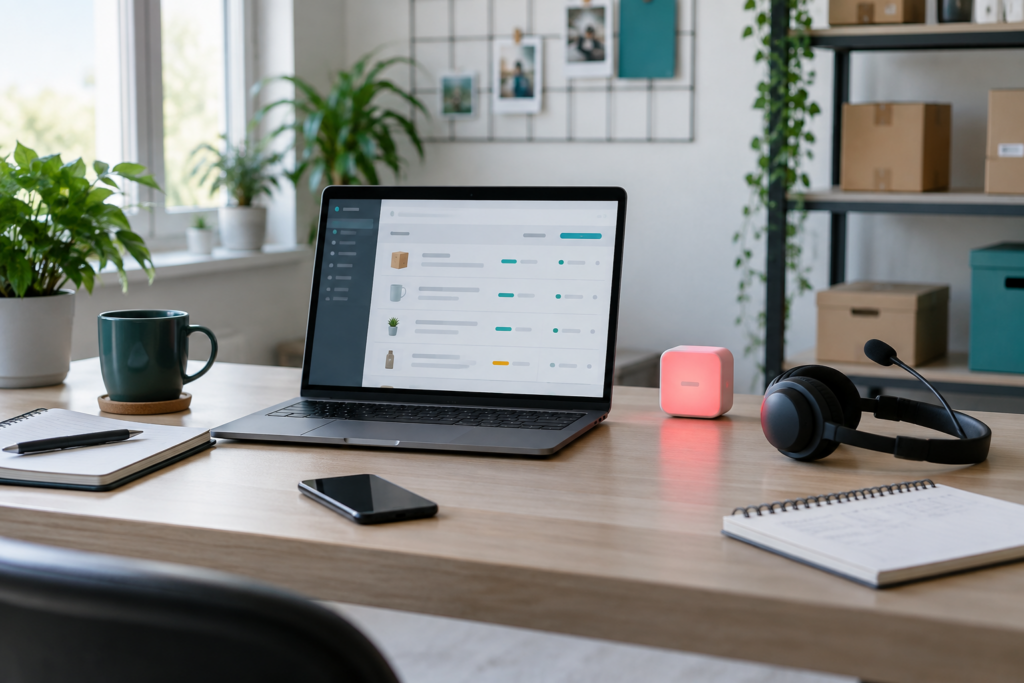
Luxafor Busy Tag adds a small screen to that familiar idea. Its product page lists an LED busy light, a 1.69-inch colour display, 240 × 280 resolution, and support for custom text, images, and GIFs. The important part for a lean ecommerce team is not the gadget itself. It is being able to turn a vague status into something that is visible from across a shared workspace.
Microsoft Teams already lets users show statuses such as Busy, Do Not Disturb, In a meeting, and In a call. Microsoft also documents that Teams can set some of those statuses automatically during calls, which makes a physical indicator more useful when the people sitting nearby cannot see the app. See Microsoft’s guide to changing your Teams status for the settings your team should agree on first.
For example, a red signal can mean “customer or supplier call, interrupt only for a payment failure or urgent delivery problem.” A yellow signal can mean “deep work, send it in chat and I will get back to you.” Green can mean “available for normal questions.” Keep it boring and obvious, because a complicated color system becomes a pain in the butt almost immediately.
Using Visual Cues to Prevent Unnecessary Interruptions
The point is to answer the question people are already asking before they walk over: “Is this a good moment?” “In a meeting” or “Available after lunch” removes uncertainty in a few words. That small bit of context is often more useful than a generic red dot.
For store owners, I would use the display around the moments that directly affect revenue. Put up a clear status when you are handling a supplier onboarding call, negotiating MAP pricing, walking a customer through a high-ticket purchase, or dealing with a chargeback. Those are the times when switching context can create a real mistake instead of just slowing down an admin task.
Use a visual signal alongside basic written procedures, not as a substitute for them. If a customer has an urgent order issue, your VA should know who owns it, what information to collect, and when to escalate. My guide on hiring and onboarding a VA for ecommerce customer service covers the kind of handoff process that makes these status rules actually work.
Slack is another example of why short, plain-language statuses work. Its own documentation explains that a status message tells teammates what you are doing, while availability indicates whether you are active. You can use Slack’s status and availability settings as the digital side of the same system.
Building an Effective Workplace Status System
A device cannot create a communication habit by itself. People need to agree on what the signs mean and what to do when one of them is showing. This is the same idea as any good SOP in ecommerce: the tool only works when the team knows the process behind it.
Start with a small set of rules:
- Choose meanings that can be understood without a separate explanation.
- Decide which requests may wait and which ones justify an interruption.
- Keep the same meanings across desks, meeting rooms, and remote workstations.
- Give new colleagues a quick explanation instead of assuming they will work it out.
For a small store, three statuses are usually enough: available, focus work, and urgent customer or supplier call. Add a fourth only if the team really needs it, such as “packing orders” or “on lunch.” The more statuses you create, the more likely everybody will ignore them.
Build the rules into your daily stand-up or operations check-in. If you are setting up a new team from scratch, my Team Pulse setup guide for small ecommerce teams is a good example of keeping responsibilities visible without drowning the business in meetings.
Leave room for ordinary human behaviour. Someone may forget to change the display, while someone else may have an urgent question. A useful system makes both exceptions easy to handle. The rule should never be “do not bother anyone.” It should be “use the right channel unless the issue affects a customer, payment, order, or supplier deadline right now.”
Visual Indicators for Calls and Focused Work
Busy Tag can be controlled through Luxafor software and the original Busy Tag app. The product page lists Microsoft Teams and Zoom status updates, custom hotkeys, timers, Zapier notifications, and IFTTT. If your team relies on more than one platform, test the actual workflow before rolling it out to everyone.
The screen is useful when the reason for being unavailable matters. A light says “wait,” while a short message can say why or when waiting should end. That is useful when you are recording product videos, dealing with an upset customer, or concentrating on a supplier agreement where a missed detail can cost you later.
There is also a practical sales angle here. High-ticket customers often want to talk through shipping, warranties, dimensions, or lead times before they buy. If a team member is already on one of those calls, it is better for the next person to see that immediately than to ask them a question that breaks the conversation.
Make the display reflect a real workflow instead of using it as desk decoration. For example, one hotkey can set a 30-minute “quote review” status, while another can set an “on a customer call” status. When the timer clears, the normal availability signal comes back without somebody having to remember it manually.
Integrating Status Signals Into Daily Workflows
Keep the signal close to the work it describes and set any timer before starting the session. For an owner running a store from a home office, that may mean placing it beside the laptop where a partner, assistant, or visiting teammate can see it. In a small office, it should be visible from the natural walking path, not hidden behind a monitor.
Busy Tag uses USB-C and requires an external power source while operating. Magnets attach it to a laptop or monitor. It measures 36 × 46 × 8 mm and weighs 20 g. Those details make it portable enough for a laptop setup, but you still need to account for the cable and power source before deciding it belongs on every desk.
Start by connecting status behavior to work that already has a calendar or a timer. My preference is to make team availability visible in shared calendars, then use a local visual signal for the people who are physically nearby. Google Workspace is useful here because a shared calendar gives the team the bigger picture before they rely on a desk-level signal.
If you have a sales or support team, the same routine should include a customer record. Use a CRM such as HubSpot to log the reason for a call and the next step, so the visual status never becomes the only place important customer context exists.
A simple rollout is to test the status system with one or two people first. Give the team a short list of approved messages, set the timer rules, and tell everybody which customer or supplier problems override the signal. Then look at the actual friction after a week. If people are still walking over to ask basic questions, the display wording is probably too vague. If nobody asks questions anymore, you may have made the system too rigid.
Keep the first version focused on behavior, not software. You can always connect more automations later, but a team that does not know whether “busy” means a five-minute task or a 45-minute customer call will not get much value from the technology. Clarity first, then automation. That is how I would approach it with a small ecommerce operation.
Do one week of testing before you make it a permanent rule. Ask the team which interruptions still needed an immediate answer, which ones could move to chat, and whether the colors were clear without explanation. That feedback is what turns a small device into a useful operating system rather than another subscription or gadget your team stops noticing.
Benefits for Open-Plan and Hybrid Work Environments
Open-plan offices make interruptions visible, but not easier to judge. Someone wearing headphones may be free, while someone who looks idle may be handling a sensitive call. A visible status gives the people in the same room a little context before they create another interruption.
Hybrid work adds another layer. A Teams icon helps remote colleagues, while a physical display helps the person nearby. Busy Tag works with Windows and macOS, and Luxafor lists a web app for Linux and locked-down environments. For a team with VAs in different countries, the goal is not to force everyone into the same schedule. It is to make handoffs clear despite different time zones.
When you are hiring remote help, the first win is usually not a sophisticated management platform. It is giving people a clear job, a documented escalation path, and a way to see when you are actually available. I have used OnlineJobs.ph for finding remote talent, but you still need the SOPs and communication rules that make a new hire productive.
Teams usually notice three practical changes first:
- Fewer questions asked in the middle of calls.
- More specific messages about when someone will be available.
- Less guesswork around a shared desk or home workspace.
I would add a fourth change for ecommerce teams: fewer customer issues bouncing around with no clear owner. A live-chat tool such as Tidio can take basic website questions off the team’s plate, while your visual signals protect the time needed for complex support and high-ticket sales conversations.
The device still needs power, and automatic status changes depend on correct software setup. Clear setup matters as much as the display. The same goes for remote accountability, so review my Hubstaff review for ecommerce teams if you need a clearer view of time tracking and workload before adding more processes.
Conclusion: Improving Productivity Through Visual Communication
Reducing interruptions does not mean making an office silent. It gives people enough information to choose a better moment. A small screen cannot replace team agreement or a direct conversation when something is urgent, but it can remove the repeated “Are you busy?” question and make availability easier to read.
My honest take is that a visual status tool makes the most sense after you have already set the basics: one way to track tasks, clear customer-service ownership, and written escalation rules. If your team is still figuring out those basics, start with a simple project workflow first. My comparison of simple project-management tools for small teams can help you choose a starting point.
For ecommerce operators, protecting focused time is part of building a business that does not need you to answer every question all day. Go deep before you go wide. Get the right niche, suppliers, legal foundation, and team systems in place, then use tools like this to make the day run smoother.
If you are still at the niche-research stage, use my high-ticket niches list to find categories worth pursuing. When you start talking to manufacturers, the high-ticket supplier sourcing guide will help you approach those conversations the right way.
Before you hire a team or take customer payments, make sure the business is set up properly with my business formation checklist. If you want help building the processes, supplier relationships, and team systems around your store, my management service is there for operators who would rather not do every part themselves.
Related Articles
If you found this useful, these guides go deeper on the systems that help an ecommerce team stay focused and responsive:
- Benefits of Having a Dedicated Workspace for Your Business
- Best Email Management Apps for Busy Entrepreneurs in 2026
- Best Power Dialers for Sales Teams in 2026
- Best Virtual Phone Number Services for Business in 2026
- What Is High-Ticket Dropshipping?

Trevor Fenner is an ecommerce entrepreneur and the founder of Ecommerce Paradise, a platform focused on helping entrepreneurs build and scale profitable high-ticket ecommerce and dropshipping businesses. With over a decade of hands-on experience, Trevor specializes in high-ticket dropshipping strategy, niche and product selection, supplier recruiting and onboarding, Google & Bing Shopping ads, ecommerce SEO, and systems-driven automation and scaling. Through Ecommerce Paradise, he provides free education via in-depth guides like How to Start High-Ticket Dropshipping, advanced training through the High-Ticket Dropshipping Masterclass, and fully done-for-you turnkey ecommerce services for entrepreneurs who want a faster, more hands-off path to growth. Trevor is known for emphasizing sustainable, real-world ecommerce models over hype-driven tactics, helping store owners build scalable, sellable, and location-independent brands.

Still deciding what to sell?
Grab the free list of 1,000+ niches that work for high-ticket dropshipping, sorted by category.
Free. Unsubscribe any time.


