



How long does it take to get an LLC? In Delaware, as of 2026, the state will process it within an hour if you pay a $1,000 one-hour service fee on top of the $110 filing fee and the filing arrives by 9 p.m. Eastern. In other states, or without that fee, the wait can run long enough to push back a launch date you already announced.
The state’s review belongs on the launch calendar next to the store build and your supplier applications. The build can move ahead while the filing sits in the queue. The federal tax ID can’t, because the IRS asks you to form the LLC through your state before you apply for an EIN, so your state’s processing time sets the earliest date for anything that asks for that number.
For a high-ticket store, I treat the LLC timeline as part of the operating plan, not a box to tick after the site looks ready. If you are still mapping the business itself, start with my high-ticket dropshipping guide and decide what suppliers, payment methods, and margins the store needs before you commit to a launch date.
Disclosure: Some links below are affiliate links. They may earn E-Commerce Paradise a commission at no added cost to you. They do not replace legal or tax advice, and I only recommend comparing a service after you have confirmed the state fees and requirements for your situation.
What Texas and Delaware charge to go faster
Every LLC starts with a filing. You send the state a formation document and someone there reviews it. In most cases the company exists once the state accepts the filing. The part that varies is the wait, and what the state charges to shorten it.
Texas publishes its prices plainly. As of 2026, the Secretary of State charges $300 to file a certificate of formation for an LLC. Its Texas Express program currently sells paid tiers on top of that. The cheapest, Standard Expedited, costs $50 and is typically processed within two to three business days. For filings received by noon, Next-Day costs $500 and Same-Day costs $750. All of these are charged in addition to the $300.
Delaware’s Division of Corporations fee schedule, revised August 2026, lists $110 to form a domestic LLC. Its expedite tiers are $50 for 24-hour service, $100 for same-day, $500 for two-hour, and $1,000 for one-hour.
Fees and procedures get revised. The Delaware schedule above is itself an August 2026 revision. Texas made a bigger change in late September 2026, taking its online filing system offline from September 25 to September 29 while it moved business filings to a new portal, SOSPortal. To compare states before you pick one, LLCBuddy‘s state LLC guides, written by business formation expert Steve Goldstein, break down formation costs state by state.
Whichever state you choose, take the fee and the posted processing information from that state’s filing office in the week you file. (A blog post you bookmarked in the spring may already be out of date.)
That last point matters more than people expect. A $50 expedite can be a smart expense when a supplier onboarding window or a real launch campaign depends on it. It is not smart just because an LLC feels like the last item on a long to-do list. I would write down the state filing fee, the expedite tier, the date the document can be submitted, and the date you actually need an EIN. Those four details make the decision much clearer.
Do the timing math before paying for an expedite
- Start with the state: use the state filing office’s current fee page, not a comparison chart that may be months old.
- Add the EIN step: an online EIN application may be fast, but certain IRS systems need time to recognize a new number.
- Add permits and supplier review: that is the part that usually decides whether a store is genuinely ready to buy wholesale inventory.
- Keep a buffer: a rejected filing or name issue can cost more time than the difference between standard and same-day processing.
If you already know the niche you are entering, use the waiting period to pressure-test the demand and price points. My high-ticket niches list is a useful starting point for that work. It is far better to find a weak supplier or margin assumption before you have paid to speed up a filing.
Supplier applications come last in the paperwork chain
A wholesale supplier needs proof of a business before it sells to you tax-free. For a Texas-based store, that proof is a resale certificate, and you can’t complete one without a Texas sales tax permit. The paperwork behind it arrives in a set order.
The EIN comes after state approval. The Taxpayer Advocate Service tells applicants to make sure the organization is legally formed before applying. The IRS issues the number free through its online application to eligible applicants, immediately once the application is approved. It also asks for the entity’s legal name exactly as it appears on the document that created it, so have your approved certificate of formation in front of you. An owner who applies online the afternoon the state approval lands can have the number that same day.
There’s a catch. The Taxpayer Advocate Service says it can take up to two weeks for a new EIN to become part of the IRS’s permanent records. Until that happens the number won’t work for electronic filing or payment, and it won’t pass IRS TIN matching. It can still be used right away for things like opening a bank account.
Sales tax comes next. A supplier that skips sales tax on your wholesale orders needs something on file to justify it. In Texas, that’s a completed resale certificate, Form 01-339, which you give to the supplier and the supplier keeps. The Comptroller’s form asks for your 11-digit Texas sales and use tax permit number and for your name as shown on that permit. For a Texas-based store, no permit means no certificate.
Work through it in this order: state approval, then the EIN, then the sales tax permit, then the supplier applications. Your legal name runs through every piece of it, which is why applying to suppliers under your personal name to get a head start costs time instead of saving it. The applications get redone once the LLC exists, and your earliest purchase records point to you instead of the business.
Before approval, you can do all of the supplier work except hitting submit. Pick the suppliers and gather what their applications ask for, so the applications can go out the week your permit number arrives.
For a high-ticket store, I would also build a one-page supplier packet while you wait: the owner name, store URL, business address, intended product categories, sales-tax status, and a clear explanation of how you will market the brand. My guide to finding high-ticket dropshipping suppliers shows why this preparation makes the first supplier conversations more productive.
Build the store while the state reviews the filing
Whether your state’s review takes Texas’s two to three business days on Standard Expedited or a good deal longer without it, the store build doesn’t have to stop. Almost everything a customer sees can be built before the LLC exists: product pages, photography, descriptions, collections, shipping zones and email templates.
What has to wait is anything that asks for a legal entity name or a tax ID. The business bank account and payment processor verification typically fall in that group. So do the legal pages and the footer that identify the business behind the store. Put in placeholders and swap in the real details after approval.
One sorting rule covers most of it. If a form asks for your “legal business name,” it goes on the post-approval list. If it asks for your “store name,” do it now.
What I would complete during the review window
This is the window where a founder can make the later launch smoother without guessing at legal information. Build the collections, product templates, policies in draft form, shipping rules, abandoned-cart flow, and the supplier shortlist. Keep all payment and tax fields in a checklist marked “waiting for LLC details” rather than trying to force personal information into a business application.
If you need starter legal templates and an organized place to keep them, LegalNature is worth comparing. Its service covers business-formation documents and other business forms, but make sure every document matches your state and operating reality before relying on it. A template is a starting point, not legal advice.
For operators who want an outside set of eyes on the commercial side of the launch, my ecommerce coaching is designed to help you turn the setup checklist into a supplier, offer, and store plan. The work should be moving while the state has the filing.
Pay for speed only when the date is real
Whether an expedite fee is money well spent depends on what else is still unfinished.
Say supplier approval and the store build will take a few more weeks anyway. Paying $750 in Texas to be approved by close of business buys very little then, because the finished LLC sits waiting on everything else. The $50 tiers are a different calculation. Texas Standard Expedited and Delaware’s 24-hour service both cost $50, and either one shrinks the state’s part of the wait to days. For a launch that’s still weeks out, that’s the tier worth paying for.
Rejection is the bigger threat. A filing that bounces has to be corrected and reviewed again, which can cost more days than any expedite fee saves. Paying for speed doesn’t prevent it. The Texas Express page says expedited service doesn’t guarantee a filing, since each document is still reviewed for its statutory requirements, so $750 for Same-Day buys nothing if the certificate comes back rejected.
Texas sells a cheaper safeguard. For $50, the Secretary of State will preclear a draft, reviewing it for compliance with minimal statutory filing requirements before you submit the real thing. If you’d rather have someone else prepare the certificate, compare the best LLC services in Texas before you file.
The best practical test is simple: write the earliest date that a supplier, payment processor, bank, or campaign truly needs the LLC. If that date is not within the state’s normal processing window, put the expedite money into photography, samples, or supplier research instead. I have seen founders pay a premium to rush an entity when the real bottleneck was still product selection or a supplier’s review queue.
Choose a formation service by workload, not hype
You can file directly with the state, use a formation service, or talk to an attorney. The right choice comes down to the level of guidance you need and whether you will actually complete every follow-on task. A service can reduce the administrative load, but it cannot choose your state, determine your taxes, or replace legal advice for a complicated ownership situation.
Bizee for founders who want a lower-cost formation path
Bizee is the option I would compare first when you want a straightforward formation workflow and are willing to own the state choice and the business decisions yourself. Its Basic package is listed at $0 plus state fees, with paid tiers for people who want more assistance. That can be a sensible route for a lean store launch, provided you still check what is included and what remains your responsibility before you pay.
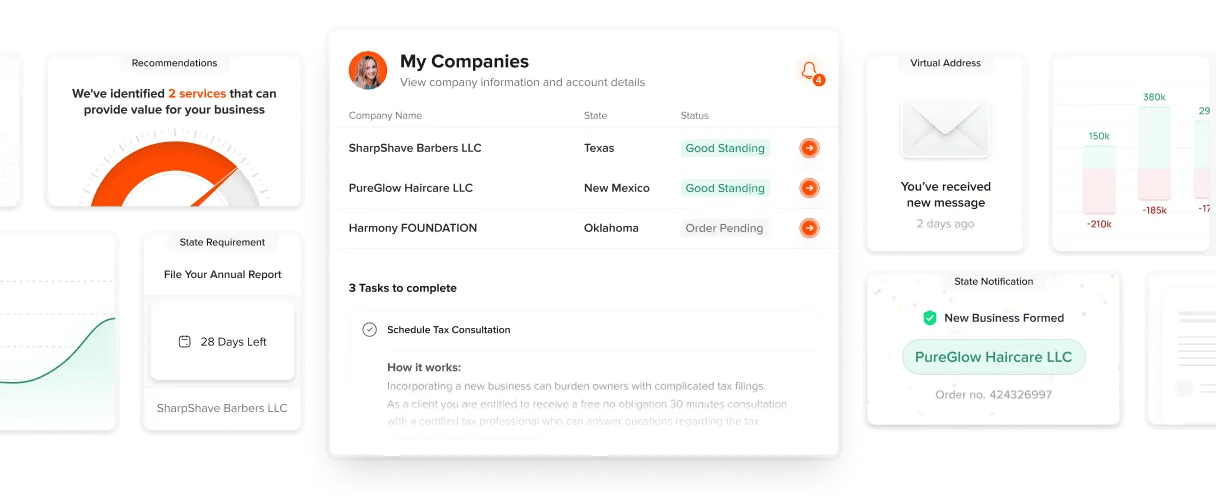
What I like about that framing is that it keeps the filing cost separate from the actual business build. The state fee is not optional, and a low service price does not make the rest of launch work disappear. Use Bizee if the workflow and current package details fit, then keep the same calendar for your EIN, permits, supplier applications, and bank account.
LegalZoom for a broader guided-service comparison
LegalZoom makes sense to compare when you want a more guided service and may value access to additional business and legal products. Its LLC page currently lists a $0 plus state-fee Basic tier, alongside higher-priced packages. Read the package terms carefully, especially where a product includes a limited-time service that renews later. For a simple single-owner store, pay for support only if it solves a real problem you would otherwise leave unfinished.

LegalZoom is not automatically the right answer because it is better known. Compare the scope, total checkout price, renewal terms, and whether you really need the guidance being sold. I would rather see a founder buy the right amount of help and keep enough budget for samples, content, and supplier communication.
LegalNature for document and compliance support
LegalNature is a relevant option when your main concern is accessing business documents alongside formation and compliance services. It is especially useful to compare if you need to get organized around operating documents, registered-agent tasks, or later compliance work. Use the service as a way to reduce administrative friction, not as a substitute for a lawyer or accountant when the facts are specific to your business.

The useful question is not “which service is the cheapest?” It is “which option lets me complete the filing accurately, understand the recurring obligations, and get back to building the store?” If you prefer to do the filing yourself, that is valid too. Just use the official state instructions and do not trade a small service fee for a filing error that costs weeks.
Forming in another state can mean two waits
Forming in Delaware and running the store from Texas adds a second filing. Texas requires a foreign LLC that transacts business in the state to file an application for registration with the Secretary of State, and that application costs $750 and goes through its own review. Waiting on it gets expensive: an LLC that has done business in Texas for more than 90 days without registering owes a late fee equal to the registration fee for each year of delinquency.
Where to form is a legal and tax decision first and a timing decision second, so take it to an attorney or accountant who knows your facts. LLCBuddy publishes state-by-state data for general education, but it isn’t a law firm or a licensed filing service and doesn’t give legal or tax advice. No general guide can weigh your specific circumstances.
For most ecommerce founders, forming where you actually operate is the simplest assumption to examine first. Do not choose Delaware because you have heard it is fast, then discover that you also need to register and maintain the entity where the work happens. The right answer may still be Delaware, but it should come from advice based on your ownership, physical presence, taxes, and customers, not a shortcut from a social post.
Put the state’s date on the calendar first
Work backward from launch. Supplier applications need the tax paperwork, and the tax paperwork needs a legal entity. The entity exists only when the state says it does, which takes however many days your state takes or however many dollars you pay to shorten them.
File first, then build while the state has your paperwork.
The state doesn’t care when you planned to launch. Plan like it doesn’t.
My practical sequence is: choose the business name and state, confirm the current filing route, submit an accurate formation document, finish the customer-facing store work, apply for the EIN once approved, complete permits and supplier paperwork, then turn on payments and place test orders. If you want a fuller list of the decisions that surround this work, use my business formation checklist for high-ticket dropshipping.
Frequently asked questions
Can I launch a store before my LLC is approved?
You can build most of the storefront before approval, including product pages, content, email flows, and shipping settings. Hold back anything that requires the final legal name, tax ID, business bank account, or verified payment processor. A soft build phase is different from taking live orders under an entity that does not yet exist.
Can I get an EIN before the state approves my LLC?
No. For an LLC, the entity should be legally formed before you apply for an EIN. Once you have the approved legal name and formation details, the IRS online process can issue an EIN to eligible applicants quickly. Plan for the separate window before all IRS systems recognize that new number.
Should I pay for same-day LLC formation?
Only when the calendar makes the fee worthwhile. If a real bank, supplier, or campaign deadline is imminent and every other launch dependency is ready, it can be reasonable. If you still need to select products, verify suppliers, or complete the store, standard processing or a lower expedite tier is normally the better use of cash.
What is the best LLC service for a new ecommerce store?
There is no universal winner. Compare Bizee if you want a lower-cost formation path, LegalZoom if guided support is a priority, and LegalNature if document and compliance tools are central to your needs. Then compare the current package details with filing directly through your state. The right choice is the one you understand and will complete accurately.
Get the legal foundation in place, then focus on the store
An LLC does not make a store profitable, but getting the sequence right keeps paperwork from slowing down suppliers, banking, tax setup, and payment verification later. If you want a more hands-on route from entity setup through supplier and storefront launch, see how my turnkey ecommerce service works. Otherwise, start with the state’s current instructions, keep your documents consistent, and give yourself more runway than the filing estimate suggests.
Related reading
- How to Form an LLC for a High-Ticket Dropshipping Store
- How Long Does It Take to Get an EIN After Forming an LLC?
- How to Open a Business Bank Account for an LLC
- Best Business Formation Service for High-Ticket Dropshippers
- How to Find the Best Suppliers for High-Ticket Dropshipping

Trevor Fenner is an ecommerce entrepreneur and the founder of Ecommerce Paradise, a platform focused on helping entrepreneurs build and scale profitable high-ticket ecommerce and dropshipping businesses. With over a decade of hands-on experience, Trevor specializes in high-ticket dropshipping strategy, niche and product selection, supplier recruiting and onboarding, Google & Bing Shopping ads, ecommerce SEO, and systems-driven automation and scaling. Through Ecommerce Paradise, he provides free education via in-depth guides like How to Start High-Ticket Dropshipping, advanced training through the High-Ticket Dropshipping Masterclass, and fully done-for-you turnkey ecommerce services for entrepreneurs who want a faster, more hands-off path to growth. Trevor is known for emphasizing sustainable, real-world ecommerce models over hype-driven tactics, helping store owners build scalable, sellable, and location-independent brands.

Still deciding what to sell?
Grab the free list of 1,000+ niches that work for high-ticket dropshipping, sorted by category.
Free. Unsubscribe any time.


