


E-commerce is a huge part of global retail, with a global revenue of over $3.89 trillion projected for 2026 (according to Statista). But when you’re competing with over 28 million online stores worldwide, it’s becoming increasingly difficult to stand out.
Relying solely on organic reach or increasingly expensive ad channels is no longer enough to stay ahead. The brands that scale sustainably usually have a strong ecosystem working behind the scenes. This includes a combination of reliable suppliers, savvy distributors, top-performing affiliates, and co-marketing partners who multiply their reach.
To build that ecosystem, a brand needs a way to reach out to potential partners. This is why “good data” plays such a huge role in the story of every e-commerce company.
For a high-ticket store, partnerships are rarely a side project. A supplier relationship determines whether you have authorized inventory. A distributor relationship affects margin and shipping coverage. An affiliate or creator relationship can put your products in front of buyers who already trust the person making the recommendation.
The point is not to collect the biggest spreadsheet. It is to build a smaller, well-maintained list of companies and people who match your product category, price point, geography, and capacity. That is what makes outreach relevant instead of random.
At Ecommerce Paradise, the same principle applies across every part of a high-ticket operation. Better inputs lead to better supplier conversations, cleaner follow-up, and a more useful record of what is working. The database is not the strategy. It is the evidence that lets your team execute the strategy with less guesswork.
The Cost of Bad Data
When you’re building a support ecosystem from scratch, everything begins with outreach. In today’s digital landscape, that usually looks like a mix of cold emails, LinkedIn connections, and intro calls.
But before your team can do any of this, they need accurate and up-to-date business data. Anything incomplete, inaccurate, or outdated disrupts their ability to connect with the right decision-makers.
In the B2B world, contact data naturally decays at roughly 22.5% per year (or about 2% every month) as people switch roles, companies rebrand, or domain structures change. This means that your team might be trying to pitch a Head of Partnerships who left the company six months prior. Or they may be targeting a distributor whose minimum order quantities or geographic footprint don’t match your company’s supply chain.
That decay matters more in ecommerce than most founders expect. A brand may still exist, yet its buyer has changed, its wholesale program has closed, or its territory rules no longer fit your store. Treat every record as a working hypothesis that needs a date, an owner, and a verification step.
When you build outreach campaigns on top of unverified lists or static directories, three major problems immediately tank your results:
1. Your Deliverability Takes a Nosedive
Send emails to outdated addresses, and your bounce rate quickly creeps up. Cross the critical 2% to 5% bounce threshold, and internet service providers flag your sending domain as spam. Once you land on blocklists, even your messages to legitimate partners stop getting delivered.
The exact warning level varies by sending platform and mailbox provider. Google’s email sender guidelines make the broader point clear: authentication, sender reputation, and recipient feedback affect delivery. A partnership list needs verification before the first campaign, not after the sender domain has taken a hit.
Use a separate partner-outreach segment, send in controlled batches, and remove hard bounces quickly. Keep an audit field that records the last successful contact date. That simple discipline keeps a prospecting problem from becoming an email infrastructure problem.
2. Wasted Hours and Burnout
Sales reps and partnership managers spend an average of 500 hours every year, or roughly 20% of their total working hours, simply searching for, manually updating, or verifying prospect information.
That’s dozens of hours spent playing detective on LinkedIn instead of having actual conversations with potential partners.
There is a better division of labor. Let a researcher confirm the company, buyer role, catalog fit, location, and last verification date before a partnership manager touches the account. The manager then spends time on the part that needs judgment, such as terms, positioning, and a useful first offer.
For a small team, a documented research brief is enough. Include the target customer, relevant product lines, price range, sales channel, decision-maker role, and why the partnership makes sense. If your team needs help maintaining that work, OnlineJobs.ph is worth looking at for a dedicated research or operations hire.
3. The “Info@” Void
When exact contact records are missing, outreach usually defaults to generic inboxes like info@ or support@. These inboxes are where high-value proposals go to die. Gartner estimates that poor data quality costs organizations an average of $12.9 million annually in lost momentum, wasted labor, and missed deals.
Generic inboxes have a place for basic support. They are a poor route for a proposal that needs a category buyer, a procurement lead, an affiliate manager, or a founder. The goal is not to bypass people. It is to route a relevant message to the person who owns the decision.
Commercial outreach still needs honest sender details, a clear purpose, and an opt-out path. The FTC’s CAN-SPAM guide applies to B2B commercial email too, so clean data never removes the need for compliant outreach.
What Good Data Looks Like
High-quality business data provides context, firmographics, and direct decision-maker access, all kept accurate through continuous verification. But this kind of data doesn’t live in static directories or scraped email lists. Instead, it lives on dedicated B2B sales intelligence platforms.
Platforms like Lusha provide accessible contact discovery and data enrichment for growing teams. Meanwhile, brands building complex supply chains or enterprise retail networks often turn to robust alternatives like ZoomInfo for deeper firmographics, intent signals, and broader B2B coverage.
A useful record has more than an email address. It gives your team a reason to believe this company belongs in the list. At a minimum, record the contact role, company size, location, product category, sales channel, current partnership model, source, and verification date.
For high-ticket stores, add operational fields that change the commercial conversation. Track minimum advertised price policies, dealer requirements, supplier lead times, shipping restrictions, warranty process, and whether a brand supports marketplaces. Those fields help you decide where to spend your time before you send the first email.
Here’s what having access to better business data looks like for different partnerships:
Suppliers and Manufacturers
The data needed: Direct contact info for Procurement or Supply Chain Directors, accurate manufacturing capabilities, minimum order quantities, and verified location data.
Instead of filling out generic Contact Us forms or dealing with middleman brokers, you land directly in front of supply chain leads who can negotiate terms, scale production, and secure your supply chain.
Before you reach out, check whether the supplier sells direct, has a dealer program, enforces MAP, and ships within the markets you serve. My step-by-step guide to finding high-ticket suppliers shows how to turn that research into a supplier application list.
Supplier data is only useful when the next action is clear. Assign a score for product fit, margin potential, delivery risk, and contact confidence. Start with the companies that pass all four checks instead of pitching every manufacturer in a category.
Retailers and Wholesale Distributors
The data needed: Specific category buyers, retail footprint details, regional distribution networks, and current brand portfolios.
Getting your product onto physical retail shelves or major online marketplaces requires pitching the exact buyer for your niche (e.g., Head of Beauty & Personal Care). Clean data skips the gatekeepers and puts your deck on their desk.
Your store platform already holds useful evidence for this kind of conversation. A Shopify store gives you a central place to review order trends, product performance, and customer demand before you approach a distributor or retail buyer.

Retail conversations also need a grounded commercial story. Bring a concise SKU list, price architecture, stock plan, lead times, merchandising assets, and proof that the assortment fits their customer. A buyer does not need a long pitch. They need enough verified context to decide whether a follow-up meeting is worth their time.
Co-Marketing and Brand Collaborations
The data needed: Growth/Marketing leads at non-competing brands that share your target customer demographic, company revenue tier, and brand positioning.
You can pitch joint giveaways, co-branded product bundles, or shared newsletter features to brands where the partnership offers a clear, mutual win. For instance, an e-commerce brand selling home goods, smart home devices, tools, or furniture would want to partner up with a home service contractor.
Start with customer overlap, not audience size. Look for the same homeowner, hobbyist, or professional buyer at a different point in the purchase journey. A furniture store and a home service contractor, for example, may both serve the person improving the same room, yet they are not competing for the same sale.
Once the partner agrees, the campaign needs shared definitions for the offer, audience, timing, tracking, and handoff. Klaviyo is useful when you need segmented email or SMS communication around a joint launch, provided each brand keeps consent and list ownership clear.
Do not send unsegmented traffic into a vague landing page. Give each partner a distinct offer, UTM structure, landing page, and post-campaign review. That makes the next collaboration easier to price and repeat.
Affiliates, Creators and Media Outlets
The data needed: Verified contact info for partnership leads, affiliate managers, or managing editors, along with authentic engagement metrics and audience demographics.
E-commerce performance marketing relies heavily on third-party trust. Reaching the actual manager behind a top review site, niche publication, or creator network turns cold outreach into high-converting affiliate deals.
Build a media record that explains why a placement fits. Record the site or creator’s audience, topical relevance, geographic reach, content format, recent examples, rate expectations, and the right contact. A link on a relevant site with real readers is more useful than a large generic list with no buying intent.
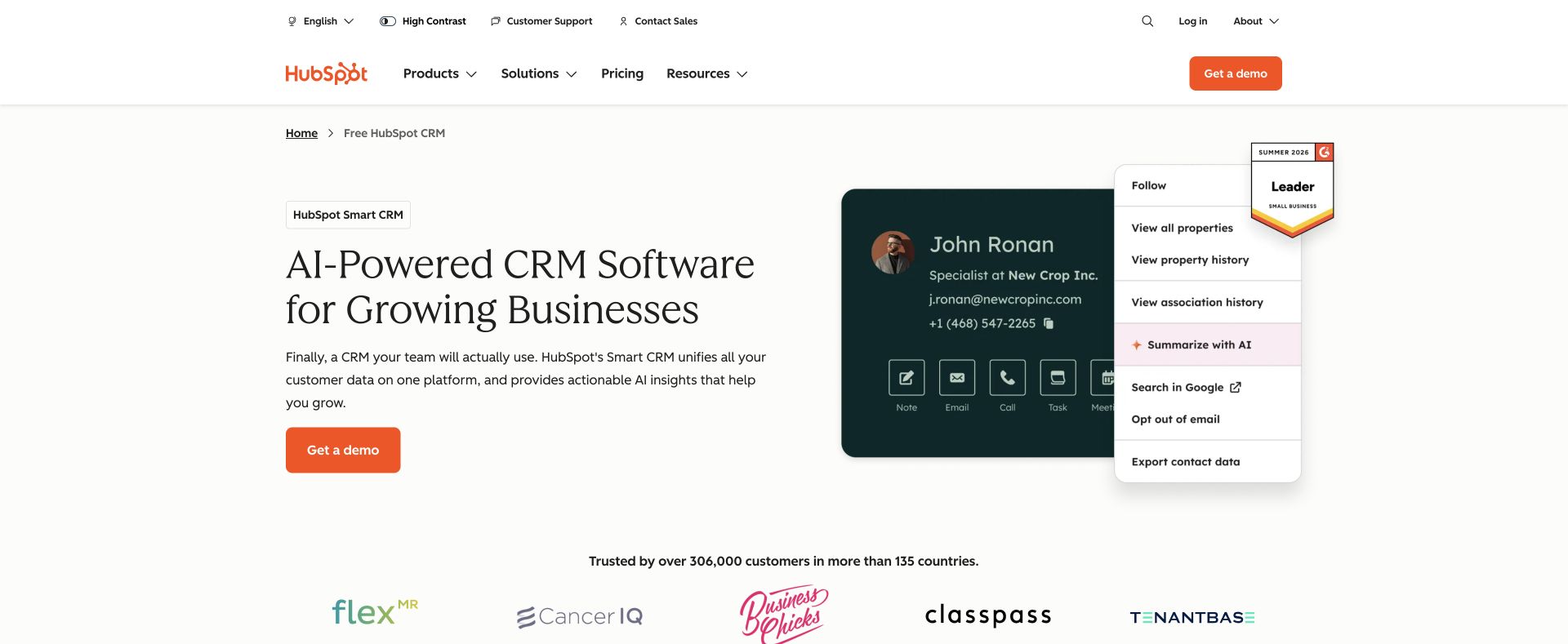
A partner CRM keeps this work from disappearing into inboxes. HubSpot is a sensible option when you need a shared record of conversations, partnership stages, assets, and follow-up dates across a growing team.
Be direct about commercial terms. Clarify whether the relationship involves affiliate commission, a flat placement fee, product samples, a co-created campaign, or a mix. Good data starts the conversation, but a clear agreement is what protects the relationship once revenue is involved.
Build a Data Routine, Not a One-Time List
The best partnership database does not need to be complicated. It needs to stay current. Give every account an owner, a last-verified date, a next action, and a reason it belongs in the pipeline. Review the list weekly before outreach, then clean it after each campaign.
- Define your ideal partner. Start with the customer, product category, geography, and sales channel you want to reach.
- Collect only decision-relevant fields. Contact data alone is not enough. Capture the facts that shape the pitch.
- Verify before sequencing. Confirm the role, company status, and relevance before the first email or call.
- Record outcomes. Track replies, objections, meeting notes, and reasons an account was disqualified.
- Refresh on a schedule. The older the list, the more it needs a repeatable re-check process.
A business with a small number of well-qualified partnerships usually outperforms a business spraying messages at thousands of questionable contacts. What I have seen with high-ticket operators is that one strong supplier or a few aligned content partners often matter more than a huge outreach volume.
If you are still choosing the category before you build the list, start with my high-ticket niches list. It will help you focus on a product area before you chase manufacturers, buyers, or creators.
Measure Whether the Partnership Is Worth Repeating
Clean partner data earns its value after the first conversation. A partnership that produces a polite reply but no qualified traffic, no supplier approval, and no next step is still useful information. The mistake is failing to record it. Teams often remember the exciting wins and forget why ten other prospects went nowhere, so they repeat the same weak outreach months later.
Give each opportunity a simple scorecard. For suppliers, track response speed, terms, product fit, margin, lead time, and onboarding requirements. For affiliate, media, and co-marketing partners, track audience relevance, agreed deliverables, clicks, qualified leads, conversion rate, revenue, and the cost of the relationship. Use the same definitions each time so you are comparing like with like.
This does not need a complicated reporting stack. A shared CRM or spreadsheet works when the fields are consistent and someone owns the follow-up. What matters is the review rhythm. Look at active opportunities before each outreach cycle and completed partnerships at the end of each campaign. Keep the partnerships that create profitable, repeatable demand. Change the offer, audience, or message for the ones that show promise but miss the target.
- Response quality: Did the message reach a person who owns the decision, and did they identify a real next step?
- Commercial fit: Do the terms, margin, timing, and customer overlap make sense for both sides?
- Execution quality: Did each side deliver the approved assets, tracking, inventory information, and follow-up?
- Business result: Did the relationship produce qualified demand, revenue, useful market feedback, or a stronger route to market?
A good partnership database therefore becomes a decision record. It shows your team whom to contact, why the outreach is relevant, what happened last time, and what should happen next. That is far more valuable than a list of names with no context.
Better Data, Better Partnerships
Strong partnerships are an e-commerce brand’s most resilient growth lever, but even the best pitch falls flat without accurate data. When you stop relying on decayed contact lists and invest in real-time B2B intelligence, your proposals will actually reach the decision-makers who can help scale your business.
Build the operating foundation before you scale the outreach. My business formation checklist covers the legal and financial basics that support supplier agreements and partnership payments.
Then return to the business model itself. The complete guide to high-ticket dropshipping lays out how the right niche, suppliers, margins, marketing, and operations fit together. If you want personal help putting that plan into action, my ecommerce coaching gives you a place to work through the details.
Related Articles
If you found this useful, these guides go deeper on related topics:
- B2B Partnerships Between Ecommerce Retailers and Home Service Contractors
- How Lead Routing Works for High-Ticket Ecommerce
- How to Choose a 3PL Fulfillment Partner
- How to Recruit Affiliates for a B2B SaaS Product
- What Is High-Ticket Dropshipping?

Trevor Fenner is an ecommerce entrepreneur and world traveler from Seattle, Washington, and the founder of Ecommerce Paradise, a platform focused on helping entrepreneurs build and scale profitable high-ticket ecommerce and dropshipping businesses. With over a decade of hands-on experience, Trevor specializes in high-ticket dropshipping strategy, niche and product selection, supplier recruiting and onboarding, Google & Bing Shopping ads, ecommerce SEO, and systems-driven automation and scaling. Through Ecommerce Paradise, he provides free education via in-depth guides like How to Start High-Ticket Dropshipping, advanced training through the High-Ticket Dropshipping Masterclass, and fully done-for-you turnkey ecommerce services for entrepreneurs who want a faster, more hands-off path to growth. Trevor is known for emphasizing sustainable, real-world ecommerce models over hype-driven tactics, helping store owners build scalable, sellable, and location-independent brands.
He maintains homes in Seattle and Bali, spends most of the year overseas, and usually returns to Seattle for about a month each summer.


