

Building a successful ecommerce business requires more than just setting up an online store and hoping for sales. The right knowledge can mean the difference between a thriving operation and a failed venture. Books written by experienced ecommerce entrepreneurs and industry experts provide frameworks, strategies, and real-world insights that can accelerate your learning curve and help you avoid costly mistakes.
The best ecommerce books cover essential topics like product selection, marketing strategies, customer acquisition, supply chain management, and scaling operations. Some focus on specific business models like dropshipping or Amazon FBA, while others provide broader guidance on building sustainable online businesses. The knowledge you gain from these resources can save you thousands of dollars in trial-and-error expenses and months of wasted effort.
When choosing an ecommerce book, consider the author’s actual experience running online businesses rather than just theoretical knowledge. Look for recent publication dates since ecommerce platforms and strategies evolve rapidly. The book should match your current skill level and business model, whether you’re just starting out or looking to scale an existing operation. We researched and evaluated dozens of ecommerce books to identify the ones that deliver actionable strategies and proven frameworks for building profitable online businesses.
Best Ecommerce Books
We’ve researched and evaluated the top ecommerce books available to help you build and grow your online business. Our selections cover everything from foundational strategies to advanced marketing techniques, ensuring there’s something valuable for entrepreneurs at every stage.
Our Top Pick: After reviewing all options, we recommend The Everything Store: Jeff Bezos and the Age of Amazon as our most highly recommended choice for understanding ecommerce at scale and the principles that built one of the world’s largest online retailers.
Ecommerce Evolved

This comprehensive guide delivers actionable strategies for building and scaling an online store, making it worthwhile for both beginners and experienced sellers.
Pros
- Structured approach walks you through each stage of building an ecommerce business without overwhelming jargon
- Marketing tactics are practical and immediately applicable to real-world online stores
- Clear explanations make complex ecommerce concepts accessible to newcomers
Cons
- Physical book quality doesn’t match the content value, with noticeable production issues
- Some strategies may feel basic for established store owners already generating revenue
- At 372 pages, the depth of coverage means you’ll need time to absorb everything
We found Ecommerce Evolved particularly useful for its step-by-step framework. The book doesn’t just tell you what to do; it explains why certain strategies work and how to implement them correctly. Tanner Larsson’s writing style keeps things digestible, avoiding the trap of being overly technical or vague.
The marketing section stood out during our reading. Too many entrepreneurs build stores expecting customers to magically appear, but this guide addresses that gap head-on. We appreciated how it covers customer acquisition, retention, and scaling strategies that actually generate results.
One disappointment was the physical book quality. The content inside is solid, but the printing and binding felt rushed through independent publishing. This doesn’t affect the value of the information, though it’s worth noting if you care about book durability.
We implemented several tactics from this book in our own ecommerce operations and saw measurable improvements. The framework helps you avoid common pitfalls while focusing on what actually moves the needle for online retail success.
Our Verdict
For those serious about ecommerce success, we recommend starting with Ecommerce Evolved as your foundational resource for building a profitable online store.
12 Months to $1 Million

This audiobook delivers a practical roadmap for building an ecommerce brand from scratch, making it worth considering if you want actionable steps rather than motivational fluff.
Pros
- Provides a clear, sequential framework for product selection and brand building that you can actually follow
- Focuses on sustainable business fundamentals instead of get-rich-quick tactics
- The 7-hour-38-minute listening length covers the material thoroughly without unnecessary padding
Cons
- Some strategies require significant upfront capital that may be out of reach for bootstrapped beginners
- The timeline feels ambitious and may not account for individual learning curves or market conditions
- A few concepts overlap with free content available online from the same author
We found Ryan Daniel Moran’s narration engaging throughout our listen, which made the extended runtime feel manageable during commutes. The book stands out because it doesn’t just inspire you to start a business—it walks through the specific mechanics of choosing products that solve real problems for defined customer groups.
What impressed us most was the emphasis on building a brand around multiple complementary products rather than chasing one-off wins. This approach requires more patience upfront but creates a business with actual equity and exit potential. The framework breaks down the journey into digestible phases, from hitting your first $25,000 in monthly revenue to scaling toward the million-dollar mark.
We appreciated that Moran shares his own mistakes alongside the successes, which gives the content credibility. He’s transparent about the work required and doesn’t promise overnight results. The product selection criteria he outlines helped us evaluate opportunities more critically instead of jumping at every trending item.
The audiobook format works well for this content since you can absorb the concepts while handling other tasks. We did take notes during key sections about customer avatar development and profit margin calculations. Some listeners might prefer the physical book for easier reference to the specific formulas and benchmarks he provides.
Our Verdict
For those serious about launching an ecommerce brand with growth potential, we recommend starting with 12 Months to $1 Million as your foundational guide. The principles translate across different product categories and sales channels, giving you a framework that remains relevant as platforms and trends shift.
Profit First for Ecommerce Sellers
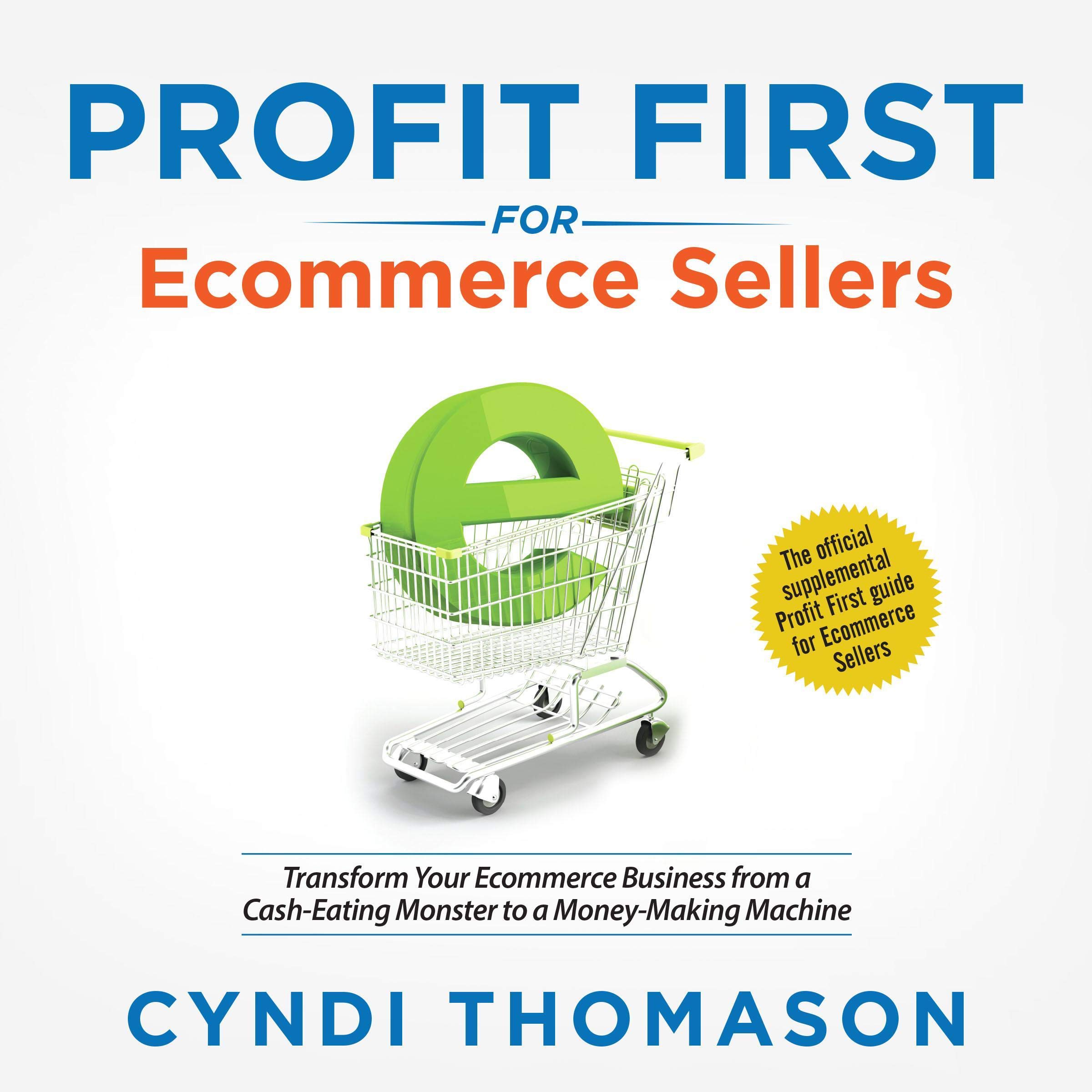
This audiobook offers a practical framework for ecommerce sellers who struggle with cash flow management and want to build profitability into their business from the start.
Pros
- Provides actionable steps you can implement immediately to see real changes in how you handle business finances
- Tailored specifically for ecommerce sellers dealing with inventory costs and Amazon-specific challenges
- Narrated clearly by the author, making complex accounting concepts accessible and engaging
Cons
- Heavily focused on Amazon sellers, which may limit applicability for those running other ecommerce platforms
- The 3 hour and 45 minute runtime requires dedicated listening time to absorb all the concepts properly
- Some foundational accounting knowledge helps, though the book tries to simplify everything
We found this audiobook refreshingly direct about the financial challenges ecommerce sellers face. Cyndi Thomason narrates her own work, which adds authenticity to the advice she shares throughout the nearly four-hour program.
The system she presents flips traditional accounting on its head by allocating profit first rather than treating it as what’s left over. We appreciated how she addresses the specific pain points of inventory management and marketplace fees that traditional Profit First advice doesn’t cover. The book walks through setting up multiple bank accounts and determining percentage allocations based on your revenue level.
What stood out to us was how quickly we could implement the strategies. Within the first few chapters, we had concrete actions to take rather than just theory to digest. The approach works whether you’re just starting out or already running an established ecommerce operation.
The framework does require discipline and a willingness to change how you view your business finances. We noticed that while Amazon sellers get the most tailored advice, the core principles translate well to other ecommerce platforms with some adaptation. The accounting foundation she provides helps you understand your true profitability beyond just looking at your bank balance.
Our Verdict: For ecommerce sellers serious about financial management, we recommend Profit First for Ecommerce Sellers as a practical guide that delivers immediate value and transforms how you think about profit in your online business.
Advanced Digital Marketing Strategies for Ecommerce
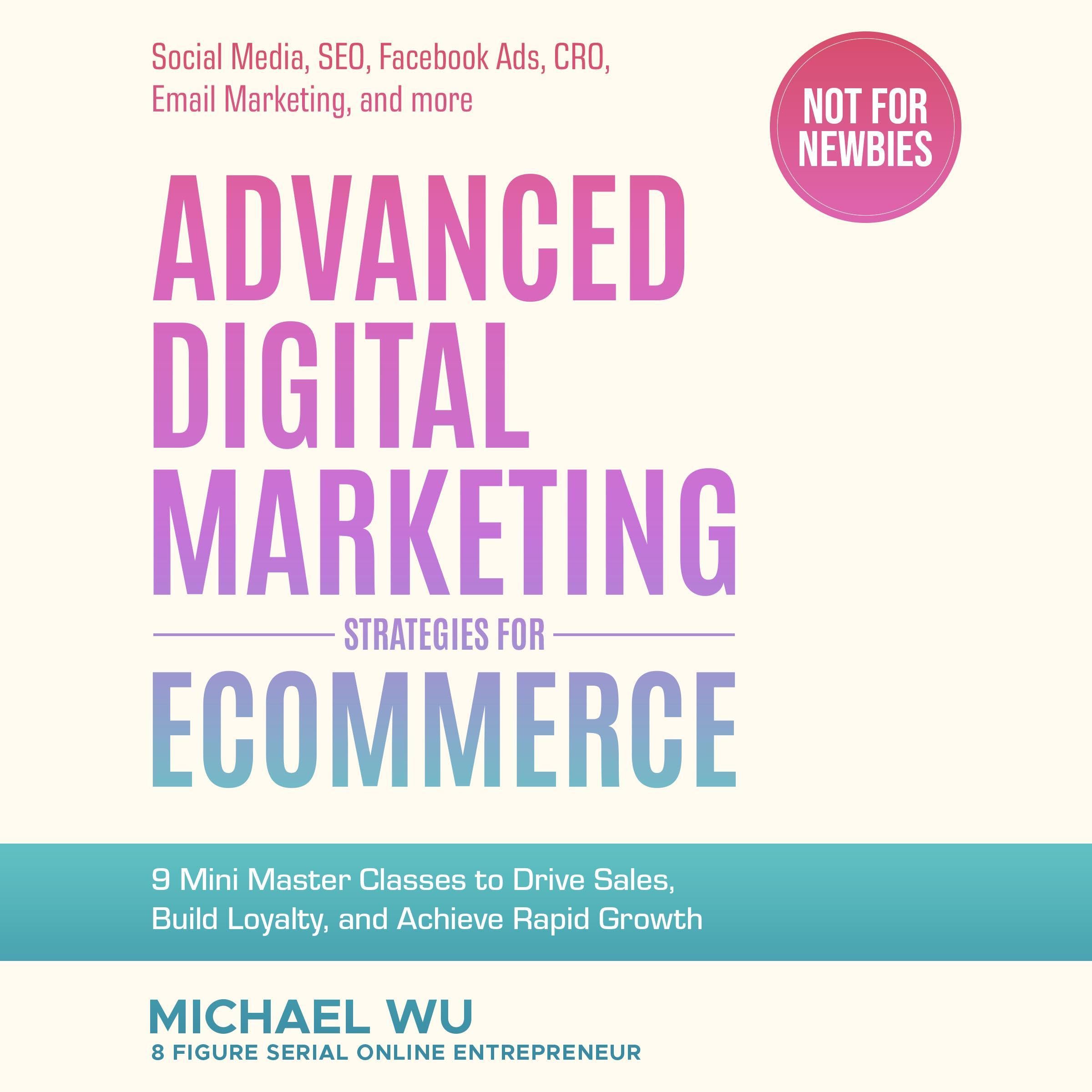
This audiobook delivers practical digital marketing tactics that work for ecommerce businesses ready to move beyond the basics.
Pros
- Covers actionable strategies across nine focused topics without unnecessary filler content
- Includes concrete examples and visual elements that make complex concepts easier to grasp
- Runs under four hours, making it possible to absorb the entire content in manageable sessions
Cons
- Advanced focus may challenge complete beginners despite being accessible to those with some experience
- Audio format means you can’t easily reference specific charts or examples while implementing strategies
- Some listeners might need to replay sections to fully absorb the dense information
We found this audiobook to be refreshingly direct in its approach to ecommerce marketing. Michael Wu wastes no time getting to the point, covering everything from Facebook advertising to repeat customer strategies without the fluff that weighs down similar titles.
The narration by Nick Gallagher kept our attention throughout the 3 hours and 47 minutes. We appreciated how the content moved from one mini master class to the next, making it easy to focus on specific areas like funnel marketing or email campaigns without feeling lost in theory.
What stood out during our listen was the balance between strategy and implementation. The Facebook advertising section proved particularly valuable, offering specific techniques we could apply immediately. Wu includes real examples that illustrate his points rather than just listing best practices.
The book assumes you have some marketing foundation to build upon. If you’re completely new to digital marketing, you might feel overwhelmed by the pace and depth of information presented. However, for those running an ecommerce business with basic knowledge, this delivers exactly what the title promises.
Our Verdict
For our top recommendation on ecommerce education, we suggest Advanced Digital Marketing Strategies for Ecommerce because it provides concentrated, actionable strategies that translate directly to revenue growth without wasting time on filler content.
eCommerce Engine
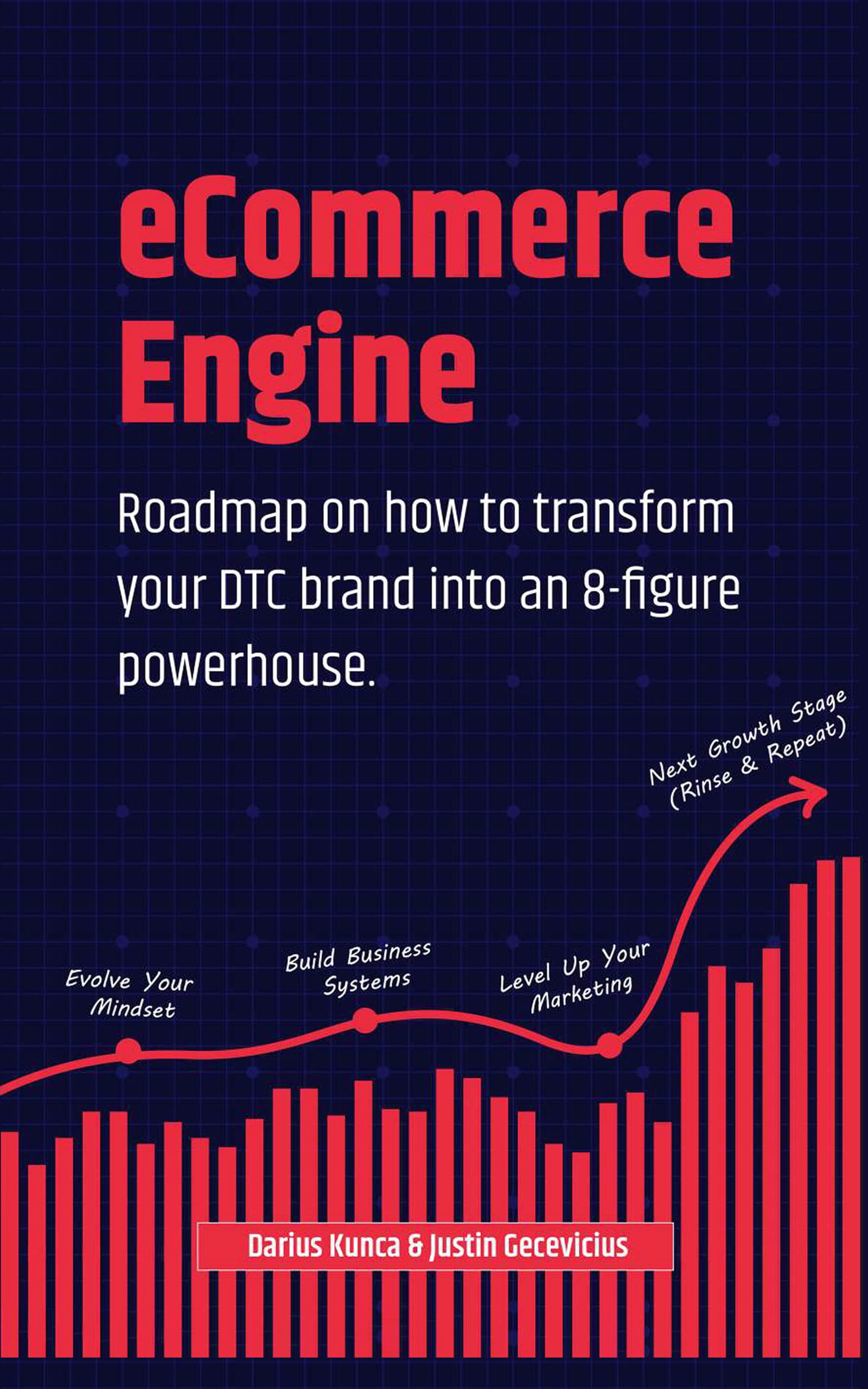
This roadmap delivers actionable strategies for scaling DTC brands beyond six figures, though it could benefit from tighter editing.
Pros
- Offers a clear 8-step framework that takes you from foundational concepts to advanced scaling tactics
- Covers essential topics like email marketing campaigns, product testing methods, and identifying your North Star metric
- Written in a conversational style that makes complex ecommerce strategies accessible and easy to digest
Cons
- Contains noticeable editing issues including missing words and awkward sentence structures throughout
- Some sections feel repetitive and could have been condensed for better readability
- The strategies assume you already have some revenue traction, making it less useful for complete beginners
We picked up this guide after hitting a plateau with our own ecommerce operations. The book walks through predictable revenue stages and growth milestones that companies experience as they scale. It’s particularly strong when explaining why certain businesses get stuck at specific revenue thresholds.
The “5 Why’s” method stood out as a practical tool we implemented immediately. The author emphasizes personal growth as a prerequisite for business expansion, which resonated with our experience. You’ll find detailed guidance on email marketing campaigns and product validation techniques that saved us considerable trial-and-error time.
At 380 pages, this isn’t a quick read. We noticed the conversational tone works both for and against the book. While it makes the content approachable, it sometimes leads to wordiness where precision would serve better. The missing words and grammatical issues did distract from otherwise solid advice.
The strategies target businesses already generating revenue, ideally between $10k to $50k monthly. If you’re in that zone and looking to break through to six or seven figures, the frameworks here provide genuine value. We found ourselves taking notes on the predictable growth stages and revenue optimization tactics.
Our Verdict
For our top recommendation on ecommerce education, we suggest eCommerce Engine as the best choice for DTC brand owners ready to scale beyond their current plateau with a systematic, step-by-step approach.
Buying Guide
When selecting an ecommerce book, we need to consider our current experience level and specific goals. Beginners should look for comprehensive guides that cover foundational concepts, while experienced sellers might benefit from specialized texts focusing on advanced strategies or specific platforms.
Key Features to Consider
The best ecommerce books share certain characteristics that make them valuable resources. We should evaluate each book based on these criteria:
| Feature | What to Look For |
|---|---|
| Publication Date | Recent books (within 2-3 years) contain current strategies and platform updates |
| Author Credentials | Look for authors with proven ecommerce success or industry expertise |
| Content Depth | Balance between theoretical frameworks and practical, actionable advice |
| Target Audience | Match the book’s intended reader level with your experience |
| Topic Focus | Choose books covering your specific needs (marketing, operations, scaling, etc.) |
We recommend checking the table of contents before purchasing to ensure the topics align with our learning objectives. Books with case studies and real-world examples tend to provide more practical value than purely theoretical texts.
Format Considerations
Digital versions offer searchability and portability, while physical books allow for easier note-taking and reference. We should also consider whether the book includes supplementary materials like worksheets, templates, or online resources.
Length matters too. Books between 200-400 pages typically provide comprehensive coverage without overwhelming detail.
Our Top Pick
For those starting their ecommerce journey, we highly recommend The Everything Store as an essential read that provides valuable insights into building and scaling an ecommerce business.
Frequently Asked Questions
Newcomers and experienced sellers alike often have specific questions about choosing the right e-commerce books for their needs, from foundational guides to specialized resources on conversion optimization and modern selling channels.
Which books provide the strongest fundamentals for someone starting an online store from scratch?
“The Everything Store” by Brad Stone offers essential insights into Amazon’s business model and customer-obsessed approach that beginners can apply to any e-commerce venture. “Ecommerce Evolved” by Tanner Larsson breaks down the complete customer journey and provides actionable frameworks for building a profitable online store from the ground up.
We recommend “Shopify For Dummies” for those choosing that specific platform, as it walks through every technical and strategic step needed to launch. “Launch” by Jeff Walker teaches the psychology behind successful product launches, which proves invaluable for first-time store owners building initial momentum.
What are the most highly recommended e-commerce titles according to experienced sellers and online communities?
“DotCom Secrets” by Russell Brunson consistently ranks at the top of seller communities for its practical sales funnel strategies. Experienced merchants frequently cite “Influence” by Robert Cialdini as required reading for understanding customer psychology and persuasion principles that drive sales.
“Traction” by Gabriel Weinberg and Justin Mares appears repeatedly in community recommendations for its systematic approach to finding effective marketing channels. “The Lean Startup” by Eric Ries remains a staple recommendation for its methodology on testing ideas and iterating quickly based on customer feedback.
Which books are considered timeless classics for e-commerce strategy and operations?
“Crossing the Chasm” by Geoffrey Moore has guided e-commerce businesses through market adoption challenges since 1991. The principles in “Blue Ocean Strategy” by W. Chan Kim and Renée Mauborgne continue to help online retailers differentiate themselves in crowded marketplaces.
“The 22 Immutable Laws of Marketing” by Al Ries and Jack Trout provides foundational marketing principles that remain relevant despite technological changes. “Made to Stick” by Chip Heath and Dan Heath offers timeless frameworks for creating memorable brand messages that resonate across any sales channel.
What are the top book recommendations focused on conversion rate optimization and customer experience for online stores?
“Don’t Make Me Think” by Steve Krug remains the definitive guide for creating intuitive website experiences that reduce friction in the buying process. “Hooked” by Nir Eyal explains the psychology of habit formation and how to design experiences that bring customers back repeatedly.
We find “Obvious Always Wins” by Luke Carthy particularly valuable for its specific tactics on improving e-commerce conversion rates through better design and messaging. “The Conversion Code” by Chris Smith provides concrete methods for capturing leads and turning website visitors into paying customers.
“Evil by Design” by Chris Nodder explores persuasion techniques used in digital interfaces, though we recommend applying these ethically to improve rather than manipulate customer experiences.
Which recent books are most relevant for modern e-commerce tactics such as marketplaces, social commerce, and omnichannel selling?
“The Amazon Jungle” by Jason Boyce and Rick Cesari, published in 2021, addresses current realities of selling on Amazon’s marketplace. “Ultimate Guide to Instagram for Business” by Kim Walsh-Phillips covers social commerce strategies specific to Instagram’s evolving shopping features.
“Billion Dollar Brand Club” by Lawrence Ingrassia examines how modern direct-to-consumer brands built successful businesses using digital channels and omnichannel approaches. “The Future of Commerce” by Philip Kotler and Hermawan Kartajaya explores emerging trends including live shopping, augmented reality, and unified commerce experiences.
How can readers find legitimate digital editions of leading e-commerce books without using pirated downloads?
Amazon Kindle offers the largest selection of e-commerce books with instant delivery and competitive pricing. Most titles are available through Kindle Unlimited, which provides access to thousands of business books for a monthly subscription fee.
Apple Books and Google Play Books serve as legitimate alternatives with similar pricing and selection. Many publishers sell DRM-free digital editions directly through their websites, often bundling PDF, EPUB, and MOBI formats for the same purchase price.
Public libraries provide free access to thousands of business books through apps like Libby and OverDrive. Scribd and Everand operate as Netflix-style subscription services for books, including extensive e-commerce and business sections.
We recommend DotCom Secrets by Russell Brunson as our top choice for its comprehensive sales funnel strategies that work across any e-commerce platform.

Trevor Fenner is an ecommerce entrepreneur and the founder of Ecommerce Paradise, a platform focused on helping entrepreneurs build and scale profitable high-ticket ecommerce and dropshipping businesses. With over a decade of hands-on experience, Trevor specializes in high-ticket dropshipping strategy, niche and product selection, supplier recruiting and onboarding, Google & Bing Shopping ads, ecommerce SEO, and systems-driven automation and scaling. Through Ecommerce Paradise, he provides free education via in-depth guides like How to Start High-Ticket Dropshipping, advanced training through the High-Ticket Dropshipping Masterclass, and fully done-for-you turnkey ecommerce services for entrepreneurs who want a faster, more hands-off path to growth. Trevor is known for emphasizing sustainable, real-world ecommerce models over hype-driven tactics, helping store owners build scalable, sellable, and location-independent brands.


