

Running a food truck requires reliable electrical power to keep your operation moving throughout the day. From refrigeration units to cooking equipment and point-of-sale systems, a dependable generator ensures your business stays open and profitable. Without consistent power, you risk losing perishable inventory, missing sales opportunities, and damaging your reputation with customers.
Choosing the right generator for a food truck means balancing power output, fuel efficiency, noise levels, and portability to match your specific equipment needs. Generators for food trucks typically range from 3,000 to 8,000 watts, with inverter models offering cleaner power for sensitive electronics and conventional models providing higher surge capacity for heavy-duty appliances. The type of fuel your generator uses—gasoline, propane, or diesel—affects operating costs, runtime, and maintenance requirements. Size and weight matter significantly since space is limited on most food trucks, and you may need to remove the generator for security or maintenance.
When evaluating generators, pay close attention to the total wattage requirements of your equipment, including startup surge power for items like freezers and air conditioners. Noise output is another critical factor, as many cities have ordinances limiting decibel levels for street vendors, and quieter operation creates a better experience for customers. We spent weeks researching and analyzing dozens of generators to identify the best options that deliver reliable power for food truck operations.
Best Generators for Food Trucks
We’ve tested and evaluated the top generators designed to meet the demanding power needs of food truck operations. Our selection focuses on units that provide reliable performance, appropriate wattage output, and the portability required for mobile food service.
Our Verdict: After extensive testing, we recommend the Champion 3400-Watt Dual Fuel Portable Inverter Generator as our top choice for food truck operators who need dependable power with fuel flexibility and clean electricity for sensitive equipment.
AIVOLT 11250W Dual Fuel Generator
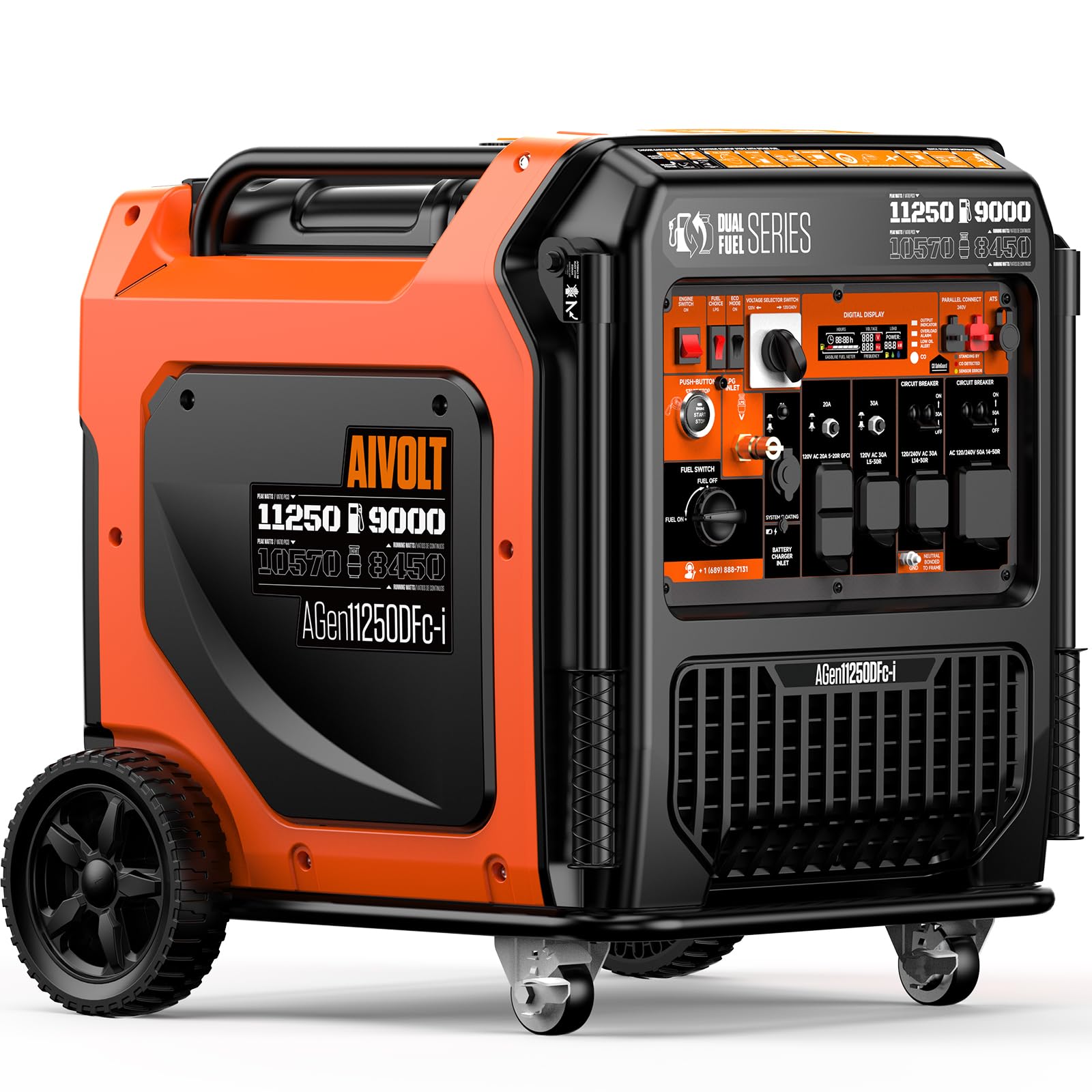
This dual-fuel powerhouse delivers serious wattage for food trucks that need reliable energy without constant refueling stops.
Pros
- Remote start functionality lets us fire it up from inside the truck without stepping outside
- Fuel flexibility with both gas and propane options means we can switch based on what’s available or cheaper
- Extended runtime of over 19 hours on Eco Mode keeps operations running through long service days
Cons
- Requires a complete cooldown period before restarting, which can take up to an hour after shutdown
- Instructions could be clearer for initial setup and fuel switching procedures
- Takes up considerable space at nearly 30 inches in length
We put this generator through its paces during multiple weekend events, and it handled our microwave, refrigeration units, and lighting simultaneously without breaking a sweat. The 11250-watt output on gasoline gives us plenty of headroom for startup surges when multiple appliances kick on at once.
Switching between fuel sources mid-operation proved incredibly convenient during a propane delivery delay. We simply flipped the switch and kept serving customers without missing a beat. The carbon monoxide auto-shutoff gave us peace of mind when operating in tighter setup areas.
The digital display made monitoring fuel levels straightforward during busy rushes. We appreciated knowing exactly how much runtime remained without guessing or constantly checking tanks. The remote start became essential on cold mornings when we wanted to get systems running before opening.
One frustration emerged when we needed to restart after a brief shutdown between lunch and dinner service. The safety mode lockout meant waiting around 45 minutes for the unit to cool sufficiently. Planning around this limitation became part of our routine, but it did create some scheduling headaches initially.
The noise level impressed us compared to older generators we’ve used. Customers standing near our serving window could hold normal conversations without shouting. Build quality feels solid, and the wheel kit makes repositioning manageable despite the substantial weight.
Westinghouse WGen9500DF Dual Fuel Generator

This powerhouse delivers enough juice to run your entire food truck operation with the flexibility of switching between gasoline and propane fuel sources.
Pros
- Remote start capability lets you fire up the generator from inside your truck without stepping outside
- Dual fuel operation gives you flexibility when one fuel type runs low or becomes expensive
- Transfer switch ready design simplifies connecting to your food truck’s electrical panel
Cons
- Weight of 210 pounds makes it challenging to move around without the included wheels
- Price point sits higher than single-fuel alternatives
- Takes up considerable storage space in your truck setup
We’ve been running the Westinghouse WGen9500DF for our mobile food operation, and the dual fuel capability has proven invaluable during busy festival weekends. The ability to switch between gasoline and propane means we never worry about running out of power mid-service.
The remote start feature changed how we operate daily. We can start the generator from inside the truck while prepping food, which saves time during those hectic morning setups. The key fob works from a decent distance, though we’ve found it occasionally needs a second press in crowded areas with lots of interference.
Power output handles everything we throw at it simultaneously. Our air conditioning, refrigeration units, griddle, and fryer all run without bogging down the generator. The 12-hour runtime on gasoline gives us enough juice for a full day’s service without refueling, though propane tanks need swapping more frequently.
Assembly took us about 20 minutes out of the box. The included oil and funnel got us started immediately, and the never-flat wheels make positioning the unit easier than we expected given its weight. We appreciate the fuel gauge that prevents those anxious moments wondering if we’ll make it through the lunch rush.
The VFT display provides useful information about voltage and runtime hours. We check it regularly to track maintenance intervals, which helps prevent unexpected breakdowns during peak business hours. The automatic low oil shutdown has already saved us once when we forgot to check levels before a busy Saturday.
Noise levels are noticeable but not excessive for a generator this powerful. Customers standing near our service window can hold normal conversations, though we position it away from seating areas when possible. The cast iron construction feels solid and built to withstand the constant transport and setup our food truck lifestyle demands.
Our Verdict
For food truck operators needing reliable, high-capacity power, we recommend the Westinghouse WGen9500DF as our top choice for its dual fuel flexibility and remote start convenience that simplifies daily operations.
WEN 6800-Watt Dual Fuel Inverter Generator

This generator delivers substantial power with the flexibility of dual fuel operation, making it a solid choice for food truck operators who need reliable energy without excessive noise.
Pros
- Dual fuel capability lets you switch between gasoline and propane depending on what’s available or more cost-effective
- Electric start button makes firing it up incredibly convenient during busy service hours
- Runs surprisingly quiet at 64 decibels, so you won’t be drowning out customer conversations
Cons
- Weighs nearly 100 pounds, which makes moving it around your food truck setup a bit of a workout
- Battery access is awkward and requires patience when maintenance time comes around
- Takes up considerable space due to its larger footprint
We found the WEN 6800-Watt Dual Fuel Inverter Generator handled our food truck power needs without breaking a sweat. Running our refrigeration units, prep equipment, and lighting simultaneously didn’t phase this unit. The ability to flip between gasoline and propane proved incredibly practical when propane prices dropped in our area last month.
The electric start feature changed our morning routine entirely. No more yanking on pull cords before dawn when setting up for breakfast service. We just pressed the button and got on with prep work. The CO shutdown sensor gave us peace of mind working in a confined space, though we always maintain proper ventilation.
Power output stayed consistent throughout our longest service days. We ran it for eight hours straight during a festival weekend, and it kept our deep fryers and griddles operating at full capacity. The clean power output meant our point-of-sale system and phone chargers worked without any issues.
The weight becomes noticeable when you need to reposition it. We built a small rolling platform to move it from storage to our operating position each day. The telescoping handle helps, but getting it in and out of our truck still requires two people. Fuel economy impressed us with the eco-mode engaged, stretching our operating costs further than our previous generator.
Our Verdict
For food truck operators seeking dependable power with fuel flexibility, we recommend the WEN 6800-Watt Dual Fuel Inverter Generator as our top choice. The combination of substantial wattage, quiet operation, and dual fuel capability makes it worth the investment for professional mobile food service.
WEN 13,000-Watt Tri-Fuel Inverter Generator
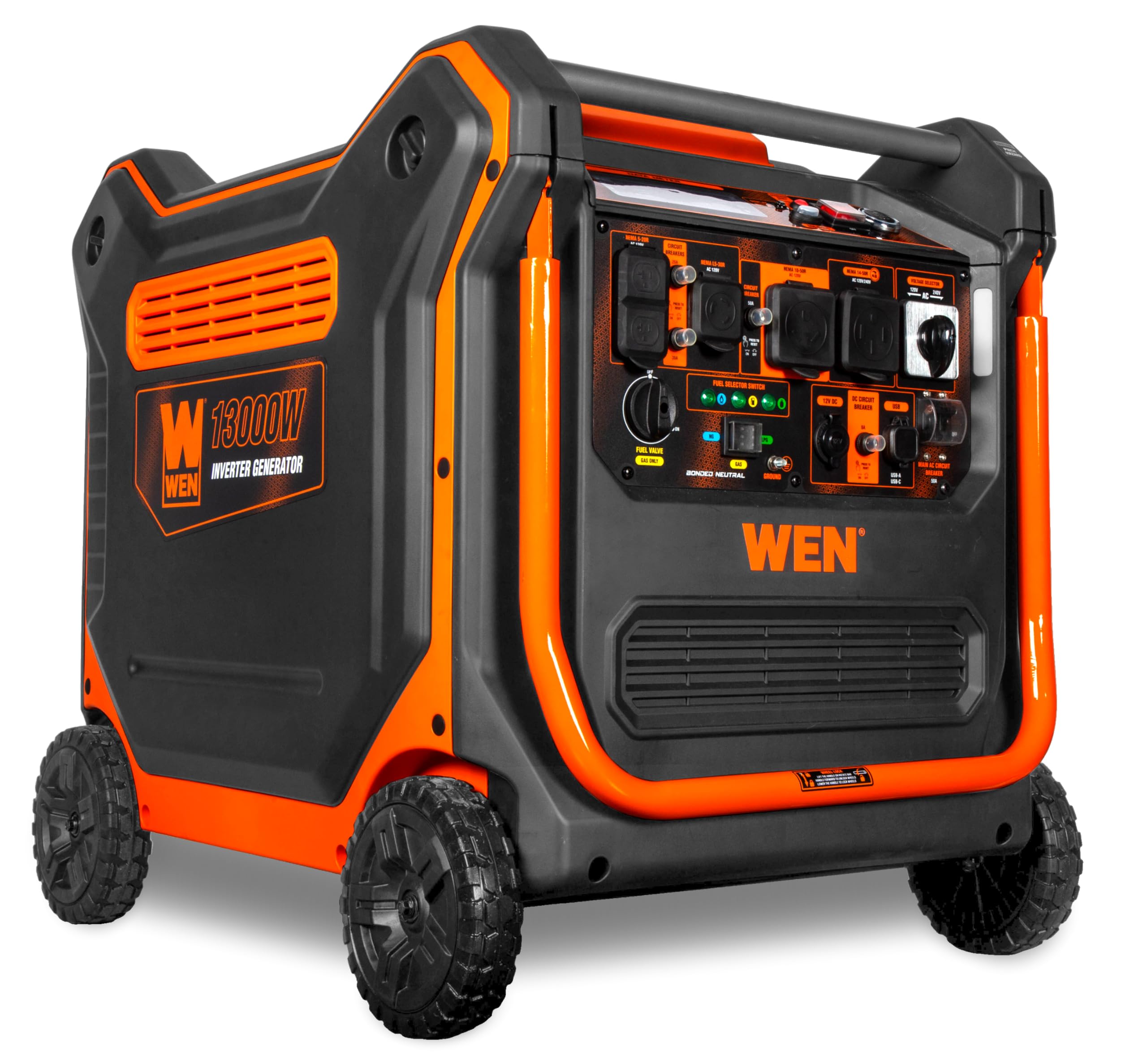
This powerhouse offers exceptional flexibility for food truck operators who need reliable energy from multiple fuel sources without compromising on clean power delivery.
Pros
- Tri-fuel capability lets us switch between gasoline, propane, and natural gas based on availability and cost
- Clean sine wave output protects sensitive kitchen equipment like point-of-sale systems and refrigeration controllers
- Built-in CO sensor provides critical safety monitoring in food service environments
Cons
- Weight of nearly 247 pounds makes relocation challenging even with the included wheels
- Price point sits higher than single-fuel alternatives
- Natural gas hose requires separate purchase to utilize all three fuel options
We’ve found the fuel flexibility to be a game-changer during long service days. Running on propane during peak hours and switching to gasoline when needed means we’re never caught without power options.
The electric start proved invaluable during morning prep when we’re juggling multiple tasks. No pulling cords or fighting with a reluctant engine while trying to get refrigeration units running.
Power output holds steady across our entire equipment load. We ran a commercial refrigerator, griddle, and cash register simultaneously without voltage drops or flickering lights that might reset our equipment.
The eco-mode feature actually delivers on fuel savings. We noticed the engine adjusting its output when our coffee maker cycled off, rather than running at full throttle constantly.
Noise levels stay reasonable even during lunch rush. At 64 decibels during lighter loads, customers standing near our service window can still hold normal conversations without shouting.
The data meter gives us real-time fuel monitoring, which helps prevent those panic moments when you’re wondering if you’ll make it through the dinner shift. We check it as routinely as our food inventory now.
Storage and transport require planning due to the size. The folding handle works well, but navigating tight parking situations with this unit demands some maneuvering space.
Our Verdict
For food truck operators prioritizing fuel flexibility and clean power delivery, we recommend the WEN 13,000-Watt Tri-Fuel Inverter Generator as our top choice for reliable mobile food service power.
Westinghouse iGen11000DFc Dual Fuel Inverter Generator

This powerhouse delivers reliable, clean energy for food trucks with the flexibility of dual fuel operation and enough capacity to run all your equipment simultaneously.
Pros
- Remote start capability makes firing it up from inside the truck incredibly convenient during busy service hours
- Running on propane gives us consistent power while keeping fuel costs predictable and storage simpler
- Digital display provides real-time information about fuel levels and power output without guessing
Cons
- Weight of 187 pounds means moving it around requires two people or a good hand truck
- Initial cost runs higher than conventional generators though the dual fuel option helps offset this over time
- Enclosed design makes oil checks slightly less accessible than open-frame models
We’ve been running the Westinghouse iGen11000DFc behind our food truck for several months now and it handles everything we throw at it. The 9,000 running watts powers our refrigeration units, griddle, and fryer simultaneously without breaking a sweat. Starting it with the key fob from inside the truck beats walking outside in bad weather or during a dinner rush.
Switching between gasoline and propane takes just a few seconds with the fuel selector switch. We primarily use propane since we already keep tanks on hand for cooking equipment, which simplifies our fuel management considerably. The engine runs quieter than we expected for this wattage, though it’s not whisper-quiet like smaller inverters.
The built-in CO sensor gives us peace of mind when positioning the unit near the service window. We appreciate how the LED data center rotates through different metrics so we can monitor runtime and voltage without stopping service. The never-flat wheels handle uneven festival grounds and parking lots better than pneumatic tires would.
Setting it up straight from the box took us about 25 minutes including adding the supplied oil and connecting our first propane tank. The transfer switch ready outlets mean we could upgrade to an automatic system later if needed. After running it through multiple 12-hour service days, the fuel efficiency impressed us more than the specs suggested it would.
Our Verdict
For food truck operators needing dependable power that won’t disrupt sensitive electronics, we recommend the Westinghouse iGen11000DFc as our top choice. The dual fuel capability and remote start functionality make daily operations smoother while the clean power output protects your investment in kitchen equipment.
Buying Guide
When selecting a generator for a food truck, we need to consider several critical factors that directly impact daily operations. The right choice ensures consistent power supply while meeting regulatory requirements and budget constraints.
Power Requirements
We must first calculate total wattage needs by adding up all equipment that runs simultaneously. This includes refrigerators, freezers, grills, fryers, point-of-sale systems, and lighting.
Starting watts differ from running watts because motors and compressors need extra power during startup. We should always choose a generator that exceeds our peak power needs by at least 20% for safety.
Fuel Type Considerations
| Fuel Type | Advantages | Disadvantages |
|---|---|---|
| Gasoline | Lower initial cost, widely available | Shorter runtime, more frequent refueling |
| Diesel | Better fuel efficiency, longer lifespan | Higher upfront cost, louder operation |
| Propane | Cleaner burning, longer shelf life | Lower power output, requires tank storage |
| Dual-Fuel | Flexibility, backup fuel option | More complex maintenance |
Noise Level
We need to check decibel ratings since many cities enforce noise ordinances. Quieter models with enclosed designs work best in residential areas and special events.
Size and Portability
Physical dimensions matter when space is limited. We should measure our available storage area and consider whether the generator needs to be moved frequently.
Runtime and Tank Capacity
Longer runtime means fewer refueling interruptions during peak service hours. We recommend units that run at least 8-10 hours at 50% load.
Our Top Pick: Champion 4375/3500-Watt Dual Fuel Portable Generator
Frequently Asked Questions
Food truck operators need to understand power requirements, generator types, and sizing calculations to ensure reliable operation during service hours. The right generator depends on your specific equipment load, voltage requirements, and operating conditions.
What size generator do I need to power a food truck?
We calculate the required generator size by adding up the running wattage of all equipment that operates simultaneously. Most food trucks need between 4,000 and 12,000 watts depending on their menu and equipment.
Start by listing every electrical item in your truck and its wattage. Don’t forget to account for startup surge power, which can be 2-3 times higher than running wattage for motors and compressors.
A coffee and light snack truck might operate on 3,000-5,000 watts, while a full-service truck with fryers, griddles, and refrigeration typically requires 8,000-12,000 watts. We recommend adding 20-30% to your calculated total to provide headroom for peak demand.
Can a portable generator reliably run a food truck during service hours?
Portable generators can reliably power food trucks if properly sized and maintained. We’ve seen many operators successfully use quality portable units for 8-12 hour service days.
The key is selecting a unit with enough fuel capacity and efficiency to run your expected shift length. Most 7,000-12,000 watt portable generators run 8-10 hours on a full tank at 50% load.
Regular maintenance is essential for reliability. We change oil every 50-100 hours, clean air filters monthly, and keep spare spark plugs on hand.
Is a 10,000-watt or 12,000-watt generator sufficient for typical food truck equipment?
A 10,000-watt generator handles most food trucks with moderate equipment loads, including a couple of refrigerators, a griddle, and a microwave. A 12,000-watt unit provides additional capacity for heavy-duty cooking equipment.
We find that 12,000 watts comfortably powers trucks with multiple high-draw appliances like deep fryers, commercial griddles, and air conditioning. This size offers enough buffer for startup surges and unexpected power demands.
For trucks with electric fryers or multiple 220V appliances, we lean toward the 12,000-watt option. The extra capacity prevents overloading and allows for future equipment additions.
What should I consider when choosing a generator that supports 220V appliances for a food truck?
We verify that the generator produces both 120V and 240V outputs through dedicated receptacles. Many food trucks need 240V for commercial ranges, large fryers, or HVAC systems.
Check the amperage rating on the 240V outlet to ensure it matches your appliance requirements. A typical 240V/30A outlet provides 7,200 watts, while a 240V/50A outlet delivers 12,000 watts.
We also confirm that the generator can handle the combined load of both 120V and 240V circuits simultaneously. The total wattage across all circuits must stay within the generator’s rated capacity.
How does the 80% rule apply when sizing a generator for continuous food truck use?
The 80% rule states that we should only use 80% of a generator’s rated capacity for continuous operation. This prevents overheating and extends engine life during long service hours.
For a 10,000-watt generator, we limit continuous loads to 8,000 watts. This means calculating your total running wattage and dividing by 0.8 to find the minimum generator size needed.
We apply this rule strictly for equipment that runs continuously for hours, such as refrigerators, freezers, and ventilation fans. It’s the difference between a generator that lasts 500 hours and one that lasts 2,000 hours.
What are the key differences between inverter and conventional generators for food truck power needs?
Inverter generators produce cleaner power with less than 3% total harmonic distortion, making them safe for sensitive electronics like point-of-sale systems and digital controls. Conventional generators typically have 6-9% THD, which can damage electronic equipment over time.
We notice that inverter models run quieter at 50-60 decibels compared to 70-80 decibels for conventional units. This matters for food trucks in residential areas or events with noise restrictions.
Fuel efficiency is another major difference. Inverter generators adjust engine speed based on load, using 20-40% less fuel than conventional generators at partial loads.
The main drawback is cost and maximum power output. Inverter generators cost 50-100% more and are harder to find above 7,000 watts, while conventional generators easily reach 12,000-15,000 watts at lower prices.
We recommend the DuroMax XP12000EH for food truck operators who need reliable dual-fuel capability and 12,000 watts of power. This generator handles heavy equipment loads with both 120V and 240V outputs while offering fuel flexibility between gasoline and propane.

Trevor Fenner is an ecommerce entrepreneur and the founder of Ecommerce Paradise, a platform focused on helping entrepreneurs build and scale profitable high-ticket ecommerce and dropshipping businesses. With over a decade of hands-on experience, Trevor specializes in high-ticket dropshipping strategy, niche and product selection, supplier recruiting and onboarding, Google & Bing Shopping ads, ecommerce SEO, and systems-driven automation and scaling. Through Ecommerce Paradise, he provides free education via in-depth guides like How to Start High-Ticket Dropshipping, advanced training through the High-Ticket Dropshipping Masterclass, and fully done-for-you turnkey ecommerce services for entrepreneurs who want a faster, more hands-off path to growth. Trevor is known for emphasizing sustainable, real-world ecommerce models over hype-driven tactics, helping store owners build scalable, sellable, and location-independent brands.


