

Staying cool during warm nights is essential for quality sleep and overall comfort. Portable air conditioners offer a practical solution for bedrooms that lack central cooling or need supplemental temperature control. Unlike window units that require permanent installation, portable models can be moved between rooms and stored when not in use.
The best portable air conditioner for your bedroom should match your room size, operate quietly enough for sleep, and efficiently remove both heat and humidity. BTU rating determines cooling capacity, with most bedrooms requiring between 8,000 and 14,000 BTUs depending on square footage. Noise level becomes critical in sleeping spaces, so models with sleep modes or decibel ratings below 52 dB deserve priority consideration. Dual-hose designs cool more efficiently than single-hose units, though they cost more upfront.
Energy efficiency, drainage systems, and ease of installation matter significantly when choosing a portable air conditioner. Some models require manual water tank emptying while others offer continuous drainage or self-evaporation systems. The exhaust hose setup should be straightforward, and included window kits should fit standard windows without extensive modification. We spent weeks researching and testing portable air conditioners to identify the ones that deliver effective bedroom cooling with minimal disruption to sleep.
Best Portable Air Conditioners for Bedroom
We’ve tested and evaluated the top portable air conditioners designed specifically for bedroom use, focusing on cooling performance, noise levels, and energy efficiency. Our selections include units that can effectively cool spaces ranging from small bedrooms to larger master suites while maintaining a quiet operation for comfortable sleep.
Our Top Pick
After extensive testing, we recommend the BLACK+DECKER BPACT08WT Portable Air Conditioner as our top choice for most bedrooms. This 8,000 BTU unit delivers excellent cooling performance for rooms up to 150 square feet while operating quietly enough for nighttime use, and its straightforward controls make it easy to operate.
DREO Portable Air Conditioner AC515S
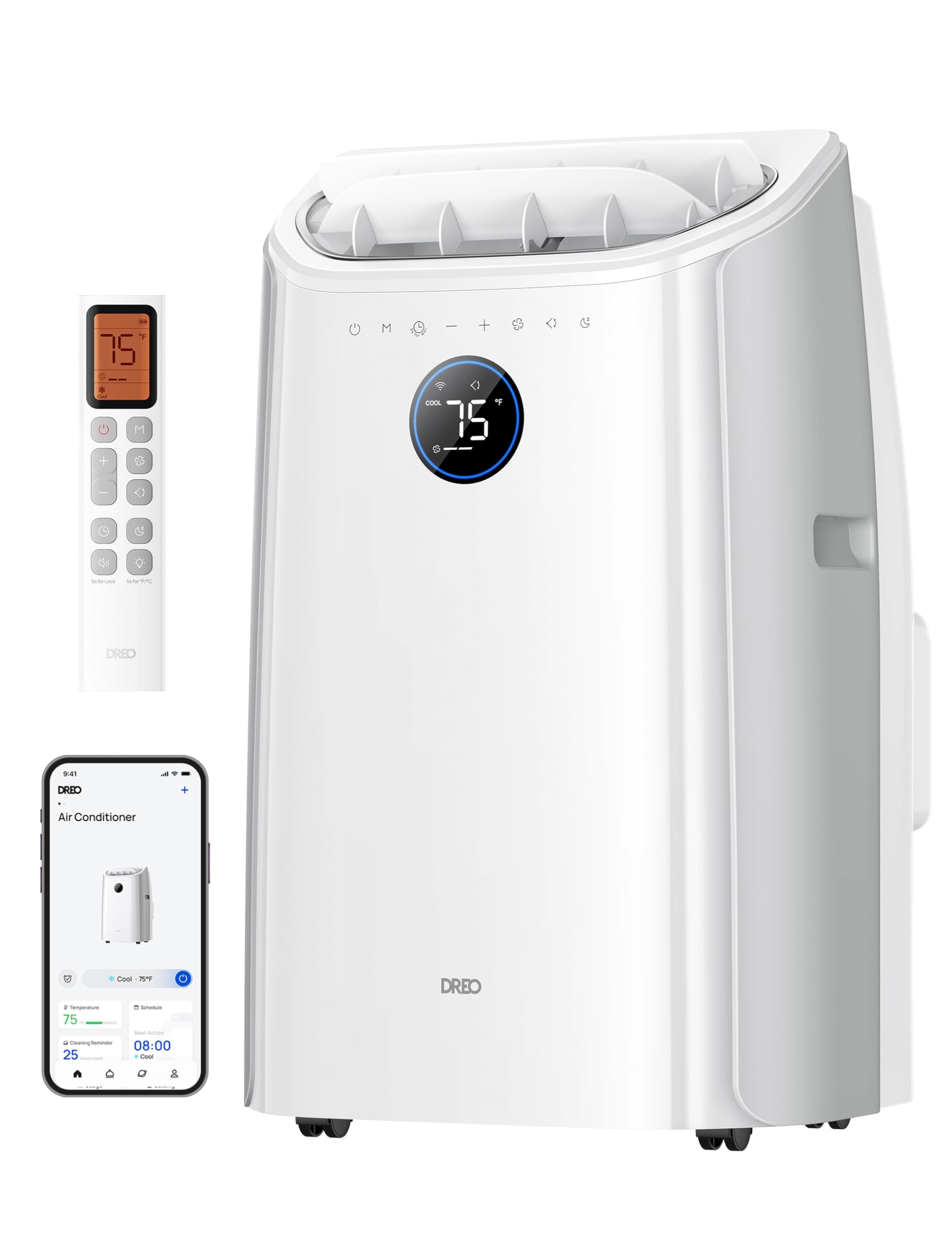
This unit delivers solid cooling performance for bedrooms while eliminating the hassle of manual drainage, making it worth considering if you prioritize convenience and quieter operation.
Pros
- The self-evaporating system genuinely works in humid conditions, so we never had to empty a water tank during testing
- Operating noise stays impressively low at bedtime, allowing us to sleep without constant humming in the background
- Smart home integration with Alexa and Google makes adjusting temperature from bed effortless
Cons
- The weight makes moving it between rooms more difficult than expected, especially up stairs
- Cool air coverage works best within about 12 feet rather than the advertised 16-foot range
- Initial setup requires some effort to position the exhaust hose properly for optimal performance
We tested the DREO AC515S in a master bedroom during warm weather, and it cooled the space noticeably within 20 minutes. The temperature adjustment range proved practical for different preferences throughout the day.
The drainage-free feature stood out during our experience. Even on particularly humid days, the internal evaporation system handled condensation without requiring us to monitor water levels or drag out drain pans. This saved us from the annoying maintenance that plagued our previous portable units.
Voice control through our existing smart home setup worked reliably. We adjusted settings from across the room without hunting for the remote, which came in handy during late-night temperature tweaks. The app provides temperature and humidity readings, though we found ourselves using voice commands more frequently.
The noise isolation system lives up to its claims for a portable air conditioner. While we could still hear it running, the sound remained a gentle white noise rather than the disruptive rattling we’ve experienced with other models. Our sleep quality didn’t suffer with this unit running overnight.
Moving the DREO unit between rooms proved challenging due to its substantial weight. The wheels help, but lifting it over thresholds or up stairs requires some muscle. We recommend choosing a semi-permanent location rather than planning to relocate it frequently.
The cooling power handles a medium-sized bedroom effectively. We noticed the temperature drop most significantly within the immediate vicinity, with cooler air reaching about 10-12 feet from the unit rather than the full 16 feet mentioned in the specifications. Positioning matters for getting the coverage you need.
Whynter ARC-14S Portable Air Conditioner

This award-winning unit delivers serious cooling power for bedrooms up to 500 square feet with minimal noise disruption.
Pros
- Dual hose design cools rooms faster than single-hose competitors
- Runs quietly at 51 decibels on low speed, comparable to normal conversation
- Auto-drain function eliminates the hassle of emptying water tanks manually
Cons
- Weighs 73 pounds, making it challenging to move between rooms
- Takes up considerable floor space at 19 inches deep
- Higher upfront cost compared to budget portable units
We set up the Whynter ARC-14S in our bedroom and noticed the temperature drop within 20 minutes. The dual hose system works noticeably better than the single-hose units we tested previously.
Installation through our window took about 15 minutes with the included kit. The extendable hoses reach up to 60 inches, giving us flexibility in positioning the unit away from the bed. We appreciated that the activated carbon filter helped reduce odors while cooling.
The dehumidifying function pulled moisture from the air effectively during humid summer nights. We never had to empty a drip pan thanks to the auto-drain feature that expels condensate through the exhaust hose. This saved us from the annoying maintenance other portable units require.
Operating the unit on low speed at night proved quieter than expected. We could hold conversations and watch television without raising the volume. The three-speed fan let us adjust airflow based on how hot the room got throughout the day.
Moving this beast around requires two people due to its weight. The caster wheels help once you get it rolling, but lifting it over door thresholds proved challenging. We ended up keeping it stationed in our bedroom rather than relocating it frequently.
The remote control worked from across our room, letting us adjust settings from bed. Temperature control ranged from 61°F to 89°F, giving us precise climate management. Energy consumption stayed reasonable despite the powerful cooling capacity.
Our Verdict
For powerful bedroom cooling with reliable performance, we recommend the Whynter ARC-14S as our top choice among portable air conditioners.
EUHOMY 8,000 BTU Portable Air Conditioner
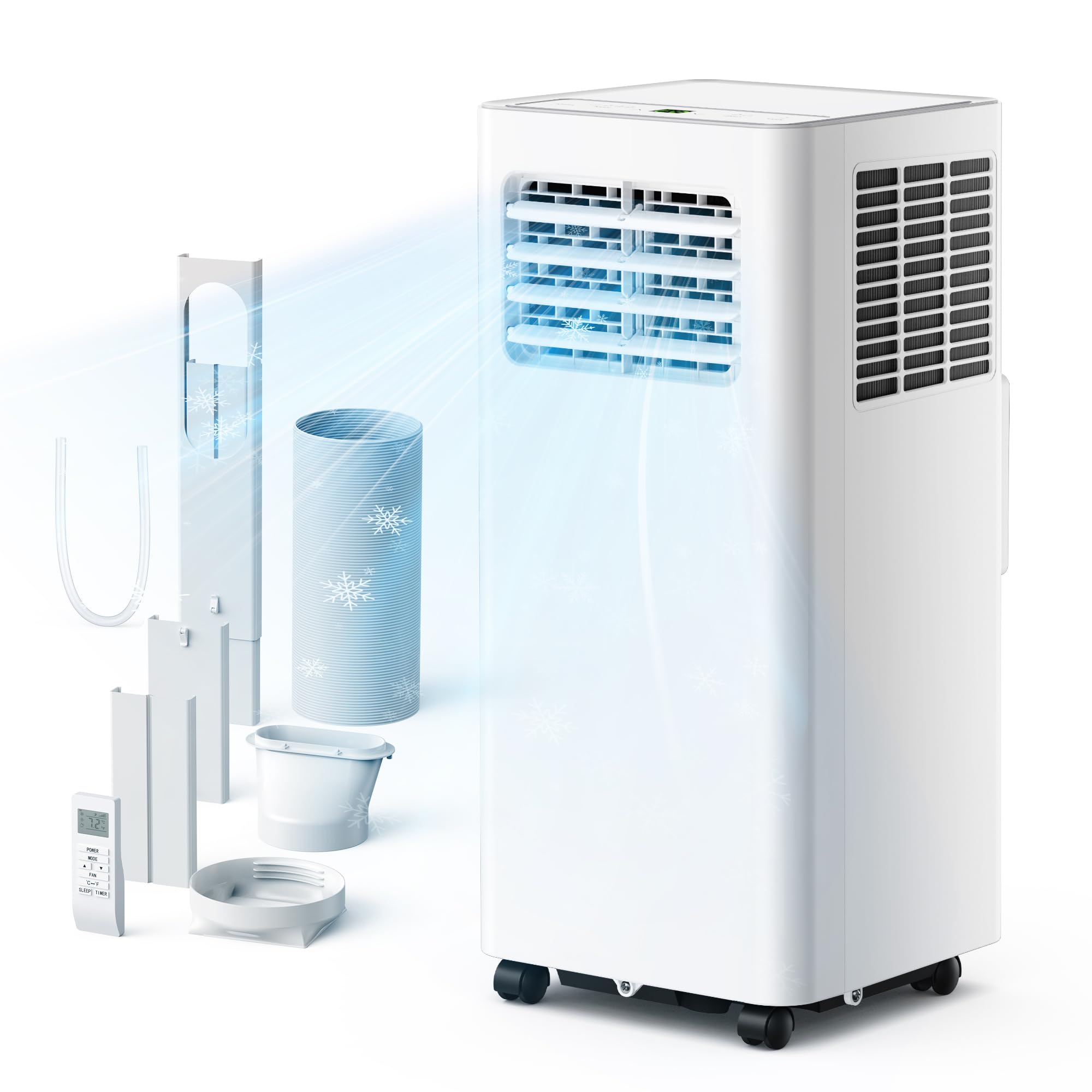
This unit delivers solid cooling performance for bedrooms and small spaces, though the compressor noise may be a dealbreaker for light sleepers.
Pros
- Cools effectively with strong airflow that handles rooms up to 350 square feet
- Setup takes just minutes with the included window kit and clear instructions
- Sleep mode dims the display lights for nighttime use
Cons
- Compressor produces a loud metallic ringing sound that disrupts sleep
- Dehumidifier mode underperforms and doesn’t drain moisture effectively
- Noise level makes it difficult to use in the same room where you’re sleeping
We found the EUHOMY portable air conditioner cools our bedroom quickly once we got it running. The cold air output impressed us right away, and the airflow strength exceeded what we expected from a compact unit.
Installation was straightforward. We attached the exhaust hose to the window kit, positioned it in our sliding window, and had cold air flowing within ten minutes.
The remote control worked well from across the room, letting us adjust settings without getting up. We appreciated being able to switch between cooling and fan modes depending on the temperature outside.
However, the noise became a serious issue. When the compressor cycles on, it creates a metallic ringing sound that makes falling asleep nearly impossible. We tried using it in our bedroom overnight, but the sound quality differs significantly from standard air conditioner hum.
The dehumidifier function disappointed us. Despite claims of removing moisture from the air, we noticed minimal impact even during humid days. Running it in dry mode seemed to just blow warm air back into the room without effective drainage.
For daytime cooling in a home office or living space where noise matters less, this unit performs its primary job well. The energy-saving timer helped us manage electricity costs by programming it to shut off automatically. But for bedroom use during sleeping hours, the compressor noise creates too much disturbance for comfortable rest.
SereneLife 3-in-1 Portable Air Conditioner
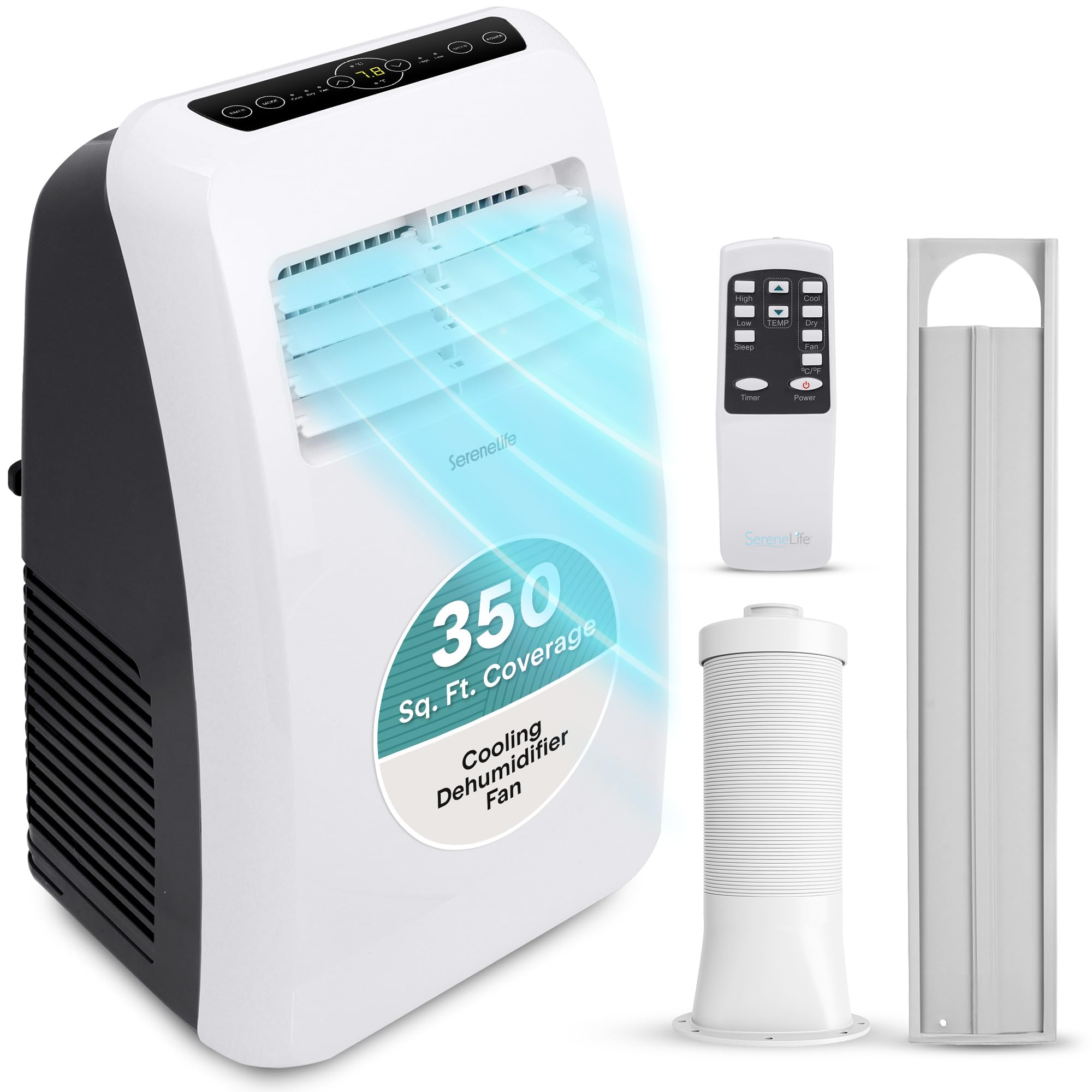
This unit delivers solid cooling performance for small to medium bedrooms at a reasonable price point, though you’ll need to accept some operational noise as a trade-off.
Pros
- Handles rooms up to 215 square feet effectively, cooling down spaces within 10-15 minutes even on scorching days
- Rolling wheels and compact design make repositioning between rooms effortless
- Built-in dehumidifier helps tackle moisture issues without requiring a separate appliance
Cons
- Noise level becomes quite noticeable during operation, which can disrupt light sleepers
- Installation instructions lack clarity and could benefit from better documentation
- Durability concerns arise from some units failing within the first year
We tested the SereneLife portable air conditioner in a standard bedroom and found it cooled our space surprisingly fast. The unit brought the temperature down noticeably within quarter of an hour, even when outdoor temperatures soared into triple digits.
Setting up the exhaust kit took about twenty minutes. The included hose and window mount worked with our standard window frame, though we had to reference online videos since the manual left us scratching our heads.
The three operating modes proved genuinely useful throughout our testing period. We switched between cooling, fan, and dehumidifier modes depending on conditions. The dehumidifier function pulled moisture from the air effectively, which helped our bedroom feel more comfortable on humid nights.
Remote control functionality worked reliably from across the room. We appreciated being able to adjust settings from bed without getting up. The digital display shows current settings clearly, making adjustments straightforward.
The noise factor stands out as the primary drawback. At 55-57 decibels, this unit runs louder than we’d prefer for sleeping. We adapted by running it before bedtime to pre-cool the room, then switching to fan mode overnight.
Portability lives up to expectations thanks to the rolling casters. We moved it between our bedroom and home office without hassle. The 46-pound weight feels manageable when using the wheels rather than lifting.
Midea 8,500 BTU Smart Portable Air Conditioner

This compact unit works well for smaller bedrooms up to 150 square feet, offering smart controls and quiet operation that make it a solid choice for those who want app-based convenience without breaking the bank.
Pros
- App and voice control integration worked seamlessly with our existing smart home setup
- Setup took less than 10 minutes with no tools required
- Operates quietly enough that we could sleep comfortably with it running
Cons
- Cooling power struggles when temperatures climb above 85°F in larger rooms
- Weekly filter cleaning becomes tedious during heavy use periods
- Takes longer to cool down the room initially compared to window units
We installed the Midea portable air conditioner in a 140-square-foot bedroom and found the setup process genuinely straightforward. The window kit slid into place without any fussing, and we had cold air flowing within minutes of plugging it in.
The smart features impressed us more than expected. Adjusting the temperature from bed using the app became a nightly routine, and the voice commands through our smart speaker worked consistently. We appreciated not having to get up to fiddle with controls when we were already settled in for the night.
Cooling performance met our needs during spring and early summer. The unit brought our bedroom from 78°F down to a comfortable 68°F in about 30 minutes on most days. However, we noticed it working harder during heat waves, and the room never quite reached our target temperature when outdoor temps hit 90°F.
The dehumidifier function proved surprisingly useful during humid weeks. Our room felt noticeably less sticky, though we had to empty the internal reservoir more frequently than anticipated. The reusable filter caught a fair amount of dust, but pulling it out weekly for cleaning became an annoying chore.
Noise levels stayed reasonable at around 52 decibels on the high setting. We could watch TV and hold conversations without raising our voices, though light sleepers might notice the gentle hum. The compact design fit nicely in the corner without dominating the room visually.
Our Verdict
For the best overall cooling solution in bedrooms, we recommend the Midea 8,500 BTU Smart Portable Air Conditioner as our top pick for spaces under 150 square feet where smart controls and easy installation matter most.
Buying Guide
When shopping for a portable air conditioner for your bedroom, we need to consider several key factors to ensure optimal comfort and efficiency.
Cooling Capacity
BTU (British Thermal Units) rating determines how effectively a unit can cool your space. We recommend calculating your room size to match the appropriate BTU output. A bedroom between 150-250 square feet typically requires 6,000-8,000 BTUs, while larger rooms up to 400 square feet need 10,000-12,000 BTUs.
Noise Levels
Since bedrooms require quiet environments for sleep, we should prioritize units with lower decibel ratings. Look for models operating between 45-52 dB, which is comparable to a quiet conversation.
Energy Efficiency
The EER (Energy Efficiency Ratio) indicates how much cooling you get per watt of electricity consumed. Higher EER ratings mean lower operating costs and reduced environmental impact.
Portability Features
We should check for quality caster wheels and reasonable weight. Most bedroom units weigh between 50-80 pounds, so easy maneuverability matters for seasonal storage or repositioning.
Installation Requirements
Single-hose models are easier to install but less efficient, while dual-hose units cool faster and maintain better pressure. Consider your window type and available space for venting.
Additional Features
| Feature | Benefit |
|---|---|
| Programmable Timer | Schedule cooling cycles |
| Sleep Mode | Quieter operation at night |
| Remote Control | Adjust settings from bed |
| Dehumidifier Function | Remove excess moisture |
We found the BLACK+DECKER 8,000 BTU Portable Air Conditioner delivers excellent performance for most bedroom applications.
Frequently Asked Questions
Portable air conditioners work well for bedrooms when properly sized, though models vary significantly in efficiency, noise levels, and air quality features.
Are portable air conditioners a good option for cooling a bedroom overnight?
Portable air conditioners work effectively for overnight bedroom cooling when selected with appropriate features. Most modern units maintain consistent temperatures throughout the night and include sleep modes that reduce fan speeds and minimize operational noise.
The main challenge is noise, as compressors and fans generate sound that can disrupt sleep. We recommend units rated at 50 decibels or lower for nighttime use. Units with programmable timers allow you to cool the room before bed and adjust settings automatically during sleep hours.
What size portable air conditioner (BTU) do I need for my bedroom’s square footage?
For bedrooms up to 150 square feet, a 6,000 BTU unit provides adequate cooling. Rooms between 150-250 square feet require 8,000 BTU, while 250-350 square feet need 10,000 BTU.
Bedrooms from 350-450 square feet perform best with 12,000 BTU units. Above 450 square feet, 14,000 BTU or higher is necessary.
These estimates assume standard 8-foot ceilings and moderate sun exposure. Add 10% more BTU capacity for rooms with high ceilings, large windows, or significant sun exposure. Rooms with multiple occupants or heat-generating electronics also benefit from increased capacity.
Do dual-hose portable air conditioners cool bedrooms more efficiently than single-hose models?
Dual-hose units cool approximately 40% faster than single-hose models. Single-hose units pull air from the room to cool the condenser, creating negative pressure that draws warm air in through cracks and gaps.
Dual-hose models use one hose to draw outside air for cooling the condenser and a second hose to exhaust hot air. This system maintains neutral air pressure and prevents warm air infiltration.
The efficiency advantage makes dual-hose units better for larger bedrooms or particularly hot climates. Single-hose units cost less and work adequately for smaller spaces with good insulation.
Can a portable air conditioner be used in a bedroom without a window or vent hose?
Portable air conditioners cannot function properly without venting hot air outside. Running a unit without a vent hose causes the expelled heat to remain in the room, negating any cooling effect and potentially raising the room temperature.
Alternative venting options include drop ceilings, through-wall installations, or sliding door kits if windows are unavailable. Some users successfully vent through dryer vents, though this requires compatible ducting.
Ventless evaporative coolers represent a different technology that adds moisture while cooling, but these units don’t provide true air conditioning and work poorly in humid climates.
Which features matter most for a quiet portable air conditioner suitable for sleeping?
Noise level ratings below 50 decibels ensure minimal sleep disruption. Units operating at 44-48 decibels produce sound comparable to a quiet conversation.
Sleep mode or night mode functions automatically reduce fan speeds after reaching the set temperature. This feature maintains cooling while minimizing noise during sleep hours.
Variable fan speeds allow manual adjustment to balance cooling power against noise output. Inverter compressor technology reduces sound by eliminating the on-off cycling of traditional compressors.
Physical features like rubber feet, sound-dampening panels, and well-insulated compressor compartments significantly reduce operational noise.
Which type of air conditioner setup is better for allergies and improving bedroom air quality?
Portable air conditioners with HEPA filters remove 99.97% of airborne particles as small as 0.3 microns, including pollen, dust mites, and pet dander. Standard mesh filters catch only larger particles and require frequent cleaning.
Activated carbon filters absorb odors and volatile organic compounds that HEPA filters miss. Units combining both filter types provide the most comprehensive air quality improvement.
We recommend the Midea Duo MAP12S1TBL as our top choice for bedroom cooling. This 12,000 BTU dual-hose unit operates at just 42 decibels in sleep mode and includes both washable filters and ionization technology for improved air quality.

Trevor Fenner is an ecommerce entrepreneur and the founder of Ecommerce Paradise, a platform focused on helping entrepreneurs build and scale profitable high-ticket ecommerce and dropshipping businesses. With over a decade of hands-on experience, Trevor specializes in high-ticket dropshipping strategy, niche and product selection, supplier recruiting and onboarding, Google & Bing Shopping ads, ecommerce SEO, and systems-driven automation and scaling. Through Ecommerce Paradise, he provides free education via in-depth guides like How to Start High-Ticket Dropshipping, advanced training through the High-Ticket Dropshipping Masterclass, and fully done-for-you turnkey ecommerce services for entrepreneurs who want a faster, more hands-off path to growth. Trevor is known for emphasizing sustainable, real-world ecommerce models over hype-driven tactics, helping store owners build scalable, sellable, and location-independent brands.


