

Ultrawide monitors have transformed office work by providing significantly more screen real estate than traditional displays. These expansive screens eliminate the need for multiple monitors while reducing desk clutter and cable management headaches. The increased horizontal space allows you to view multiple documents, spreadsheets, and applications side by side without constant window switching.
The key advantage of an ultrawide monitor for office tasks is the ability to maintain focus and productivity by keeping all your essential tools visible at once. Professionals working with data analysis, content creation, or financial modeling particularly benefit from the seamless workflow that ultrawide screens enable. The curved design options also reduce eye strain during long work sessions by maintaining consistent viewing distances across the entire display.
When shopping for an ultrawide monitor for office use, resolution and panel type are critical considerations. A higher resolution like 3440×1440 ensures text remains sharp and readable even when splitting the screen into multiple sections. Panel technology matters too—IPS panels offer superior color accuracy and wider viewing angles compared to VA or TN alternatives, which is essential for design work and collaborative viewing. Connectivity options, adjustable stands, and blue light filtering features also play important roles in long-term comfort and usability. We spent extensive time researching and testing various ultrawide monitors to identify the ones that deliver the best performance for office environments.
Best Ultrawide Monitors for Office Work
We’ve tested and evaluated the top ultrawide monitors designed to enhance productivity in professional environments. Our selections focus on screen real estate, ergonomic features, and reliable performance for daily office tasks.
Our Top Pick
After extensive testing, we recommend the LG 34WN80C-B 34-Inch Curved UltraWide Monitor as our top choice for office work. This monitor delivers exceptional color accuracy, USB-C connectivity with 60W power delivery, and a comfortable 21:9 aspect ratio that streamlines multitasking without overwhelming your workspace.
Samsung 34″ ViewFinity S50GC

This ultrawide monitor delivers excellent value for office professionals who need expanded screen real estate without breaking the bank.
Pros
- Ultra-WQHD resolution provides crisp text and ample workspace for multitasking across multiple windows
- Intelligent Eye Care features automatically adjust brightness based on ambient lighting, reducing strain during long work sessions
- Picture-by-Picture mode lets you connect two input sources simultaneously at native resolution
Cons
- Flat panel design may not suit everyone’s ergonomic preferences compared to curved alternatives
- Plastic construction on the rear housing shows fingerprints and smudges more easily than expected
- 100Hz refresh rate is adequate for office work but won’t satisfy demanding gamers
We found the Samsung 34″ ViewFinity S50GC transformed our daily workflow by eliminating the need to constantly switch between windows. The 21:9 aspect ratio gave us enough horizontal space to comfortably view a spreadsheet alongside a document and browser window. Text remained sharp even at the edges of the display.
The ambient light sensor proved genuinely useful rather than gimmicky. Our workspace brightness changes throughout the day, and the monitor adjusted accordingly without us touching any settings. Eye Saver Mode noticeably reduced the harsh blue light during evening work sessions.
HDR10 support brought surprising depth to our daily tasks. Presentations and design work benefited from the enhanced color range, though we primarily appreciated how it made everything from charts to photos look more vibrant. The matte finish eliminated distracting reflections from overhead lighting.
Setting up dual inputs through PBP worked flawlessly when we needed to monitor our laptop and desktop simultaneously. Each source maintained its native resolution, which meant no awkward scaling issues. The minimal bezels kept our focus on the content rather than the frame.
Build quality feels solid for the price point, though the plastic back panel does attract fingerprints. We mounted it on an aftermarket arm without any issues. The included cables got us up and running immediately with both HDMI and DisplayPort options available.
Our Verdict
For the best overall office ultrawide experience, we recommend the Samsung 34″ ViewFinity S50GC as our top choice for professionals seeking maximum productivity without premium pricing.
Dell 34 Plus USB-C Curved Monitor

This monitor delivers exceptional value for office work with its single-cable USB-C connectivity and eye-friendly features, though the included cable runs disappointingly short.
Pros
- Single USB-C connection handles video, data, and 65W charging simultaneously
- ComfortView Plus technology effectively reduces blue light without washing out colors
- Clean desk setup with thoughtful cable management and adjustable height
Cons
- Included USB-C cable is frustratingly short for most desk configurations
- Built-in speakers sound distorted and tinny for voice calls
- USB-C connection occasionally drops signal when bumped
Daily Performance
We’ve been using this curved ultrawide for spreadsheet work and document editing, and the 3440×1440 resolution makes a noticeable difference when working with multiple windows side by side. The curve felt natural within a couple days of switching from a standard flat panel. Text remains sharp across the entire 34-inch span, which matters when we’re reviewing contracts or comparing data in Excel.
Practical Features
The height and tilt adjustments work smoothly without requiring tools. We appreciate being able to raise the screen to proper eye level without stacking books underneath. Dell’s window management software helps divide the screen into fixed zones, though we found ourselves using Windows snap features more often.
Real Issues
That USB-C cable they include barely reaches from the monitor to a laptop sitting right next to it. We ordered a longer replacement cable within the first week. The speakers produce muddy audio that’s fine for system alerts but terrible for video calls. We immediately switched back to headphones for meetings.
Color and Comfort
The VA panel produces deeper blacks than we expected, making it suitable for photo editing work alongside our office tasks. Colors look accurate when reviewing marketing materials. After full workdays staring at the screen, we haven’t experienced the eye strain that plagued us with our previous monitor.
Verdict
For our top recommendation, we suggest the Dell 34 Plus USB-C Curved Monitor as the best choice for office work thanks to its clean single-cable setup and excellent eye comfort features that matter during long workdays.
Sceptre 34-Inch Curved Ultrawide WQHD Monitor

This monitor delivers excellent value for office work with its expansive screen real estate and sharp image quality, though the gaming-focused features may be unnecessary for some productivity users.
Pros
- The 21:9 ultrawide format provides substantial workspace for multitasking with multiple windows side by side
- Sharp WQHD resolution makes text crisp and easy to read during long work sessions
- Affordable price point compared to other ultrawide monitors with similar specifications
Cons
- Built-in speakers produce mediocre sound quality that’s only adequate for video calls
- The RGB backlight feature feels gimmicky for professional office environments
- Matte screen finish can appear slightly grainy in certain lighting conditions
We found the Sceptre 34-Inch Curved Ultrawide to be surprisingly capable for office tasks despite its gaming-oriented marketing. The 3440 x 1440 resolution gives us plenty of pixels to work with when editing documents or comparing spreadsheets.
Setting up multiple windows became effortless with the extra horizontal space. We could comfortably fit three full-size documents across the screen without feeling cramped. The 1500R curve felt natural after a brief adjustment period and helped reduce eye strain during extended use.
The VA panel produces decent color accuracy for everyday office work. We didn’t need to calibrate anything out of the box for typical productivity tasks. Text rendering was clean and legible even at smaller font sizes.
Connectivity options are generous with two HDMI and two DisplayPort inputs. This made it easy to switch between our work laptop and desktop without constantly swapping cables. The tilt adjustment worked smoothly, though we wished for height adjustment capabilities.
Build quality feels solid considering the price point. The stand provides stable support without wobbling during typing. We appreciated the straightforward assembly process that took less than ten minutes.
Our Verdict
For office workers seeking maximum screen space without breaking the budget, we recommend the Sceptre 34-Inch Curved Ultrawide WQHD Monitor as our top choice for productivity-focused users who value workspace expansion over premium features.
LG 34U530A-W 34-inch UltraWide Monitor
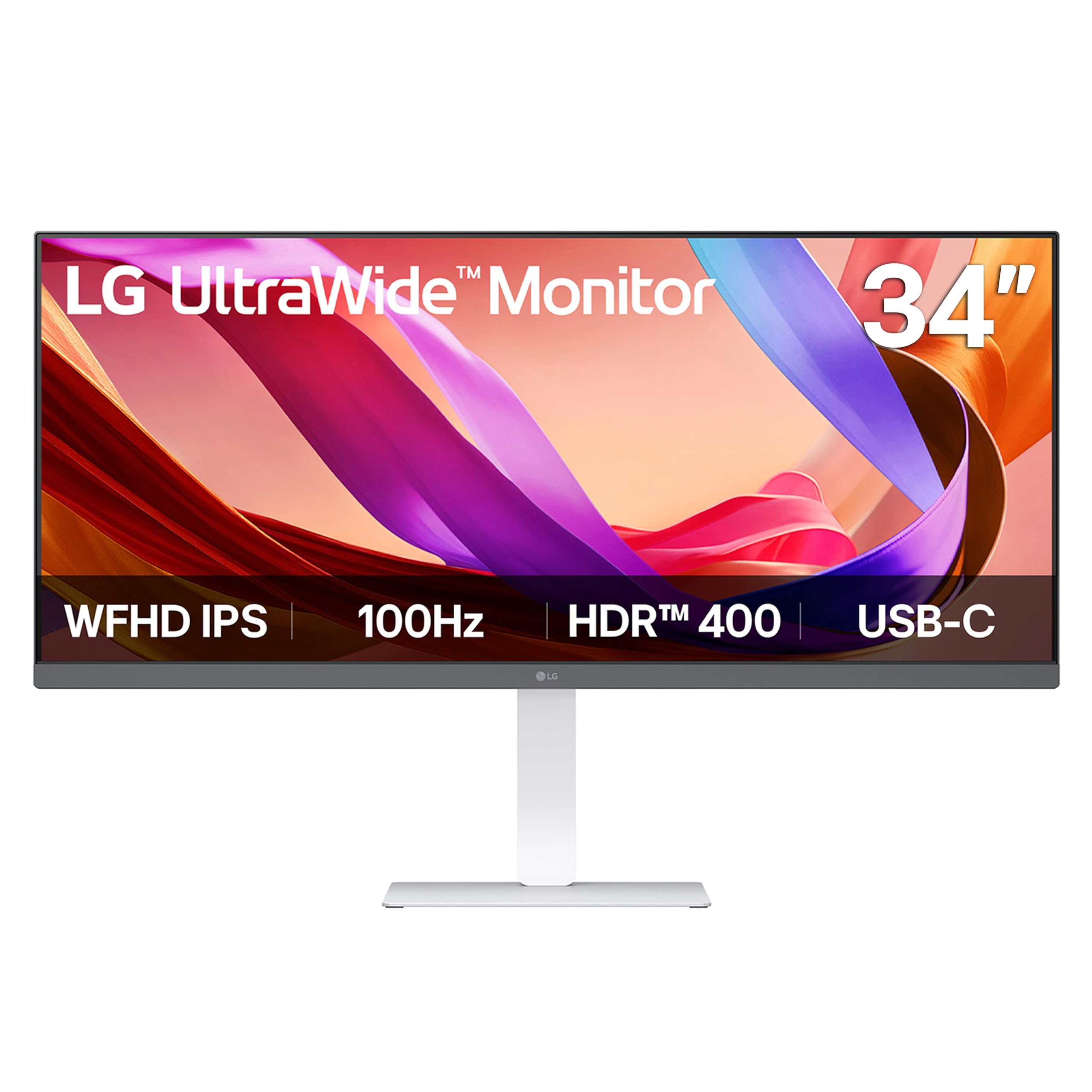
This ultrawide monitor delivers exceptional value for office professionals who want to consolidate multiple windows into a single, spacious display without the hassle of managing dual monitors.
Pros
- The 21:9 aspect ratio provides genuine productivity gains by letting you view full documents, spreadsheets, and communication apps simultaneously without constant window switching
- USB Type-C connectivity simplifies your desk setup by powering and displaying content from your laptop through a single cable
- The adjustable L-shaped stand offers excellent ergonomic flexibility with height, tilt, and swivel options while taking up minimal desk space
Cons
- The 2560 x 1080 resolution means pixel density is lower than standard monitors, which can make text appear less sharp at close viewing distances
- Built-in speakers deliver adequate sound for video calls but lack the depth and clarity you’d want for extended media consumption
- The 5ms response time and basic color accuracy may not satisfy users who need professional-grade color work
We found the LG 34U530A-W transformed our daily workflow in ways we didn’t anticipate. The extra horizontal space eliminated the frustrating dance of constantly resizing windows or switching between tabs. We could keep our email client open on one side while working on documents in the center and monitoring project management tools on the right.
Setting up the monitor took less than ten minutes. The USB Type-C connection handled everything through one cable, which cleared up our desk significantly. We appreciated not having to deal with separate power adapters and display cables cluttering our workspace.
The 100Hz refresh rate kept everything fluid during video calls and when scrolling through lengthy documents. HDR 400 certification added noticeable pop to presentations and graphs, though we wouldn’t rely on this monitor for photo editing where color accuracy matters most. Reader Mode proved genuinely useful during afternoon document reviews, reducing the eye strain we typically experience with standard displays.
The white finish looks clean and modern, though we noticed the screen’s matte coating reduced glare effectively in our bright office environment. Adjusting the height and tilt felt smooth and stayed locked in position once we found our preferred viewing angle. The compact base freed up enough desk space for our notebook and coffee mug, which our previous dual-monitor setup never allowed.
We did notice text sharpness wasn’t quite as crisp as higher-resolution displays we’ve used. For spreadsheet work with small fonts, we occasionally needed to zoom in slightly. The built-in speakers handled Teams calls adequately but sounded thin when we tried playing background music during work sessions.
Our Verdict
For office professionals seeking an affordable entry into ultrawide productivity, we recommend the LG 34U530A-W as our top choice. The combination of practical screen real estate, simple connectivity, and space-saving design delivers exactly what most knowledge workers need without unnecessary features that drive up the price.
LG 32MR50C-B Curved Monitor
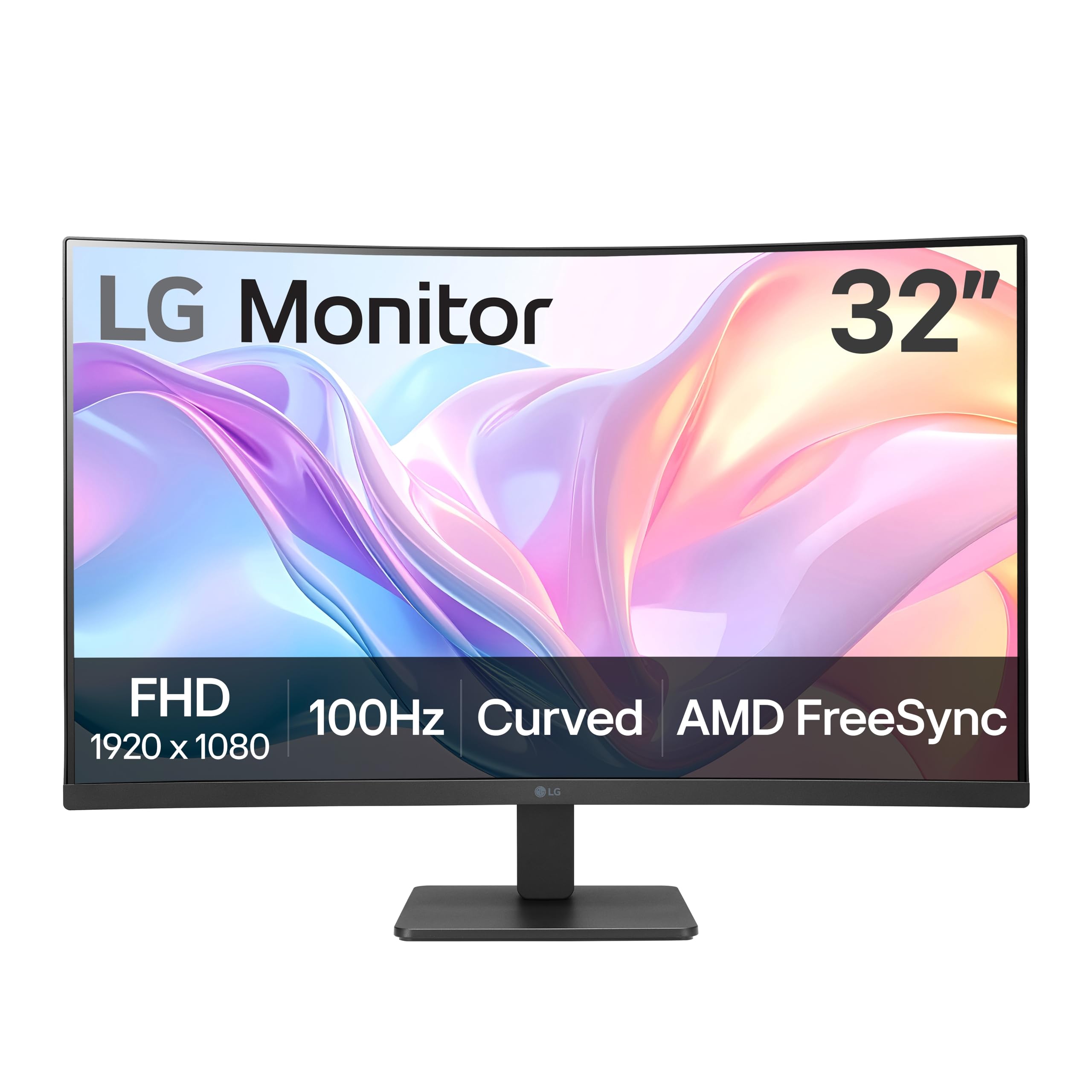
While this LG curved monitor offers decent value for basic office tasks with its large 32-inch display, the lower Full HD resolution at this screen size may disappoint those who need crisp text for extended work sessions.
Pros
- The curved screen and wide viewing angles create an immersive workspace that reduces neck strain during long work days
- Reader Mode effectively cuts down blue light, making it comfortable to stare at spreadsheets and documents for hours
- OnScreen Control software lets us quickly split the display into multiple sections for easy multitasking
Cons
- The 1920×1080 resolution feels stretched across 32 inches, resulting in less sharp text compared to higher resolution displays
- No built-in speakers means you’ll need external audio for video calls or presentations
- The stand only offers tilt adjustment without height or swivel options, limiting ergonomic flexibility
We found the LG 32MR50C-B delivers a mixed experience for office work. The generous screen real estate proved excellent for comparing documents side by side or keeping multiple windows open simultaneously. Reviewing financial spreadsheets became noticeably easier with the extra horizontal space.
The curve adds a subtle wraparound effect that we initially questioned but grew to appreciate over several weeks of testing. It helps keep the edges of the display within our peripheral vision without turning our heads as much.
However, the pixel density becomes an issue when working with fine text. At arm’s length, individual pixels are just barely visible, and fonts don’t render as crisply as we’d prefer for detailed work. After a full day of document editing, we noticed more eye fatigue than with higher resolution monitors.
The VA panel produces rich blacks and decent contrast, which helps when switching between bright documents and darker applications. Colors appear vibrant enough for standard office tasks, though professionals working with color-critical content should look elsewhere.
Setting up the display took just minutes, but we immediately missed having height adjustment. The fixed stand forced us to stack books underneath to achieve proper eye level. The glossy screen finish can create reflections in brightly lit offices, though the anti-glare coating mitigates this somewhat.
Our Verdict
For our top recommendation in ultrawide office monitors, we suggest the LG 32MR50C-B if you’re on a tight budget and primarily work with applications that don’t require pixel-perfect clarity, though those seeking professional-grade text sharpness should invest in a higher resolution alternative.
Buying Guide
Screen Size and Aspect Ratio
Ultrawide monitors for office work typically range from 29 to 49 inches diagonally. A 34-inch display with a 21:9 aspect ratio offers the best balance between screen real estate and desk space for most users. If you need even more horizontal workspace for multiple documents or spreadsheets, consider a 49-inch super ultrawide with a 32:9 aspect ratio.
Resolution Considerations
We recommend a minimum resolution of 2560×1080 for 29-inch models, but 3440×1440 provides sharper text and more usable space on 34-inch displays. Higher pixel density reduces eye strain during extended work sessions. For larger screens above 38 inches, 3840×1600 or 5120×1440 resolutions maintain clarity.
Panel Technology
| Panel Type | Advantages | Disadvantages |
|---|---|---|
| IPS | Accurate colors, wide viewing angles | Higher cost |
| VA | High contrast, deep blacks | Narrower viewing angles |
| TN | Fast response times, budget-friendly | Poor color accuracy and angles |
IPS panels work best for office environments where color accuracy and viewing angles matter.
Essential Features
Look for adjustable stands with height, tilt, and swivel options to reduce neck strain. USB-C connectivity with power delivery simplifies cable management and charges laptops through a single cable. Built-in KVM switches let you control multiple computers with one keyboard and mouse.
Blue light filters and flicker-free technology protect your eyes during long workdays. At least 75Hz refresh rate provides smoother scrolling through documents compared to standard 60Hz displays.
Our Top Pick
The Dell S3422DWG delivers exceptional value with its 34-inch curved VA panel and 3440×1440 resolution.
Frequently Asked Questions
Ultrawide monitors raise specific questions about sizing, resolution clarity, connectivity features, and budget trade-offs for office environments. The answers depend on desk space, workflow requirements, and whether text sharpness or screen real estate takes priority.
Is an ultrawide monitor a good choice for office productivity and multitasking?
Yes, ultrawide monitors excel at office productivity by eliminating bezels between multiple displays and providing seamless workspace for side-by-side applications. We find them particularly effective for professionals who regularly work with spreadsheets, documents, and communication tools simultaneously.
The 21:9 or 32:9 aspect ratio lets you snap three or four windows side by side without overlapping. This works well for tasks like comparing documents, referencing data while writing reports, or monitoring email alongside project management software.
Some users initially find the wider field of view requires head movement, but most adapt within a few days. Cable management is simpler than multi-monitor setups, and desk space usage is more efficient.
What size ultrawide monitor is best for office work: 34-inch, 38-inch, or 49-inch?
The 34-inch ultrawide strikes the best balance for most office workers, fitting standard desks while providing ample screen space at a comfortable viewing distance. We recommend sitting 24 to 30 inches away from a 34-inch display for optimal text clarity and reduced eye strain.
38-inch models offer more vertical space, which benefits users who work extensively with long documents or code. The extra height reduces scrolling, but these monitors require deeper desks to maintain proper viewing distance.
49-inch super ultrawide monitors (32:9) effectively replace two 27-inch displays. They work best for financial professionals, data analysts, or anyone managing numerous windows simultaneously, but they require at least 30 inches of desk depth and adequate GPU power.
What resolution and pixel density should I look for to keep text sharp for long workdays?
We recommend a minimum pixel density of 100-110 PPI for comfortable all-day reading without text appearing fuzzy or requiring scaling. A 34-inch ultrawide at 3440×1440 resolution delivers approximately 109 PPI, which provides sharp text without needing Windows scaling adjustments.
Lower pixel densities around 80-90 PPI make text edges appear jagged and force you to sit further back or use scaling. This negates the screen space advantage of an ultrawide monitor.
Higher pixel densities above 120 PPI offer crisper text but may require 125% or 150% scaling in Windows, which some applications don’t handle well. Native resolution usage maximizes workspace efficiency for office tasks.
Is 3440×1440 comparable to 4K for office use, and what are the trade-offs?
3440×1440 resolution on a 34-inch ultrawide provides similar pixel density to 4K on a 32-inch 16:9 monitor, making text equally sharp. The ultrawide format offers more horizontal workspace, while 4K provides more vertical space.
We find 3440×1440 more practical for office multitasking because applications snap naturally into halves or thirds across the width. 4K monitors at 27-inch size require scaling that reduces effective workspace, while 32-inch 4K displays take up more vertical desk space.
The trade-off is vertical resolution. 3440×1440 gives you 1440 pixels of height, same as a standard 1440p display, whereas 4K delivers 2160 pixels vertically. This matters for working with tall documents or lengthy spreadsheets.
Which features matter most for office work—USB-C docking, KVM switch, or an ergonomic stand?
USB-C docking with power delivery ranks as the most valuable feature for modern office setups, especially when using laptops. A single cable connection that delivers 65-90W power, video signal, and USB peripheral connectivity eliminates cable clutter and simplifies switching between work and personal devices.
KVM switches benefit users who regularly alternate between two computers, like a work laptop and personal desktop. Built-in KVM lets you switch keyboard, mouse, and display with one button press rather than physically reconnecting peripherals.
Ergonomic stands with height adjustment, tilt, and swivel prevent neck strain during long work sessions. We prioritize stands offering at least 4-5 inches of height adjustment and the ability to position the monitor’s top edge at or slightly below eye level.
What are the best ultrawide monitors for office work under $500, and what compromises should I expect?
Budget ultrawide monitors under $500 typically use VA or IPS panels with 3440×1440 resolution at 34 inches, delivering good image quality for office tasks. The main compromises involve build quality, stand adjustability, and connectivity options rather than display performance.
Lower-priced models often include basic tilt-only stands instead of fully adjustable ergonomic mounts. Many omit USB-C connectivity and offer limited USB hub functionality, requiring separate docking stations for laptop users.
Color accuracy and uniformity may not match premium models, but this rarely affects productivity work like spreadsheets, documents, and web browsing. Refresh rates stay at 60-75Hz, which is adequate for office applications but limits gaming performance.
We recommend the LG 34WP65C-B for those seeking solid office performance under $500, offering 3440×1440 resolution, a curved VA panel, and HDR10 support with acceptable factory calibration for productivity tasks.

Trevor Fenner is an ecommerce entrepreneur and the founder of Ecommerce Paradise, a platform focused on helping entrepreneurs build and scale profitable high-ticket ecommerce and dropshipping businesses. With over a decade of hands-on experience, Trevor specializes in high-ticket dropshipping strategy, niche and product selection, supplier recruiting and onboarding, Google & Bing Shopping ads, ecommerce SEO, and systems-driven automation and scaling. Through Ecommerce Paradise, he provides free education via in-depth guides like How to Start High-Ticket Dropshipping, advanced training through the High-Ticket Dropshipping Masterclass, and fully done-for-you turnkey ecommerce services for entrepreneurs who want a faster, more hands-off path to growth. Trevor is known for emphasizing sustainable, real-world ecommerce models over hype-driven tactics, helping store owners build scalable, sellable, and location-independent brands.


