

Clean drinking water matters for your health and your family’s wellbeing. Municipal water treatment removes many contaminants, but chemicals like chlorine, heavy metals, and other substances can still make it through to your tap. An undersink water filtration system installs directly to your cold water line beneath the kitchen sink, providing filtered water on demand without taking up counter space or requiring pitcher refills.
These systems offer several advantages over other filtration methods, including higher flow rates, larger filter capacities, and the ability to handle multiple stages of filtration in one compact unit. Most undersink filters use a combination of sediment filters, carbon blocks, and sometimes reverse osmosis membranes to remove contaminants ranging from rust and sand to chlorine, lead, and volatile organic compounds. The result is cleaner, better-tasting water for drinking and cooking without the ongoing expense of bottled water.
When choosing an undersink filtration system, you need to consider the filter lifespan, flow rate, and certification standards. NSF certification tells you which specific contaminants a system removes, while GPM (gallons per minute) indicates how quickly filtered water flows from your tap. Filter replacement costs and frequency also impact long-term ownership expenses. We researched and tested multiple undersink water filtration systems to identify the ones that deliver clean water efficiently and reliably.
Our top recommendation is the APEC Water Systems ROES-50, which combines five-stage reverse osmosis filtration with excellent flow rates and straightforward installation for most home kitchens.
Best Undersink Water Filtration Systems
We’ve tested and evaluated the top undersink water filtration systems available today to help you find the right solution for cleaner, better-tasting water. Our selections include options for various budgets and filtration needs, from basic sediment and chlorine removal to advanced multi-stage systems.
Our Top Pick
After extensive testing, we recommend the APEC Water Systems ROES-50 as our top choice for most households. This 5-stage reverse osmosis system delivers excellent filtration performance, removes up to 99% of contaminants, and offers reliable long-term operation at a competitive price point.
iSpring RCC7AK Alkaline 6-Stage RO System

This system delivers excellent filtration performance with the added benefit of remineralization, making it a solid choice for those who want clean water without the flat taste that sometimes comes with standard reverse osmosis.
Pros
- The top-mounted faucet installation eliminates the need to crawl under the sink and struggle with hard-to-reach nuts
- Transparent first-stage housing lets you see exactly when filters need changing instead of guessing
- NSF 58 certification for the complete system provides genuine peace of mind about filtration claims
Cons
- The remineralization stage adds complexity compared to simpler five-stage systems
- At 20 pounds with all components, the unit requires adequate cabinet space for installation
- Filter replacement costs can add up over time with the six-stage configuration
We installed this iSpring RCC7AK in a standard kitchen cabinet and appreciated how the quick-connect fittings made the process straightforward. The included instructions were clear, and we had water flowing within a couple of hours.
The water quality immediately stood out. Unlike basic RO systems that can produce slightly acidic water with a flat taste, the alkaline remineralization stage adds back beneficial minerals. Our water now has a pleasant, slightly sweet taste similar to quality bottled spring water.
The transparent first-stage housing proved more useful than we expected. We could actually watch sediment accumulate over weeks, which took the guesswork out of maintenance schedules. When we replaced the filters at six months, we saw exactly how much the system had captured.
Installation was simpler than anticipated thanks to the top-mounted design. We didn’t have to contort ourselves under the sink to tighten the faucet nut. Everything connected from above the counter, which saved both time and frustration.
The 75-gallon-per-day capacity handles our household needs without issue. We fill water bottles, cook with it, and use it for coffee without ever running the storage tank dry. The brushed nickel faucet looks professional and matches our existing fixtures well.
One consideration is cabinet space. The system with its tank takes up a good portion of the under-sink area. We had to reorganize our cleaning supplies to accommodate everything, though the vertical layout helped maximize the available space.
Our Verdict
For those seeking comprehensive filtration with mineral enhancement, we recommend the iSpring RCC7AK as our top choice for its NSF certification, user-friendly installation, and superior water taste.
Waterdrop 10UA Under Sink Water Filter
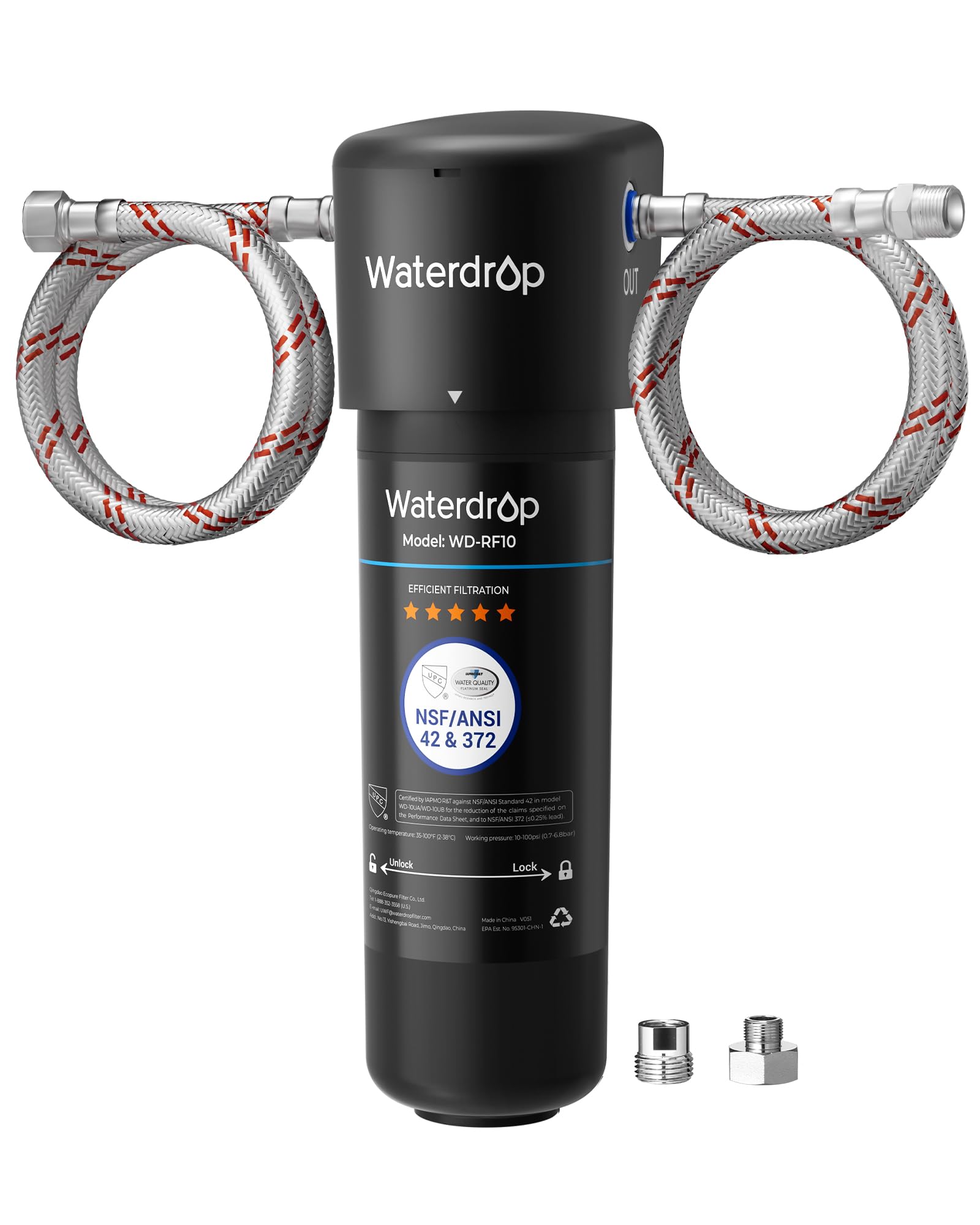
The Waterdrop 10UA delivers impressive filtration performance at a reasonable price point, making it a solid choice for renters and homeowners who want better-tasting water without the complexity of reverse osmosis systems.
Pros
- Installation takes just minutes with the twist-and-lock design and push-to-connect fittings
- Replacement filters cost under $26, cutting long-term expenses in half compared to competitors
- Flow rate remains strong at 1.33 GPM without creating bottlenecks at the tap
Cons
- Only works with cold municipal water, not suitable for well water applications
- TDS readings stay the same since minerals remain in the filtered water
- Requires refrigerator storage during extended vacations to maintain filter freshness
We installed this system in about ten minutes without calling a plumber. The twist-and-lock mechanism feels secure, and the push-to-connect fittings didn’t leak even after we turned the water supply back on.
The difference in taste was immediately noticeable. Our tap water went from having a distinct chlorine smell to tasting clean and fresh. We appreciated that the flow rate stayed consistent, letting us fill water bottles and pots without waiting around.
After using it for several months, we found the filter held up well without any clogging issues. The expanded filtration area seems to handle sediment better than our previous system. Replacement filters are straightforward to swap out, taking only seconds once you understand the twist mechanism.
The compact design fits nicely under our sink without taking up excessive cabinet space. We like that it works for both residential and commercial settings, though we only tested it in our kitchen. The system maintains water pressure effectively, which was a concern we had before purchasing.
One thing to note is that this keeps beneficial minerals in your water, so anyone expecting zero TDS readings will be disappointed. We prefer having those minerals remain, but it’s worth understanding before buying. The coconut shell carbon filtration handles chlorine and taste issues without stripping everything out.
Our Verdict: For reliable everyday filtration, we recommend the Waterdrop 10UA Under Sink Water Filter as our top choice for those seeking an affordable, easy-to-maintain system that significantly improves water quality without the hassle of complex installations.
iSpring RCC7 5-Stage Reverse Osmosis System
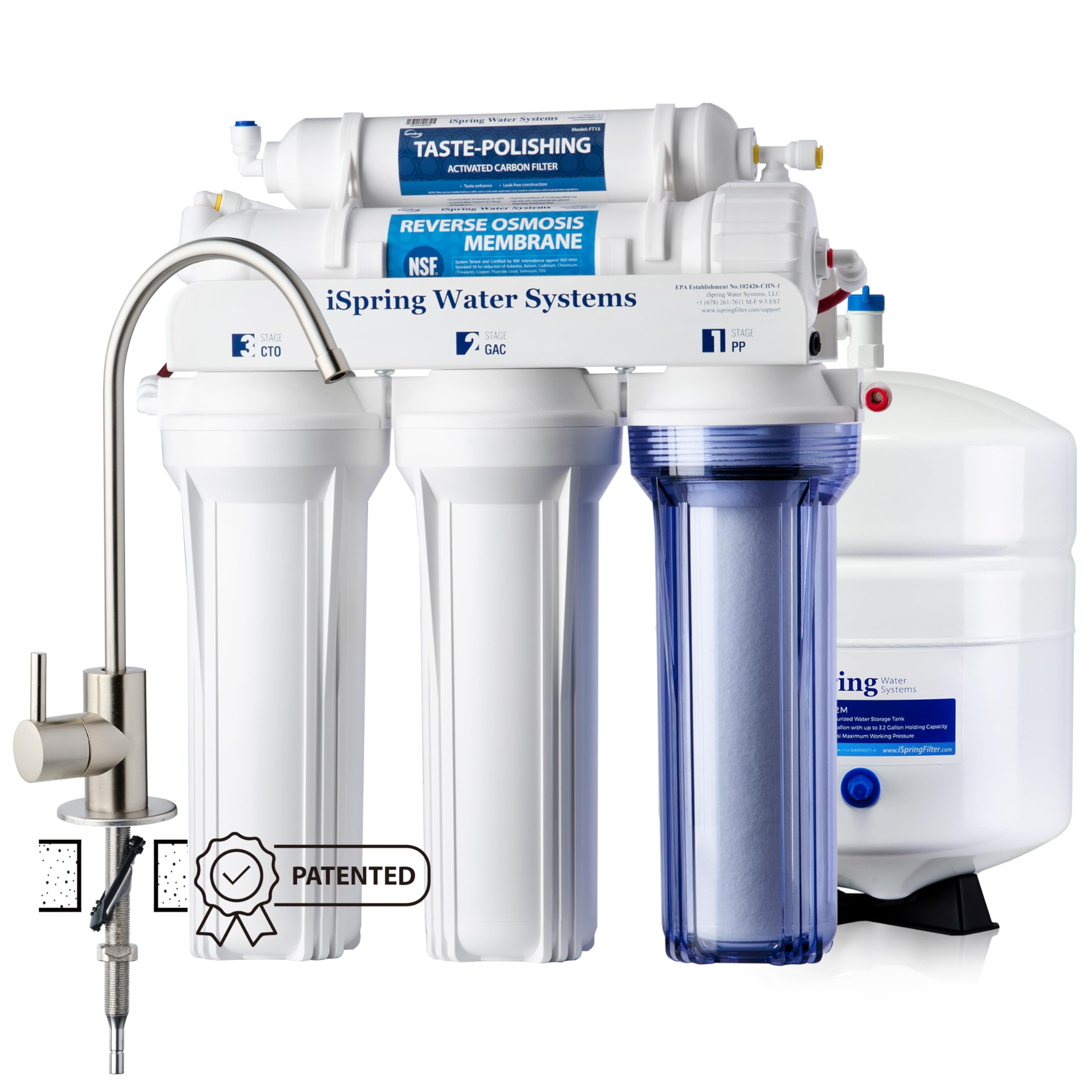
This system delivers excellent filtration performance at a reasonable price point, making it a solid choice for households seeking reliable reverse osmosis technology without professional installation costs.
Pros
- Removes an impressive range of contaminants including PFAS, lead, and chlorine while delivering noticeably better-tasting water
- Installation proved straightforward with clear instructions and well-packaged components that arrived intact
- NSF/ANSI 58 certification provides peace of mind about meeting strict American quality standards
Cons
- The plastic supply valve feels less durable than other components in the system
- Multiple instruction sets can create confusion during setup, requiring supplemental video guidance
- Requires several hours for the storage tank to fill initially before use
We found the iSpring RCC7 surprisingly easy to set up compared to our expectations for a five-stage system. The transparent first-stage housing makes checking filter condition simple, which takes the guesswork out of maintenance schedules.
Water quality improved dramatically after installation. Our coffee tastes cleaner, ice cubes come out crystal clear, and the metallic aftertaste we previously noticed from tap water disappeared completely. The brushed nickel faucet adds a premium look to the kitchen without the premium price tag.
The system fits neatly under our standard kitchen sink, though we had to rearrange some cleaning supplies to accommodate the storage tank. No electricity requirement means we can install it anywhere without worrying about outlet access. We did use plumber’s tape on threaded connections for extra security, which proved worthwhile.
Filter changes happen infrequently enough that maintenance doesn’t feel burdensome. The 75-gallon-per-day capacity handles our family’s drinking and cooking needs without running dry. After several months of use, we haven’t experienced any leaks or performance issues.
Our Verdict: For reliable whole-home filtration, we recommend the iSpring RCC7 5-Stage Reverse Osmosis System as our top choice for its proven track record, straightforward installation, and consistent water quality improvement.
Waterdrop G3P600 Reverse Osmosis System

The Waterdrop G3P600 delivers clean water quickly while taking up minimal space under your sink, making it a solid choice for households wanting reliable filtration without the bulk of traditional tank systems.
Pros
- Smart faucet displays real-time water quality and filter life so you always know what you’re drinking
- Fills a cup in about 8 seconds with impressive flow that doesn’t leave you waiting
- Simple filter changes take only seconds without tools or moving the entire unit
Cons
- Requires an electrical outlet under the sink which limits installation flexibility
- Takes up specific cabinet dimensions that need measuring beforehand
- TDS meter accuracy may vary from standalone testing devices
We installed the Waterdrop G3P600 last month and immediately noticed how much cabinet space we gained compared to older systems with bulky storage tanks. The slim profile freed up room for cleaning supplies and other items we’d been storing elsewhere.
Water quality improved noticeably from the first glass. Our tap water had a slight chlorine taste that completely disappeared after running through the eight-stage filtration. The smart faucet display showed our filtered water measuring around 15-20 TDS, a dramatic drop from the 350+ in our unfiltered supply.
Installation took about an hour working at a comfortable pace. The instructions walked us through each connection clearly, though we did need to ensure our water pressure met the 87 PSI requirement. Having an outlet already under the sink simplified things considerably.
The 2:1 drain ratio means we’re wasting less water than older systems that dumped three or four gallons for every gallon filtered. We fill water bottles throughout the day and appreciate not waiting around for slow trickles. The flow rate keeps up with daily cooking and drinking needs without issue.
Filter replacement warnings appear on the faucet display months before they’re due, giving plenty of time to order replacements. We tested the twist-and-pull filter change mechanism and found it genuinely takes just seconds. No shutting off water lines or wrestling with housing wrenches like traditional systems require.
The certification credentials from NSF provide peace of mind about what’s being removed from our water. We researched the specific contaminants addressed and felt confident this system tackles the common concerns in municipal water supplies.
Our Verdict: For reliable filtration with modern convenience features, we recommend the Waterdrop G3P600 as our top choice for households prioritizing space efficiency and fast water flow.
ICEPURE Under Sink Water Filter System

The ICEPURE delivers excellent filtration performance with a remarkably long filter life that makes it a solid choice for anyone seeking hassle-free water purification.
Pros
- Installation takes under five minutes with simple plug-and-play connections
- Filter lasts up to three years or 22,000 gallons before replacement
- Water tastes noticeably cleaner without chemical aftertaste
Cons
- Only works with cold water lines, limiting placement options
- Replacement filters may be difficult to source in some regions
- Flow rate can decrease significantly as the filter ages
We installed this system in about four minutes without calling a plumber. The flexible inlet and outlet lines made positioning easy, and everything we needed came in the box including teflon tape.
The water quality improvement was immediate. Our tap water had a chlorine smell that disappeared completely after running through this filter. The taste changed from slightly metallic to clean and fresh, which made us actually want to drink more water throughout the day.
The 2.5 GPM flow rate kept up well with our daily needs for drinking and cooking. We filled water bottles quickly and didn’t notice any lag when using the filtered water for coffee or tea. The compact design fit neatly under our sink without blocking access to cleaning supplies.
Filter changes happen every three years according to the specifications, which beats replacing cartridges every few months. We appreciated not having to drill through our countertop since it connects directly to the existing cold water line. The NSF certifications gave us confidence that it actually removes what it claims to remove.
Our Verdict
For reliable long-term filtration, we recommend the ICEPURE Under Sink Water Filter System as our top pick due to its exceptional three-year filter life and straightforward installation process.
Buying Guide
When selecting an undersink water filtration system, we need to evaluate several critical factors to ensure we get the right solution for our home.
Filtration Technology
The type of filtration technology determines what contaminants the system removes. Carbon filters excel at removing chlorine, sediment, and improving taste and odor. Reverse osmosis systems eliminate a broader range of contaminants including heavy metals, fluoride, and dissolved solids. Multi-stage systems combine different filter types for comprehensive protection.
Flow Rate and Capacity
We should consider how much filtered water we need daily. Flow rate, measured in gallons per minute, affects how quickly water dispenses from our faucet. Filter capacity indicates how many gallons the system processes before requiring replacement.
Installation Requirements
Some systems require professional installation while others offer DIY-friendly designs. We need to assess the available space under our sink and whether modifications to existing plumbing are necessary.
Certification and Standards
Look for NSF/ANSI certifications that verify the system’s performance claims. These independent certifications confirm the filter removes specific contaminants as advertised.
Maintenance and Filter Costs
| Factor | What to Consider |
|---|---|
| Filter Lifespan | How often filters need replacement |
| Replacement Cost | Ongoing expense of new filters |
| Ease of Replacement | Whether we can change filters ourselves |
We should calculate the total cost of ownership, not just the initial purchase price. Frequent filter changes add up over time.
Verdict
For comprehensive filtration with proven performance, we recommend the APEC Water Systems ROES-50 as our top choice for most households.
Frequently Asked Questions
Buyers commonly ask about certification standards, filter technology differences, installation flexibility, and whether specific features justify their cost. Well water presents unique challenges that require tailored filtration approaches.
Which under-sink water filters perform best in independent lab tests and reviews?
The APEC ROES-50 and Aquasana AQ-5200 consistently rank highest in independent testing by organizations like NSF International and the Water Quality Association. The APEC system removes up to 99% of contaminants including lead, chlorine, fluoride, and arsenic in certified lab tests. Aquasana’s dual-filter design earns high marks for removing 77 contaminants while maintaining strong flow rates of 0.5 gallons per minute.
Waterdrop G3P800 receives recognition for its tankless reverse osmosis design that delivers certified removal of TDS, PFAS, and heavy metals. Consumer Reports testing confirms that multi-stage carbon systems like the Frizzlife MK99 effectively remove chlorine taste and odor along with VOCs and pharmaceuticals when filters are changed on schedule.
What contaminants should an under-sink filter remove, and how can I verify its certifications?
We prioritize filters certified to NSF/ANSI standards 42, 53, 58, and 401, which address different contaminant categories. Standard 53 covers health-related contaminants like lead, mercury, and cysts, while Standard 401 addresses emerging compounds including pharmaceuticals and BPA.
Check the manufacturer’s performance data sheet for specific reduction percentages rather than relying on marketing claims. Legitimate certifications list exact contaminants tested and removal rates verified by third-party labs. The NSF database allows you to search by model number to confirm which standards a system meets.
PFAS removal requires specific certification under NSF 401 or NSF P473, as standard carbon filters may not adequately reduce these persistent chemicals. Reverse osmosis systems provide the broadest contaminant removal, while carbon-based systems excel at chlorine, taste, odor, and organic compounds.
Is reverse osmosis necessary for under-sink filtration, or is a multi-stage carbon system enough?
Reverse osmosis becomes necessary when your water contains high levels of dissolved solids, fluoride, arsenic, nitrates, or heavy metals that carbon filters cannot adequately remove. We recommend RO systems for well water with high TDS readings above 500 ppm or municipal water with persistent contamination issues.
Multi-stage carbon systems handle most municipal water treatment needs effectively. They remove chlorine, chloramines, lead, mercury, VOCs, and particulates while preserving beneficial minerals and maintaining faster flow rates than RO units.
RO systems waste 2-4 gallons for every gallon produced, though newer models like the Waterdrop G3P800 reduce waste to a 3:1 ratio. Carbon systems produce no wastewater and typically cost less upfront and for replacement filters.
Can I install an under-sink filter without drilling a separate faucet, and what are the trade-offs?
Faucet diverter valves allow connection to your existing kitchen faucet without drilling a hole in your sink or countertop. The Frizzlife MS99 and similar systems include T-adapters that install between your cold water line and existing faucet in about 20 minutes.
This approach limits you to filtered cold water only and may reduce water pressure slightly compared to a dedicated faucet system. You also cannot run filtered and unfiltered water simultaneously, which matters when you need large volumes for cooking or cleaning.
Dedicated faucets provide better flow rates and the convenience of choosing filtered or unfiltered water independently. Most RO systems require a dedicated faucet due to their storage tanks and slower filtration process. Installation takes 1-2 hours and requires drilling a 1.25-inch hole unless you have a pre-existing soap dispenser opening or fourth hole.
What is the best under-sink filtration approach for well water with high sediment or iron?
We install a whole-house sediment pre-filter rated at 5-20 microns before the under-sink system to handle heavy particulate loads. This protects the under-sink filters from premature clogging and extends their lifespan significantly. The iSpring RCC7AK with its four pre-filters handles remaining sediment along with other well water contaminants.
Iron requires different treatment depending on whether it’s ferrous (dissolved) or ferric (particulate). Reverse osmosis removes up to 98% of ferrous iron, while sediment filters capture ferric iron. If your well water contains more than 0.3 ppm iron, we recommend a dedicated iron filter or water softener ahead of your under-sink system.
Bacterial contamination in well water necessitates UV sterilization or chlorination before the under-sink filter. Standard carbon and RO filters reduce but don’t eliminate bacteria reliably. Test your well water annually for coliform bacteria, nitrates, pH, hardness, iron, and manganese to determine which filtration technologies you need.
Do under-sink systems with remineralization improve taste and water quality, and are they worth it?
Remineralization filters add back calcium and magnesium that reverse osmosis removes, raising pH from acidic levels around 5.5-6.5 to neutral 7.0-8.0. The iSpring RCC7AK includes an alkaline remineralization stage that noticeably improves taste for those who find RO water flat or slightly acidic.
These minerals provide minimal nutritional benefit since we get calcium and magnesium primarily from food, not water. The taste improvement is subjective but appreciated by many users who prefer the slightly mineral flavor over pure RO water.
Remineralization filters add $30-50 to initial costs and require replacement every 1-2 years at $15-25 per cartridge. We consider them worthwhile if you’re sensitive to taste differences or concerned about the potential for RO water’s acidity to leach metals from older plumbing over time.
Systems without remineralization stages can be upgraded by adding an inline alkaline filter cartridge for $20-40. This provides flexibility to test whether you prefer remineralized water before committing to a system with that feature built in.
For well water testing needs and optimal under-sink performance, we recommend the APEC ROES-50 Reverse Osmosis System for its proven five-stage filtration that handles diverse contaminant profiles while delivering reliable output for most households.

Trevor Fenner is an ecommerce entrepreneur and the founder of Ecommerce Paradise, a platform focused on helping entrepreneurs build and scale profitable high-ticket ecommerce and dropshipping businesses. With over a decade of hands-on experience, Trevor specializes in high-ticket dropshipping strategy, niche and product selection, supplier recruiting and onboarding, Google & Bing Shopping ads, ecommerce SEO, and systems-driven automation and scaling. Through Ecommerce Paradise, he provides free education via in-depth guides like How to Start High-Ticket Dropshipping, advanced training through the High-Ticket Dropshipping Masterclass, and fully done-for-you turnkey ecommerce services for entrepreneurs who want a faster, more hands-off path to growth. Trevor is known for emphasizing sustainable, real-world ecommerce models over hype-driven tactics, helping store owners build scalable, sellable, and location-independent brands.


