

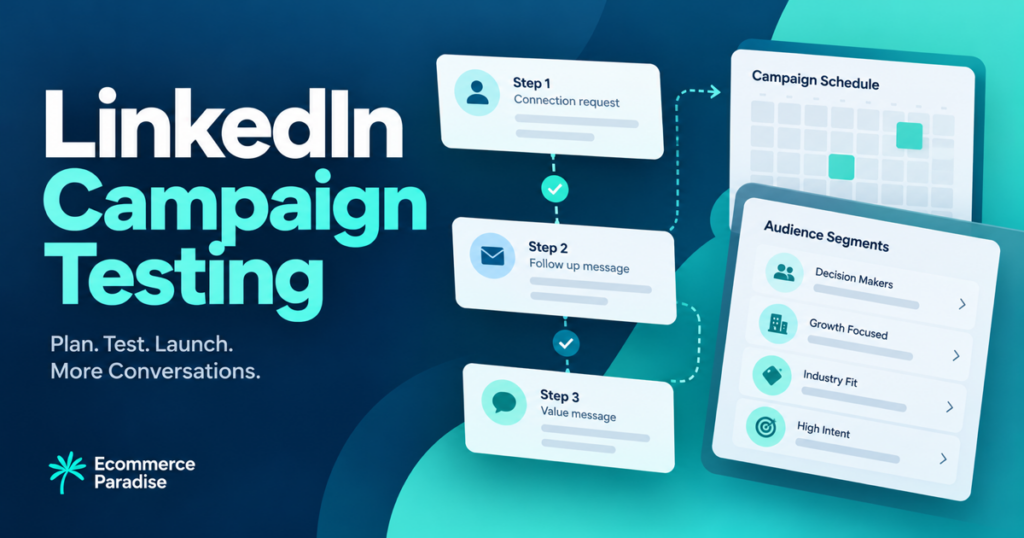
Multi-step LinkedIn campaigns require careful planning and testing. Even a small configuration error can affect how the sequence performs. The goal of automation is not simply to send large volumes of messages. It is important to build a natural touchpoint sequence that feels like a live conversation.
Before a major launch, always test every step. This can help identify workflow issues and improve campaign performance.
Audience Database Preparation and Segmentation
Any high-performing sales funnel begins with a thorough cleaning of your contact lists. Collecting leads without clear targeting criteria can result in lower response rates. It pays off to invest extra time upfront to filter out irrelevant profiles. For instance, exclude profiles that do not match your target audience or campaign criteria.
Detailed segmentation by job titles, regions, company size, or specific technical skills helps make your outreach offer genuinely spot-on. The more closely your audience matches your targeting criteria, the easier it is to write relevant, personalized opening messages.
Choosing a Tool for Building Automated Funnels
Multi-step outreach campaigns require software with configurable workflows and tools for managing account activity. A great choice here is Linked Helper’s LinkedIn automation tool, which allows you to build multi-step chains tailored precisely to user actions.
Linked Helper can stop a messaging sequence when it detects a reply, using the Check for Replies action or reply-detection settings. It simulates user interactions, including mouse clicks, scrolling, and typing, while configurable delays and activity limits help manage account risk.
Thanks to the built-in visual workflow builder, you can combine likes, profile views, connection invites, and follow-ups in a smooth, logical sequence. Linked Helper supports hyper-personalized AI generated messages based on full profile and organization data available within its own database or LinkedIn and IF-THEN-ELSE logic in message templates, allowing message content to vary according to available profile data and configured conditions. This approach helps teams build automated sales workflows and manage daily activity through configurable limits and scheduling.
Sequence Logic and Time Intervals Between Steps
Pauses between actions must look human. Sending a follow-up two minutes after an invite is accepted is a mistake. An organic scenario usually looks like this:
-
Optional profile-view or post-engagement actions, where relevant to the campaign.
-
Sending an invite with a brief, friendly text after 24 hours.
-
A pause of 2 to 4 days after the connection is accepted.
-
First value-focused message containing a question or useful insight.
-
Second follow-up after 7–10 days in case of no reply.
Follow-ups sent too frequently may annoy recipients and reduce engagement. Give the recipient time to read your thoughts at their own pace.
Testing Campaigns on a Small Sample
Never launch an automated funnel to a thousand contacts right away. Pick a test group of 30–50 profiles. Check how delays work and whether variables are populated correctly. Check whether profile variables, such as names and company names, are formatted correctly and populated as expected.
See how the text renders on a smartphone screen. Massive text blocks are hard to read, so break them down into concise points.
Analyzing Early Results and Optimization
Review the initial results after the first week of testing. Track connection acceptance rates, reply rates, and other campaign-specific metrics. If invite acceptance is sluggish, adjust the welcome message or warm-up strategy. Perhaps it makes sense to change the topic or simplify the offer.
Continuously fine-tune your workflow based on actual feedback. Regularly reviewing campaign data and adjusting the workflow can help improve outreach performance.
LinkedIn can be useful for supplier outreach, wholesale conversations, recruiting, and B2B partnerships. It is not a permission slip to turn every profile into a lead. The useful version of a campaign starts with a narrow audience, a credible reason to start a conversation, and an easy way for the recipient to opt out of further contact.
For a store owner, the objective should be qualified conversations, not an activity counter. A campaign that sends fewer messages but reaches the right distributors, brand representatives, or service partners is usually safer and more valuable than a broad sequence built around volume.
Start With an Offer Worth Responding To
Before selecting a tool or writing a sequence, define the exchange you are asking for. A supplier prospect may be open to a concise store introduction and a clear explanation of the customer segment you serve. A wholesale buyer may care about the assortment, minimum order requirements, and whether your team can support the account after the first order.
Write the value proposition in one sentence. Then write the question that follows it. If the question cannot be answered in a sentence, it is probably asking for too much too early. “Who handles new dealer applications?” is easier to answer than a request for a thirty-minute call from someone who does not know you.
For high-ticket stores, this is especially important. The strongest supplier relationships rarely begin with a template. They begin with enough preparation that the other side can see you understand the product, the market, and the customer you want to serve.
Build the Audience List Before You Build the Automation
Create a small, documented segment for the first test. Name the company type, job titles, geography, company-size range, current relationship status, and exclusion rules. Do not include current customers, people who have asked not to be contacted, direct competitors, or anyone whose role clearly does not match the message.
Add a plain-language reason each person belongs in the list. That single field forces the team to check whether the lead is actually relevant. It also gives the person sending messages enough context to personalize without inventing familiarity.
- Supplier and brand outreach: prioritize official contacts, territory fit, and a clear catalog or category match.
- Wholesale outreach: prioritize businesses with a realistic customer overlap and a sales model that can support your products.
- Recruiting outreach: prioritize experience that maps to the role rather than using a generic title filter.
- Agency or service outreach: prioritize businesses with a visible need and a specific point of view you can respond to.
Do a manual spot check before the campaign runs. Review twenty records and ask whether you would be comfortable explaining why each person received the message. If the answer is no, fix the list before you adjust the copy.
Use a Sequence That Respects the Conversation
A simple sequence is normally enough: one connection request, one short opening message after acceptance, and one follow-up only if there is no reply. Let replies end the sequence automatically. Never continue with an automated sequence once a real conversation has started.
Space the messages so the recipient has time to respond. The goal is not to imitate a human perfectly. The goal is to avoid creating pressure or noise. Every step should add context, offer a useful resource, or make a low-friction request.
Keep campaign data honest. If a message is a template, do not write as though you have followed the person’s work closely. If you did review a company or a product, mention one detail that demonstrates it. That distinction protects the sender’s credibility.
Test the Workflow Without Risking the Account
Run a test list using internal profiles or a very small group of carefully chosen contacts. Confirm the fields resolve correctly, links work, the sequence stops on reply, and no message is sent outside the intended hours. Check mobile formatting as well as desktop formatting.
Also read the current LinkedIn User Agreement and the applicable LinkedIn API terms before using any workflow or integration. Tool capability does not override platform rules. Your business is responsible for the way its account is used.
Where a campaign processes personal information outside the platform, use a clear data-handling process. The FTC’s business guide to protecting personal information is a helpful baseline for access controls, retention, and basic security decisions.
Measure Quality, Not Just Opens and Replies
Track the results that show whether the campaign is generating useful work. For supplier outreach, that could be approved dealer applications, current line sheets, or meetings with the right brand representative. For wholesale outreach, it could be qualified account discussions rather than vague interest.
Use a simple review sheet after each test. Record the segment, message angle, number of requests, acceptance rate, positive replies, negative replies, and the reason a conversation moved forward or stopped. Notes from real responses are often more valuable than a dashboard total.
Stop campaigns that create confusion, complaints, or low-quality conversations. Better segmentation and clearer positioning are more useful fixes than adding another follow-up.
Put Outreach in the Context of Your Store Plan
Before approaching suppliers, work through our supplier sourcing guide. It will help you prepare the information a serious brand is likely to ask for.
Use the high-ticket niches list to narrow your research before you build a prospect list.
Our high-ticket dropshipping guide explains the broader business model behind that research.
When you are ready to sign supplier agreements or bring on help, the business formation checklist covers the legal and financial foundation.
Explore more operating resources at Ecommerce Paradise. If you want practical help turning the research into a store plan, coaching is available.
Write Messages That Can Survive Human Review
Every campaign message should make sense when a prospect reads it without the surrounding sequence. That is a useful quality test. If the message depends on an earlier touchpoint to avoid sounding vague or presumptuous, rewrite it.
Use an opening line that identifies the relevant context, not a manufactured compliment. Mention the product category, retail channel, territory, or public business detail that explains why you reached out. Then state the reason for contact in plain language.
Keep the first message short enough to read on a phone. Avoid a long product pitch, a calendar link, and multiple questions in the same note. Give the recipient one easy action: answer a question, point you to the right person, or say that the timing is wrong.
When someone replies, move the conversation to a human owner. The owner should be able to see the initial message, the segment reason, and any notes added during research. They should not have to reconstruct the context from a tool log.
Create Campaign Guardrails Before Launch
Write down the maximum audience size, the daily activity limit, the approved message versions, the review owner, and the stop conditions. Stop conditions could include a negative response, a request not to be contacted, an account warning, a data-quality issue, or a reply that needs personal attention.
Keep an exclusion list and apply it before every new campaign. The list should cover current customers, previous negative responses, people who opted out, employees, and any account that does not match your actual criteria. A clean exclusion process protects both your reputation and your team’s time.
Do not reuse a campaign because it looked busy. Reuse it only when the segment, value proposition, and outcome remain relevant. A message that works for one supplier category may be inappropriate for a wholesale buyer or a job candidate.
Plan the Handoff From Reply to Revenue
A campaign is only a lead source. The operational value arrives after the reply. Define what happens next for each response type: qualified interest, referral to another contact, not now, no fit, and opt-out. Assign an owner and a time limit for the first human reply.
For supplier conversations, prepare a short store overview, target market, resale certificate or business information where needed, and a sensible explanation of how you plan to represent the line. For wholesale conversations, prepare the assortment, lead times, minimums, and customer support process. The goal is to make the next conversation easier, not to force a commitment.
Review the campaign with the sales or operations owner after the first ten meaningful replies. Look for patterns in objections and questions. Update the store materials, qualification criteria, or offer based on what real people say.
A Simple Launch Cadence
Day one: test the workflow internally. Day two: run a small segment with the approved copy. Day three through five: watch for replies, complaints, and configuration issues. At the end of the first week, pause and review quality before increasing volume.
This slower cadence is usually more profitable than setting up a large sequence and hoping the dashboard looks good. The best outreach process is one you can defend to the recipient and operate with a real person in the loop.
Make Testing a Controlled Experiment
A multi-step LinkedIn campaign is not useful merely because it sends several messages. The work is in choosing a precise audience, making a credible first contact, and deciding what signal should move a person into the next step. Keep the hypothesis simple enough to test. For example: does a short note about a common wholesale fulfillment problem produce more qualified replies than a generic introduction?
Change one material variable at a time. If you revise the audience, subject line, offer, message length, follow-up timing, and landing page in the same launch, you will not know why results moved. Split the campaign into small batches and document the change before it goes live.
Use a human review step for sensitive prospects, active customers, partners, and anyone who has already replied. Automation can help organize a process, but it should not replace judgment. A personal reply should take precedence over the next scheduled message, and a clear opt-out or do-not-contact request should be honored immediately.
Measure Qualified Conversations, Not Just Activity
Connection acceptance, delivery, and reply rates are useful diagnostics, but they are not the result. Track the number of conversations that fit the offer, meetings that occur, opportunities created, and eventually revenue or retained accounts. A high reply rate can be a warning sign if the replies are confused, negative, or unrelated to what you sell.
For an ecommerce operator, include operational context in the measurement. Did a supplier outreach campaign lead to better terms? Did a B2B prospecting sequence uncover accounts that fit the catalog and margin model? Did a campaign create more support work than the sales team could handle? These questions keep outreach connected to the business instead of treating it as a volume game.
Write a short campaign record after every test. Include the target segment, offer, steps, launch date, response quality, positive outcomes, complaints, and the next change to test. Over time, that record becomes a practical playbook for the team and makes it easier to spot when a previously effective approach has stopped fitting the audience.
Set Clear Stop Rules
Decide before launch what makes a test worth continuing and what makes it worth stopping. Pause a sequence if recipients report confusion, the offer does not fit the audience, a platform rule changes, or the team cannot follow up with the people who respond. A smaller, well-managed campaign is more valuable than a larger sequence that creates reputational risk.
When a test produces a useful message, turn it into a documented process with a target segment, an owner, a review date, and a clear handoff to sales or customer success. That is how experimentation becomes a repeatable outreach system.

Trevor Fenner is an ecommerce entrepreneur and world traveler from Seattle, Washington, and the founder of Ecommerce Paradise, a platform focused on helping entrepreneurs build and scale profitable high-ticket ecommerce and dropshipping businesses. With over a decade of hands-on experience, Trevor specializes in high-ticket dropshipping strategy, niche and product selection, supplier recruiting and onboarding, Google & Bing Shopping ads, ecommerce SEO, and systems-driven automation and scaling. Through Ecommerce Paradise, he provides free education via in-depth guides like How to Start High-Ticket Dropshipping, advanced training through the High-Ticket Dropshipping Masterclass, and fully done-for-you turnkey ecommerce services for entrepreneurs who want a faster, more hands-off path to growth. Trevor is known for emphasizing sustainable, real-world ecommerce models over hype-driven tactics, helping store owners build scalable, sellable, and location-independent brands.
He maintains homes in Seattle and Bali, spends most of the year overseas, and usually returns to Seattle for about a month each summer.


