


A quality home theater projector transforms any living space into a personal cinema, delivering an immersive viewing experience that flat-screen TVs struggle to match. The ability to project images ranging from 100 to 300 inches creates a theater-like atmosphere perfect for movies, sports, and gaming. Modern projectors have evolved significantly, offering sharp 4K resolution, vibrant colors, and brightness levels suitable for various lighting conditions.
When shopping for a home theater projector, resolution and brightness are the two most critical specifications to consider. Resolution determines image clarity, with 4K models providing four times the detail of standard 1080p projectors. Brightness, measured in lumens, affects how well the image displays in rooms with ambient light. Most home theater setups benefit from projectors offering at least 2000 lumens, though dedicated dark rooms can work well with lower outputs. Throw distance is another essential factor, as it determines how far the projector needs to be from the screen to produce your desired image size.
Contrast ratio impacts how deep blacks appear and affects overall picture quality, while lamp life determines long-term ownership costs. HDR support has become increasingly important for those who want enhanced color and brightness ranges that match modern streaming content. We spent extensive time researching and testing multiple home theater projectors to identify the ones that deliver exceptional picture quality and reliability.
Best Projectors for Home Theater
We’ve tested and evaluated the top home theater projectors available today to help you create an exceptional viewing experience. Our selections balance picture quality, brightness, features, and value across different price ranges.
Our Top Pick
After extensive testing, we recommend the Epson Home Cinema 5050UB as our most highly recommended projector for home theater. It delivers outstanding 4K image quality with excellent contrast and color accuracy that brings movies to life.
WiMiUS P62 Pro Smart Projector
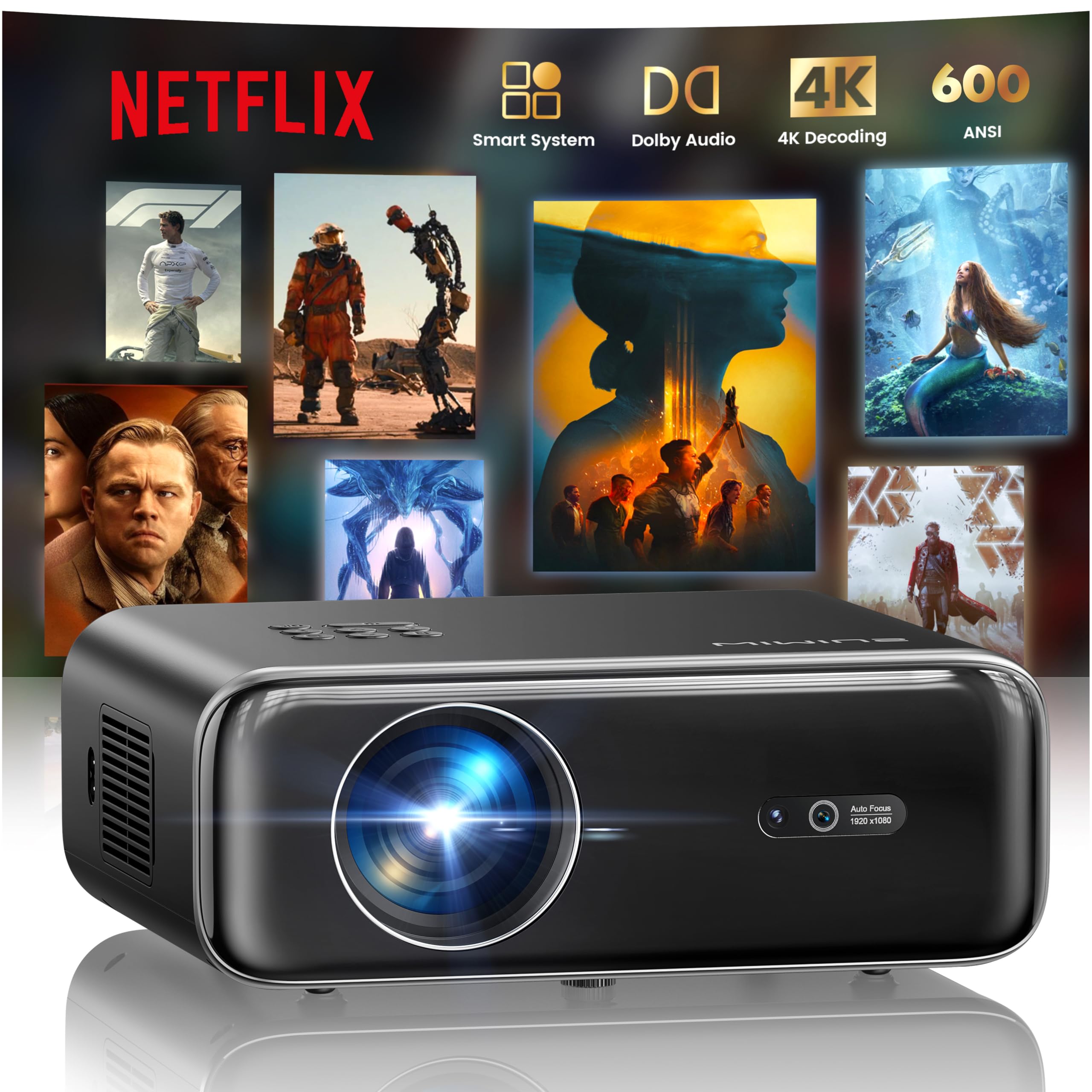
The WiMiUS P62 Pro delivers impressive image quality and smart features at a reasonable price point, making it a solid choice for anyone seeking a versatile home theater projector without breaking the bank.
Pros
- Built-in streaming apps eliminate the need for external devices and streamline your setup
- Dual HDMI ports with ARC and CEC support provide excellent connectivity flexibility
- Auto focus and keystone correction get you up and running quickly without manual adjustments
Cons
- No carrying case included despite the portable design
- Performance in well-lit rooms could be better even on high brightness mode
- Built-in speakers lack the depth needed for true cinematic sound without external audio
We’ve been using the WiMiUS P62 Pro for several weeks now, and the native smart OS has proven more useful than we initially expected. Being able to launch streaming apps directly from the projector saves us from juggling multiple remotes and devices.
The auto focus feature works remarkably well when we move the projector between rooms. Within seconds of powering on, the image sharpens itself without any fiddling. The keystone correction handles angled placement gracefully, though we noticed it works best when the projector sits relatively level to begin with.
Image quality impressed us during evening movie sessions. Colors appear vibrant and shadows retain detail thanks to the HDR10 support. We projected onto a plain white wall and still got respectable results, though a proper screen would certainly enhance the experience further.
WiFi 6 connectivity has been stable throughout our testing. We streamed content without buffering issues, and screen mirroring from our phones worked seamlessly. The dual HDMI setup came in handy when we connected both a gaming console and streaming stick simultaneously.
The built-in speakers produce clear dialogue but feel thin during action sequences. We connected a soundbar via the ARC port, which transformed the audio experience completely. The Bluetooth speaker mode is a nice bonus feature when we want background music without turning on the projector.
Setup flexibility stands out as a key strength. We tried ceiling mounting, tabletop placement, and even a photography tripod. The projector handled all configurations without complaint, and the physical control buttons on top proved useful when the remote wasn’t nearby.
Our Verdict
For comprehensive home theater performance, we recommend the WiMiUS P62 Pro as our top choice. The combination of smart features, reliable auto-correction technology, and versatile connectivity options delivers excellent value for home entertainment enthusiasts.
YGSKK Mini Projector with WiFi and Bluetooth
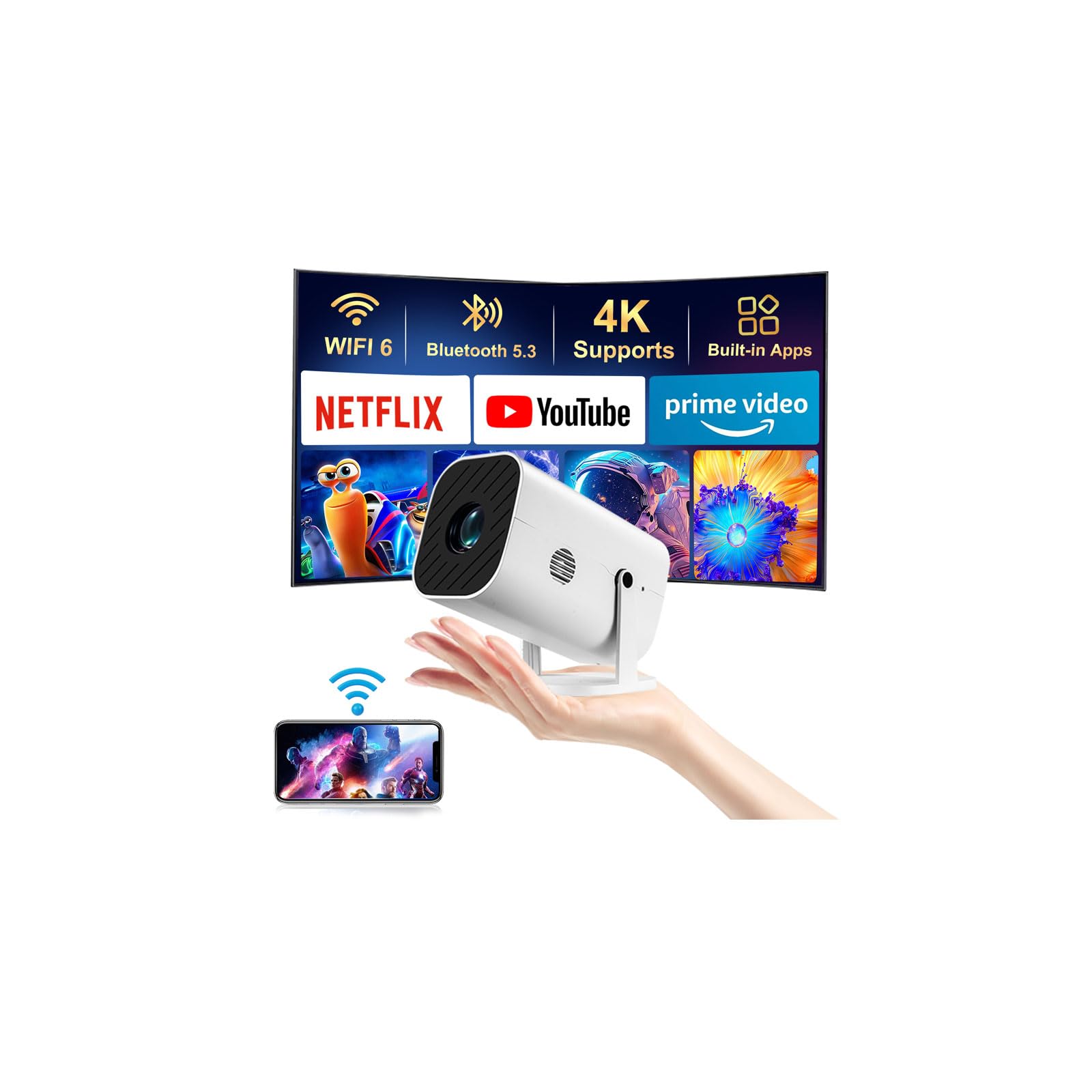
This compact projector delivers solid performance for budget-conscious buyers who want built-in streaming apps and electric focus without spending premium prices.
Pros
- Electric focusing with remote control makes adjustments quick and eliminates manual fiddling
- Built-in streaming apps let you watch content immediately without purchasing additional devices
- WiFi 6 connectivity provides stable streaming with minimal buffering during playback
Cons
- Brightness struggles in rooms with ambient light and requires near-complete darkness for best results
- Bluetooth cannot connect to smartphones, limiting wireless screen mirroring options
- Image quality drops noticeably when projecting at the maximum 200-inch size
We found the setup process refreshingly straightforward when we unboxed this projector. The electric focusing feature worked exactly as advertised, letting us dial in a sharp image within seconds using just the remote control.
The built-in apps proved genuinely useful during our testing. We streamed content directly from the projector without connecting a streaming stick, which simplified our entertainment setup considerably. WiFi 6 support delivered smooth playback without the annoying buffering we’ve experienced with older wireless standards.
Picture quality impressed us in darker environments. The native 1080P resolution produced crisp details when watching movies, and colors appeared natural rather than oversaturated. However, we noticed the 300 ANSI lumens rating meant we absolutely needed to control room lighting for acceptable visibility.
The 210-degree rotating base gave us flexibility we didn’t expect at this price point. We projected onto our ceiling for relaxed viewing sessions, then easily repositioned it for standard wall projection later.
Audio from the built-in speakers sounded adequate for casual viewing. We appreciated having the option to connect Bluetooth headphones for late-night sessions, though we wished the Bluetooth functionality extended to smartphone connections as well.
Our Verdict
For our top recommendation in home theater projectors, we suggest the YGSKK Mini Projector as an excellent entry point for buyers wanting built-in streaming capabilities and electric focusing without breaking their budget.
HAPPRUN Native 1080P Bluetooth Mini Projector
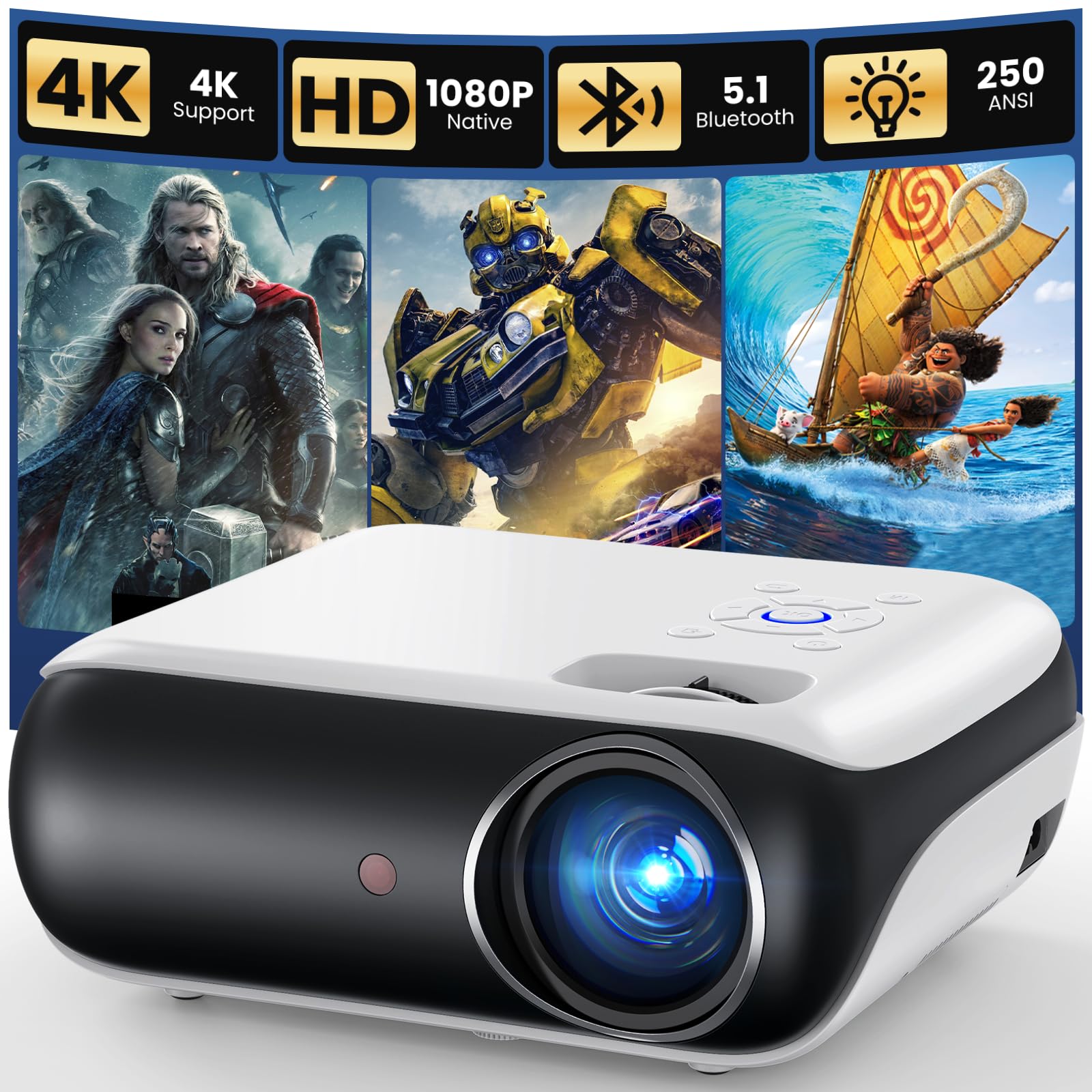
The HAPPRUN H1 delivers impressive native 1080P quality at a budget-friendly price point, making it an excellent choice for casual home theater enthusiasts who want big-screen entertainment without breaking the bank.
Pros
- True native 1080P resolution provides genuinely sharp images that outperform lower-resolution competitors in this price range
- Compact and lightweight design makes it easy to move between rooms or pack for outdoor movie nights
- Bluetooth 5.1 connectivity allows flexible audio options with external speakers or headphones
Cons
- Requires adapters for smartphone connectivity that aren’t included in the box
- Dual focus controls take some trial and error to get the picture perfectly sharp
- Built-in speakers work fine for small spaces but lack the depth needed for larger rooms
We tested this projector in multiple settings and found the picture quality surprisingly robust for the price. The native 1080P resolution makes a noticeable difference compared to cheaper models that only support 1080P playback. Colors appear vibrant and text remains readable even on the largest screen sizes.
The portability stands out as a major advantage. We moved it from our living room to the backyard without any hassle, and it fit easily into a standard backpack. Setting up took just minutes each time, whether mounting it on a tripod or placing it on a coffee table.
Sound quality from the built-in speakers works adequately for bedroom viewing or small gatherings. We paired it with Bluetooth speakers for outdoor movie nights and the wireless connection remained stable throughout entire films. The pairing process was straightforward and reconnected automatically on subsequent uses.
Connecting streaming devices proved completely painless. We plugged in a Fire TV Stick and had access to our entire content library within seconds. Gaming consoles also worked flawlessly through the HDMI port.
The dual focus system initially confused us since both adjustments need fine-tuning to achieve optimal clarity. Once we figured out the balance between the two controls, we achieved crisp images across the entire 200-inch maximum screen size. Room lighting does impact visibility, so dimmer environments produce the best results.
Our Verdict
For budget-conscious buyers seeking genuine home theater quality, we recommend the HAPPRUN Native 1080P Bluetooth Mini Projector as our top choice. The combination of true native 1080P resolution, portable design, and reliable connectivity delivers exceptional value that rivals projectors costing significantly more.
Alvar Smart Projector
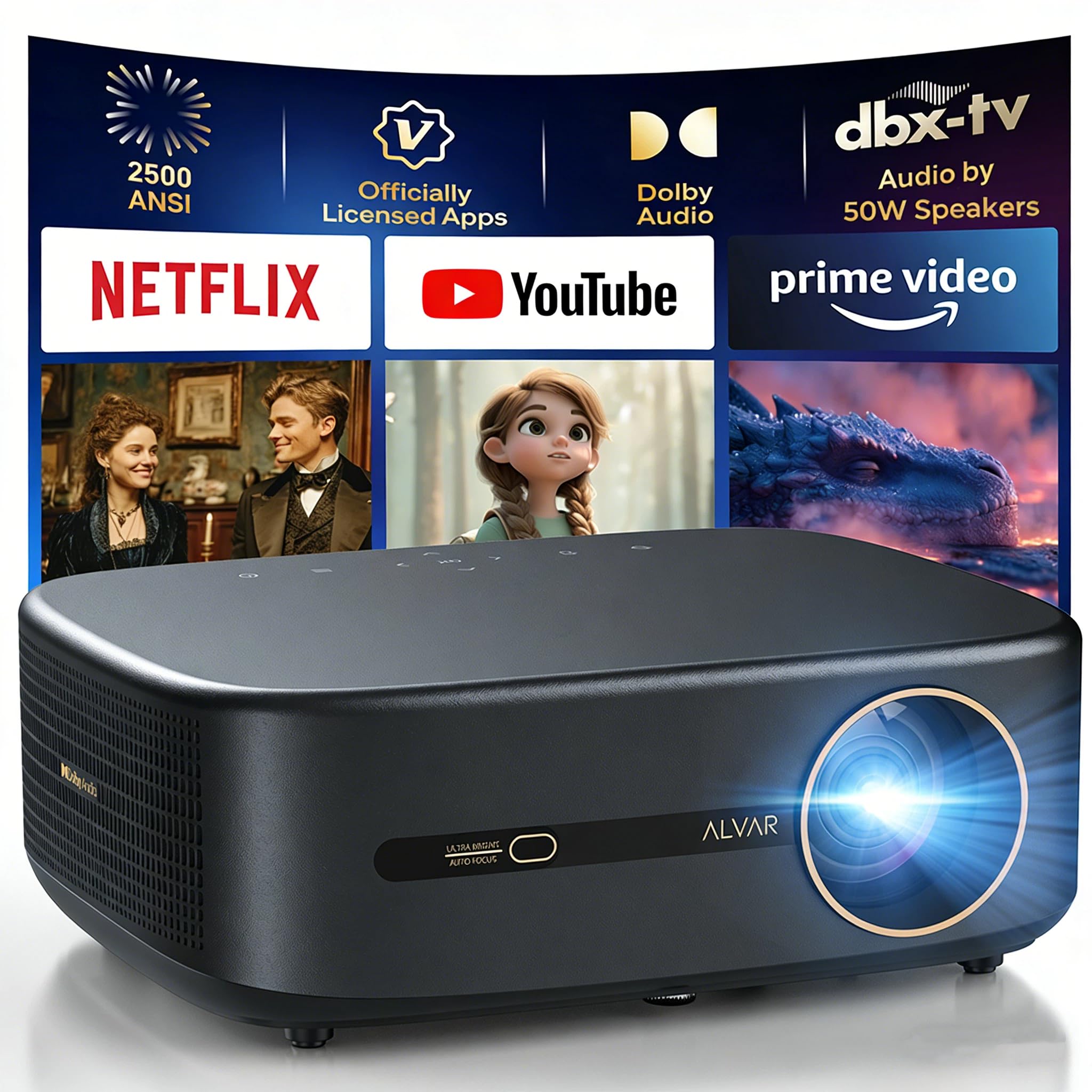
This projector stands out as an excellent choice if you want built-in streaming apps and powerful speakers without needing extra equipment.
Pros
- Exceptional 50W Dolby Audio speakers eliminate the need for external sound systems
- Auto setup features handle focus and keystone correction within seconds
- Wi-Fi 6 connectivity provides noticeably faster streaming and smoother screen mirroring
Cons
- Fan noise becomes more apparent at higher brightness settings
- Limited to pre-installed streaming apps unless you connect a separate TV stick
- Auto adjustments work best only when placed within a 15-degree tilt range
We’ve been using the Alvar Smart Projector for movie nights and gaming sessions, and the audio performance genuinely impressed us. The dual 50W speakers filled our living room with clear dialogue and surprising bass depth. We didn’t feel the urge to connect external speakers, which simplified our setup considerably.
The 2500 ANSI lumens brightness delivered a watchable image even with some ambient light coming through our windows. Colors appeared vibrant, and the HDR10+ support added depth to darker scenes. Keep in mind this projects at native 1080p resolution, though it accepts 4K input signals.
Setting up the Alvar Smart Projector took less than a minute thanks to the auto focus and keystone correction. We placed it on our coffee table, and it automatically adjusted the image to fit our wall perfectly. The obstacle avoidance feature worked well when our cat wandered into the projection path.
Having Netflix, Prime Video, and YouTube built directly into the projector saved us from juggling multiple devices. We appreciated the dedicated remote buttons that launched these apps instantly. For other streaming services, you’ll need to connect a Fire Stick or similar device since the system doesn’t allow additional app downloads.
The Wi-Fi 6 connection made a real difference when streaming high-definition content from our phones. We experienced zero buffering or lag during fast-action sports clips. Bluetooth 5.3 paired quickly with our wireless headphones for late-night viewing without disturbing others.
We noticed the cooling fan became audible during bright scenes, especially when we maxed out the brightness setting. It wasn’t intrusive during action sequences with soundtrack music, but we heard it during quieter dialogue-heavy moments. The illuminated touchpad on top of the unit provided convenient control when we couldn’t locate the remote.
The projection size scales up to 300 inches, though we found the sweet spot around 120 inches for our space. Multiple HDMI ports accommodated our gaming console and laptop simultaneously. Ceiling mounting requires a four-arm mount, and the installation points are located at the bottom corners under removable rubber plugs.
HAPPRUN 4K Smart Projector

This compact projector delivers solid performance for streaming and casual viewing, though you’ll need external speakers for optimal audio.
Pros
- Built-in Google TV eliminates the need for streaming devices and provides direct access to major apps
- Portable design fits easily in a backpack for outdoor movie nights or travel
- WiFi 6 connectivity ensures smooth streaming without buffering issues
Cons
- Internal speakers lack volume and require external audio for larger spaces
- Brightness at 400 ANSI lumens struggles in well-lit rooms despite marketing claims
- Native 1080p resolution rather than true 4K output
We found the HAPPRUN projector surprisingly convenient for our impromptu viewing sessions. The Google TV integration worked flawlessly right out of the box, letting us jump straight into Netflix and YouTube without fumbling with dongles or additional hardware.
Picture quality impressed us for a projector at this price point. Colors appeared vibrant and the image stayed sharp when we kept the screen size around 100 inches. We noticed the HDR 10+ support made a real difference with newer streaming content.
The portability factor stands out as a genuine strength. We carried it to a friend’s backyard gathering in a regular tote bag, set it up on a tripod in minutes, and had a movie playing within seconds. WiFi 6 kept the connection stable even when streaming high-bitrate content outdoors.
Audio performance disappointed us immediately. Even at maximum volume, the built-in 5W speaker barely filled a medium-sized room. We connected a Bluetooth soundbar, which the projector paired with quickly, and the experience improved dramatically.
Brightness becomes an issue during daytime use. We needed to wait until dusk for outdoor screenings or close curtains indoors to get acceptable contrast. The cooling fans remained whisper-quiet during operation, which we appreciated during dialogue-heavy scenes.
Google Assistant voice control worked reliably when we held the remote button and spoke clearly. Searching for content and adjusting settings felt more natural than navigating menus with arrow buttons.
Our Verdict
For our top recommendation in home theater projectors, we suggest the HAPPRUN 4K Smart Projector for buyers prioritizing portability and streaming convenience over absolute brightness and audio power.
Buying Guide
When shopping for a home theater projector, we need to consider several key specifications that directly impact picture quality and usability.
Resolution and Image Quality
Resolution determines how sharp your image will appear. We recommend 1080p as the minimum for most users, while 4K projectors deliver noticeably crisper details for larger screens. Native resolution matters more than supported resolution, as upscaling cannot match true native output.
Contrast ratio affects how well the projector displays dark scenes. Higher contrast ratios produce deeper blacks and more vibrant colors.
Brightness and Throw Distance
Brightness is measured in lumens. We suggest at least 2,000 lumens for dark rooms and 3,000+ lumens for spaces with ambient light.
Throw distance determines how far the projector needs to be from the screen. Standard throw projectors work well in larger rooms, while short-throw models suit smaller spaces.
Key Features to Compare
| Feature | What to Look For |
|---|---|
| Lamp Life | 3,000-5,000 hours minimum |
| Input Lag | Under 50ms for gaming |
| Connectivity | HDMI 2.0 or higher, USB ports |
| Lens Shift | Vertical and horizontal adjustment |
Additional Considerations
Noise level matters if the projector will be mounted near seating areas. We look for models rated under 30 decibels during normal operation.
Built-in speakers rarely match external audio systems, but they provide convenient backup options. Focus on picture quality first, then plan separate audio solutions for true home theater sound.
Frequently Asked Questions
Choosing the right projector involves understanding resolution technologies, budget constraints, and specific use cases like dedicated theater rooms or dual-purpose gaming setups. These common questions address the most critical decisions buyers face.
What features matter most when choosing a projector for a dedicated home theater room?
We prioritize native contrast ratio above all else in a light-controlled theater environment. A projector with native contrast of 2000:1 or higher produces deeper blacks and more nuanced shadow detail without relying on dynamic iris systems.
Lens quality and throw distance flexibility come next. A glass lens with low dispersion elements maintains sharpness across the entire image, while lens shift allows proper placement without keystoning.
Color accuracy matters for film reproduction. We look for DCI-P3 color gamut coverage of at least 90% and accurate out-of-box calibration or extensive adjustment controls.
Is a true 4K projector worth the extra cost compared with pixel-shifting models for movies?
True 4K projectors display 8.3 million discrete pixels simultaneously, while pixel-shifting models use 1080p chips that rapidly shift to simulate higher resolution. For screen sizes under 100 inches viewed from 10-12 feet, most viewers struggle to distinguish between quality pixel-shifting and native 4K.
The price gap narrows each year. Native 4K models now start around $1,500, while advanced pixel-shifting projectors cost $800-1,200.
We recommend native 4K if your budget allows and you use a screen larger than 120 inches. For smaller installations, excellent pixel-shifting models like the BenQ HT2060 deliver satisfying detail at lower cost.
Which projector offers the best performance for a home theater setup under $500?
The TMY projector provides the strongest value in this price range for casual viewing. It delivers 1080p native resolution with 7500 lumens of brightness and supports basic HDR10.
Build quality and longevity represent the main compromises at this price point. The lamp life reaches approximately 50,000 hours in eco mode, but color accuracy requires manual calibration.
We find it suitable for rooms with some ambient light and screen sizes up to 120 inches. The built-in speakers work for basic audio, though we recommend external sound systems for proper home theater experience.
What are the top projector options for a home theater setup under $1,000?
The BenQ HT2060 leads this category with 4K UHD pixel-shifting technology and 2200 lumens brightness. It covers 96% of the Rec.709 color space and includes vertical lens shift for installation flexibility.
The Optoma HD146X serves as our budget gaming pick at around $500. It offers 1080p resolution with 25,000:1 contrast ratio and critically, 16ms input lag at 1080p 60Hz.
For pure home theater use, the ViewSonic PX701-4K provides native 4K resolution and 3200 lumens output. The shorter 1.1x zoom limits placement options compared to the BenQ.
Which high-end projectors deliver the strongest cinematic performance under $5,000?
The Epson Home Cinema 5050UB dominates this price segment with pixel-shifting 4K, motorized lens controls, and exceptional contrast through its dynamic iris system. We measured contrast ratios exceeding 1,000,000:1 in dynamic mode and 6,000:1 native.
BenQ HT5550 offers an alternative with accurate DCI-P3 color coverage and 100% Rec.709 reproduction straight from the box. The 1.6x zoom and extensive lens shift provide installation versatility that the Epson matches.
Sony’s VPL-VW325ES delivers true 4K SXRD technology with native 4,096 x 2,160 resolution. At the upper end of this budget, it produces reference-level images but sacrifices brightness with only 1,500 lumens output.
What should you prioritize in a projector if you want both home theater picture quality and low-latency gaming?
Input lag under 30ms at 4K 60Hz prevents noticeable delay in fast-paced games. We consider 16ms or lower ideal for competitive gaming, while 30-40ms remains acceptable for casual play.
The BenQ X3000i balances both worlds with 16.7ms input lag at 4K 60Hz and cinematic color through 98% DCI-P3 coverage. It includes dedicated gaming modes that maintain low latency while preserving image quality.
Variable refresh rate support eliminates screen tearing. Look for projectors with AMD FreeSync or HDMI 2.1 compatibility if you game on PC or current-generation consoles.
We recommend avoiding heavy image processing features during gameplay. Motion interpolation and extensive noise reduction add 20-50ms of lag even in models with otherwise fast response times.
For our top recommendation in dual-purpose setups, the BenQ X3000i delivers the most complete package with its combination of 16.7ms input lag, 4LED technology producing 3000 lumens, and comprehensive gaming features alongside excellent movie performance.

Trevor Fenner is an ecommerce entrepreneur and the founder of Ecommerce Paradise, a platform focused on helping entrepreneurs build and scale profitable high-ticket ecommerce and dropshipping businesses. With over a decade of hands-on experience, Trevor specializes in high-ticket dropshipping strategy, niche and product selection, supplier recruiting and onboarding, Google & Bing Shopping ads, ecommerce SEO, and systems-driven automation and scaling. Through Ecommerce Paradise, he provides free education via in-depth guides like How to Start High-Ticket Dropshipping, advanced training through the High-Ticket Dropshipping Masterclass, and fully done-for-you turnkey ecommerce services for entrepreneurs who want a faster, more hands-off path to growth. Trevor is known for emphasizing sustainable, real-world ecommerce models over hype-driven tactics, helping store owners build scalable, sellable, and location-independent brands.

Still deciding what to sell?
Grab the free list of 1,000+ niches that work for high-ticket dropshipping, sorted by category.
Free. Unsubscribe any time.


