

Supplements are one of the easiest products to sell online and one of the hardest products to ship casually. A cracked phone case costs you a refund. A contaminated or mislabeled supplement lot can turn into a recall, a regulator’s attention, and customers who never come back.
Most operators learn this when order volume outgrows the spare room and someone asks where the lot numbers are. In 2026, that is not a back-office detail you can push off. This guide covers what actually matters: how supplements differ from ordinary inventory, which FDA rules touch a warehouse, how lot tracking and expiry rotation work in practice, and how I would vet a fulfillment partner before handing over stock.
Here at Ecommerce Paradise, I teach people how to build ecommerce businesses that can grow without becoming a pain in the butt to run. If you are still getting clear on the model itself, start with my guide to high-ticket dropshipping. Then come back to this checklist before your first major inventory handoff.
Affiliate disclosure: some links in this article are affiliate links and I may earn a commission at no cost to you. It does not change which tools I recommend or what the research found.

Want the store, supplier, and operations setup handled with an operator’s eye from day one? My done-for-you store build service → is for people who would rather build the foundation correctly than untangle a rushed setup later.
| What to verify | What a capable supplement 3PL should show you | Why it matters |
|---|---|---|
| Lot traceability | A report that follows one lot from receiving through every shipment | It makes a recall or investigation manageable instead of chaotic. |
| Expiry rotation | FEFO rules, exception reporting, and a clear process for short-dated inventory | It reduces avoidable write-offs and the risk of shipping stale stock. |
| Storage controls | Digital temperature and humidity logs with alerts and calibration records | Supplements can deteriorate even in a warehouse that looks clean. |
| Receiving controls | Documented checks for counts, damage, lot data, labels, and quarantine status | Bad inventory is cheaper to catch at the dock than after thousands of orders. |
| Recall readiness | A mock-recall process and a named operations contact | You need an answer in minutes or hours, not days. |
Why Supplements Aren’t Like Other Products to Ship
Picture a brand doing a few hundred orders a month from a home office. Shipping is a nuisance but manageable. Then a retail promotion lands, volume triples, and the founder realizes nobody can say which batch went to which customer. That is usually the point where operators start comparing the best ecommerce fulfillment companies to find a partner that already offers lot-level tracking and climate control instead of building those capabilities themselves.
The category is worth the effort. IBISWorld estimates U.S. online vitamin and supplement sales at about $27.7 billion in 2026, and Mordor Intelligence reported that online retail captured roughly 25 percent of 2025 supplement revenue. I would treat any market-size estimate as directional, but the operational conclusion is pretty clear: growth attracts brands, and brands that skip process are the ones that get surprised later.
There are three risks that show up fast. First, expiry: every unit has a date, and stock that sits too long becomes a write-off. Second, environment: heat can degrade probiotics, soften gummies, and create real quality concerns for temperature-sensitive products. Third, liability: if you are the brand owner, your name is on the label, and “the warehouse mixed up the lots” is not a good answer for a customer or regulator.
This is also why I tell people to go deep before they go wide. Supplements can be a legitimate product vertical, but you should evaluate the operating burden before you commit. My high-ticket niches list can help you compare opportunities. The free niches resource gives you a practical place to start your research.
What FDA Rules Actually Apply to a Warehouse
Here is where vendor blogs can get sloppy. Some say a 3PL must be fully cGMP certified. Others say the rules do not touch a store-and-ship warehouse at all. The primary sources are clearer, but your exact obligations still depend on the activities performed, the parties involved, and the applicable exemptions. This is general information, not legal advice.
The dietary supplement cGMP rule lives in 21 CFR Part 111. Its holding and distribution provisions require packaged and labeled supplements to be held under conditions that protect against mixups, contamination, and deterioration from temperature, humidity, and light. FDA’s small-entity guidance specifically explains that a distributor holding packaged, labeled supplements in a warehouse must meet the holding and distribution requirements that apply to its operation.
That does not mean you should accept a vague sales claim about certification. Ask the 3PL exactly what it does, which written procedures it follows, who owns quality decisions, and how it handles rejected product. FDA’s guidance says the rule does not prescribe one single method for every operation, but it does require controls that can stand up to scrutiny.
Food-facility registration is another area where you should confirm facts instead of guessing. Facilities required to register with FDA generally renew in even-numbered years, and the current FDA facility registration page explains the process. For 2026, FDA says the renewal window runs from October 1 through December 31 and that renewal has no fee. Have regulatory counsel confirm whether a specific facility and your role fall within the requirement or an exemption.
What is not in the regulation matters too. Nothing I found in Part 111 names FEFO, meaning first-expired, first-out, as a legal mandate. It is a best practice and a sensible one. A vendor who tells you FEFO is required by law is stretching. The better question is whether its system can prove that the oldest suitable stock was selected and can explain every exception.
If you want a second set of experienced eyes on the business side of supplier, systems, and fulfillment decisions, I can help you avoid the expensive shortcuts. See how one-on-one ecommerce coaching works →.
Lot Tracking and FEFO in Practice

Traceability starts at the dock. When a pallet arrives, the warehouse should capture the lot number and expiration date for every SKU, not just a count. If lot data enters the system as a handwritten note, it will be wrong by the third week. I want a scanned or validated record, an exception queue for missing information, and a clear answer about who resolves an exception.
From there, the test is simple. Pick a lot number and ask the warehouse to show you every order that shipped units from it. A good system answers in minutes. A weak one takes days, and during a recall, days matter. FDA’s dietary-supplement guidance explains that firms need to be able to determine the complete manufacturing history and control of a packaged and labeled supplement through distribution.
Retention is the part people forget. Under 21 CFR 111.605, records generally need to be kept for one year past the shelf-life date, if shelf-life dating is used, or two years beyond the distribution of the last associated batch. Ask a prospective partner how long it keeps receiving and shipping records, whether they remain searchable after a software migration, and where the records live.
FEFO is the operational side of this. The warehouse ships the earliest-expiring stock first, even if newer inventory is easier to reach. Many operators also flag stock when it is roughly 90 days from expiry, although that figure is common operating practice rather than a legal rule. Rejected or recalled products need a separate hold area with clear labels, so nobody picks them by accident.
Your storefront and warehouse should agree on the same SKU language. I recommend Shopify for a clean ecommerce operating base because it keeps the order source straightforward for most brands. If the reconciliation side is getting messy as 3PL invoices, returns, and cost of goods start piling up, Finaloop is worth a look for ecommerce-focused bookkeeping.
If you are learning the high-ticket model from the ground up, my high-ticket dropshipping masterclass gives you the bigger operating picture. Lot control is not the sexy part of the business, but it is the kind of system that keeps a good niche store from blowing up when volume finally arrives.
Temperature, Humidity and Seasonal Shipping
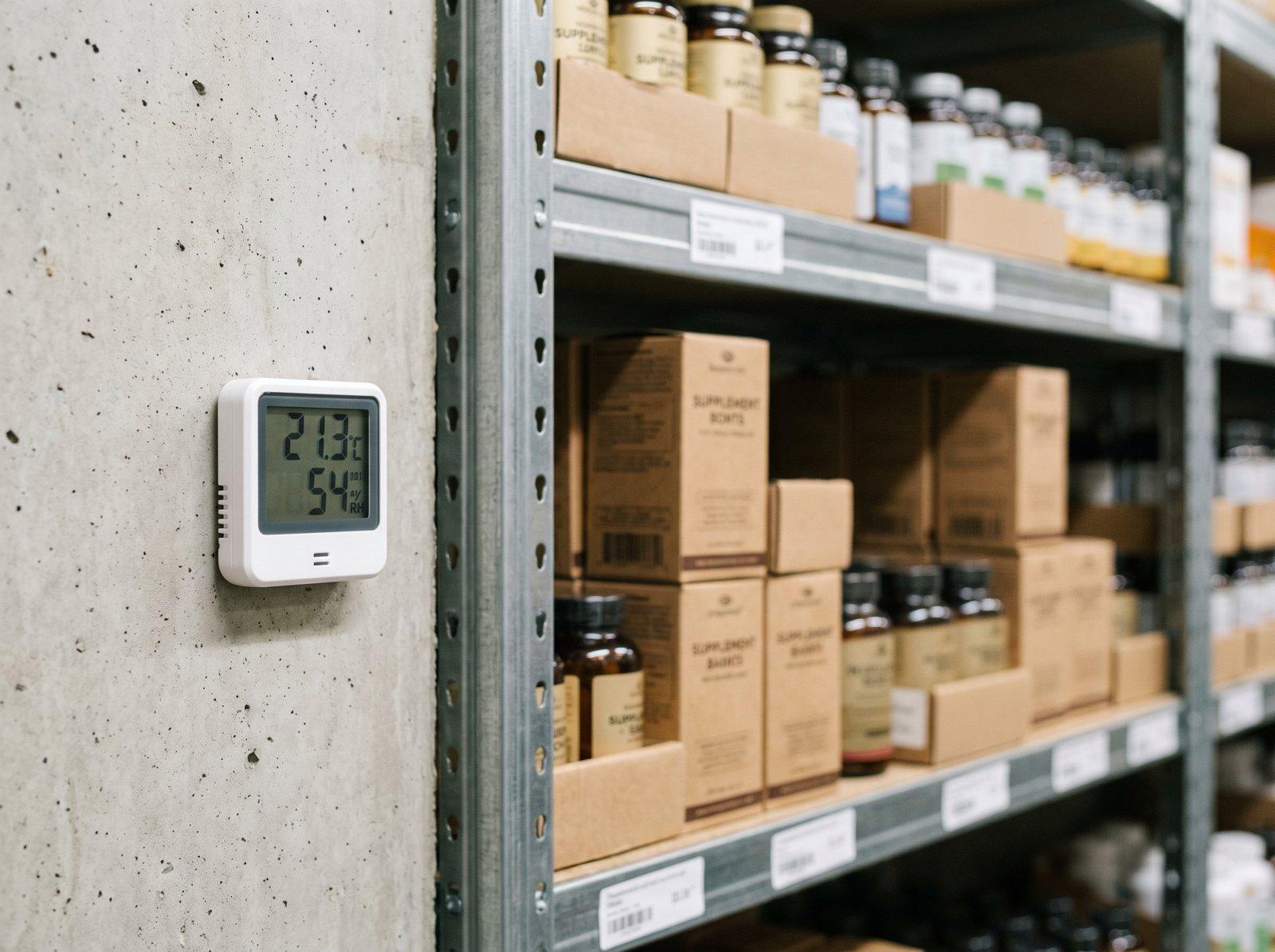
Climate control is where good intentions fail quietly. A warehouse can be spotless and still run 95 degrees in July. Ask whether the facility logs temperature and humidity digitally, with alarms when readings drift out of range. Manual checks twice a day leave long gaps, and nobody is standing there at 2 a.m. when a cooling unit fails.
Where cold storage is used for sensitive products, ask how the equipment is calibrated, monitored, and backed up. You also want to know who receives an alarm, how quickly it is investigated, and whether the 3PL can produce a report for a specific date range. Those details sound boring until you are trying to prove that a product stayed within its required conditions.
Storage is only half the story. Heat exposure in transit can be just as damaging, particularly for probiotics, gummies, and softgels. Many brands switch to insulated mailers or cooler packaging in summer, and some pause shipments to hot regions during severe heat waves. Transit time matters here, so use multi-carrier shipping software that lets you route sensitive orders on faster services.
For a brand handling more than a few carriers or service rules, Easyship can be useful for comparing services and centralizing shipping workflows. After the package leaves, AfterShip is worth considering if you need clearer delivery visibility for customers. Neither tool replaces your quality process, but both can make the handoff between warehouse and customer less opaque.
How to Vet a 3PL for Supplements: A Practical Checklist
If you are still deciding whether to hand off fulfillment at all, the guide on outsourcing to a 3PL covers costs and timing. Once the decision is made, test candidates against specifics, not a polished slide deck.
- Registration and scope: Ask the 3PL to explain the facility’s registration status and the exact activities it performs. Confirm the applicable obligations with counsel instead of treating registration as an FDA endorsement.
- Written procedures: Request holding and distribution SOPs. If none exist, that is your answer.
- Lot traceability test: Name a lot and ask for every shipment tied to it. Time the response.
- FEFO verification: Ask which lot sits at the pick face for one of your SKUs, then check the dates and the exception process.
- Digital temperature logs: Request a sample report from the past summer and ask how alarms are handled.
- Recall support: Ask whether the team has run a mock recall and what the output looked like.
- Insurance: Confirm product liability and warehouse legal-liability coverage, then have your broker review any gaps.
- Systems: Check inventory sync with your storefront, plus kitting and subscription handling if you sell bundles.
- Receiving inspection: Find out how the facility handles damaged cartons, mismatched lot data, or short shipments.
Red flags are easy to spot once you know them: lot numbers kept on paper, thermometers checked by hand, vague answers about recalls, and a sales team that cannot connect you with anyone in operations. A quick site visit or video walkthrough tells you more than any brochure. I would also ask for a sample lot-trace report before signing, not after the first issue.
Recall readiness deserves its own conversation. FDA’s recall guidance for industry is useful background, but an operator needs a practical drill: one lot, a customer list, an inventory count, a communication owner, and a timestamped decision trail. Run that drill before the warehouse is busy, then fix whatever breaks.
Already selling and spending too much time inside fulfillment tickets, supplier follow-ups, and customer emails? My store-management service → is built for operators who need experienced systems and day-to-day support as they scale.
A 30-Day Handoff Plan Before You Move Inventory
I would not send a full inventory transfer just because a 3PL said it can handle supplements. Start with a controlled handoff. During the first week, confirm the receiving appointment, pallet configuration, SKU map, lot and expiry fields, storage requirements, ownership of quality holds, and the exact files you will receive after intake.
In week two, send a test quantity across a few representative SKUs. Have the 3PL receive it, report the lots and dates back to you, and process a few test orders. This is also the time to test address correction, a damaged shipment, a return, a bundle, and an order that needs to be held. You want the team to show you the weird cases before your customers do.
During week three, run the lot-trace exercise and a short-dated inventory report. Make sure the numbers reconcile among the warehouse management system, your storefront, and your accounting. If the 3PL charges storage, pick fees, special handling, or return fees differently than the proposal suggested, get that cleaned up before the transfer becomes too large to unwind.
In week four, decide whether to move the remaining stock. At that point, you should know the operations contacts, service-level expectations, escalation path, and reporting cadence. If you are still forming the business around a new product line, use my business-formation checklist to make sure the legal and financial basics are in place before you sign a long contract.
This is where people try to save a few hours and create a six-month headache. A written receiving plan, a clear approval process, and a test order batch are boring. They are also exactly what lets you scale safely. If your first transfer needs an operations assistant, OnlineJobs.ph can be a practical place to find support for repeatable admin work after you have documented the process.
When the product is proven and the operations are working, the next job is getting more qualified traffic without breaking fulfillment. Learn about my ecommerce scaling service →.
Common Mistakes Operators Make
Skipping the mock recall is the big one. Run it before you need it. If your partner cannot trace a lot to its customers within a business day or so, fix that while the stakes are low. The goal is not to create a perfect theatre exercise. The goal is to discover whether your reports, contact list, and inventory records actually agree.
Another mistake is tracking inventory at the SKU level only. Two pallets of the same product with different expiry dates are not the same stock. Without lot-level counts, FEFO is guesswork. That is also why I am picky about supplier relationships. Review your supplier sourcing process before you outsource, then keep the same scrutiny once inventory reaches the warehouse.
Operators also skip receiving inspections, assuming the manufacturer shipped what the paperwork says. A wrong label discovered at intake is an inconvenience. Discovered after 3,000 orders, it is a crisis. Your brand should approve the acceptance rules and the documented disposition of anything that fails them.
Finally, many brands assume the 3PL absorbs their label liability. It does not. Your contract defines what the warehouse is responsible for, but the product and its claims remain yours. Sourcing matters upstream too, so review your supplier and warehouse sourcing choices with the same scrutiny.
Do not forget the customer side either. A delay, damaged carton, or status question still lands with your brand, not with the warehouse. I like Gorgias for brands that need a more organized customer-support workflow, especially once order volume makes it impossible to manage exceptions through a shared inbox.
For health products, read my guide to dropshipping supplements before you commit.
FAQ
Does every supplement 3PL need to be cGMP certified?
No blanket answer covers every facility or activity. What matters is whether the operation performs activities covered by the applicable rules and whether it has controls, records, and procedures that meet those responsibilities. Ask the operator to describe its scope, then get regulatory advice for your situation.
Is FEFO legally required for dietary supplements?
Part 111 does not name FEFO as a specific legal mandate. It is still a very smart operational control because it helps protect shelf life and makes inventory rotation auditable.
How quickly should a 3PL trace a lot during a recall drill?
I want the first usable report in minutes or hours, not days. The exact target depends on your scale and systems, but if a warehouse cannot show which customers received a specific lot within one business day, there is a serious process gap.
Should a supplement brand use one 3PL or multiple warehouses?
Start with the setup you can control. A single capable location is often simpler at lower volume. Add locations when shipping zones, transit time, inventory availability, and service levels make the added complexity worth it.
What should be in a supplement 3PL contract?
Get clear on storage conditions, lot and expiry data, receiving standards, reporting, service levels, recalls, insurance, returns, fees, termination, and who has authority to quarantine or release inventory. A lawyer who understands your product category should review the agreement before you sign.
Conclusion
Supplement logistics is not mysterious, but it punishes improvisation. Know which FDA provisions reach your warehouse, insist on lot-level records, treat temperature as a daily metric, and test every claim a prospective partner makes by asking to see the evidence. That is the whole game.
Audit before you ship, not after the first complaint. The right partner will hand over logs, procedures, and traceability reports without a fight. If they hesitate, treat that as the answer. And if you are still early in the journey, my free ecommerce mini course is a good way to get the foundation straight before you take on a more regulated product category.
Want my help building yours? Join the High-Ticket Dropshipping Masterclass. You get lifetime access to every course, the private community, and private coaching calls with me.
Related Articles
If you found this useful, these guides go deeper on related topics:
- How to Choose a 3PL Fulfillment Partner
- 3PL Fulfillment in the USA: When to Outsource, What It Costs, and How to Choose
- Best Shipping Software for Ecommerce in 2026
- Finale Inventory Review for Ecommerce Businesses
- Private Label Supply Chain Problems: How to Take Control as You Scale

Trevor Fenner is an ecommerce entrepreneur and world traveler from Seattle, Washington, and the founder of Ecommerce Paradise, a platform focused on helping entrepreneurs build and scale profitable high-ticket ecommerce and dropshipping businesses. With over a decade of hands-on experience, Trevor specializes in high-ticket dropshipping strategy, niche and product selection, supplier recruiting and onboarding, Google & Bing Shopping ads, ecommerce SEO, and systems-driven automation and scaling. Through Ecommerce Paradise, he provides free education via in-depth guides like How to Start High-Ticket Dropshipping, advanced training through the High-Ticket Dropshipping Masterclass, and fully done-for-you turnkey ecommerce services for entrepreneurs who want a faster, more hands-off path to growth. Trevor is known for emphasizing sustainable, real-world ecommerce models over hype-driven tactics, helping store owners build scalable, sellable, and location-independent brands.
He maintains homes in Seattle and Bali, spends most of the year overseas, and usually returns to Seattle for about a month each summer.


