

Product imagery is one of the quickest ways to build confidence in an ecommerce store, especially when you sell products customers cannot touch before they buy. At E-Commerce Paradise, I treat it as an operating decision, not just a design choice: the image needs to make the offer more appealing without changing what the buyer believes they will receive.
That is why the AI versus real photography question matters most for stores with higher price points, detailed specifications, variable condition, or a buyer who will study the product before checking out. The useful answer is rarely to choose one method forever. It is to decide which job each method should do, then set up a review process that protects product accuracy and brand trust.
Imagine turning a single product photo into an entire advertising campaign, complete with beautiful backgrounds and professional lighting, without ever stepping foot in a photography studio. Thanks to AI, ecommerce businesses can now do exactly that, and the results are getting remarkably good.
For online retailers dealing with hundreds of products, the appeal isn’t very hard to find. AI-generated product images can save major time and money while opening up creative possibilities that would normally require expensive photoshoots which most ecommerce companies cannot organize quickly, or at all.
But how do these images compare to the real thing? And can businesses trust AI to represent their products accurately enough to sell them? Let’s take a closer look at whether traditional ecommerce photography is on its way out.

| Image need | Best foundation | Where AI helps | Final check |
|---|---|---|---|
| Core product-page detail | Real product photography | Background cleanup or size variants | Match the physical product, colour, text, and condition |
| Campaign and social creative | Approved reference image | Scene variations, lighting concepts, and fast testing | Keep the product silhouette and claims accurate |
| Large catalogue consistency | Standardized product shots | Consistent backdrops and supporting layouts | Sample-check every SKU group before publishing |
Why Is AI Product Photography Becoming So Popular?
Traditional product photoshoots are always a handful to manage. A new campaign might mean booking a studio again, arranging props and waiting for edited photos, even though the product itself hasn’t changed.
AI cuts out much of that repeat work. With a clear product photo, ecommerce companies can replace backgrounds, create entirely new environments and produce different versions for their advertising campaigns. A skincare brand, for example, could show the same moisturiser on a sunny beach or in a cosy bathroom with as little as a single prompt without having to arrange a photoshoot.
The technology has also become far more accessible. Platforms like Shopify now offer built-in AI image editing features, while ecommerce agencies are also expanding into delivering well-refined creatives as a service to create professional-looking visuals without an expensive production team.
For ecommerce stores with hundreds of products, this is a pretty exciting development. New collections and seasonal promotions no longer have to involve weeks of photography planning, and experimenting with different visual styles becomes much easier.
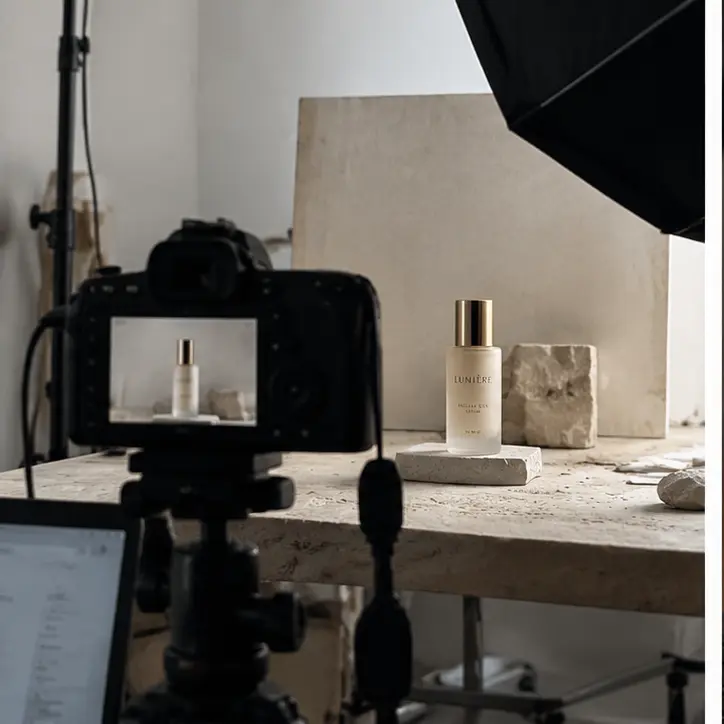
The practical advantage is speed, but speed only helps when the store has an approved starting asset. Shopify documents how its AI media tools can generate or edit images, and its AI-powered media guidance is a useful reference for understanding that workflow.
If your store already runs on Shopify, Shopify is worth evaluating for keeping products, storefront content, and image experiments in the same operational hub.
Start with the right products, not just better creative
Great imagery cannot rescue a weak product choice. If you are still narrowing your offer, my high-ticket niches list can help you focus on products where useful visuals, healthy margins, and buyer intent have room to work together.
Where AI-Generated Product Images Work Best
Furniture is one of the most interesting applications of AI product photography. Instead of photographing a sofa in several different homes, retailers can use AI to place it in a cosy living room, a modern apartment or just about any setting they fancy. This is particularly useful for helping customers picture how a piece of furniture might look in their own homes.
Fashion retailers are also finding plenty of opportunities. AI can generate images of clothing on virtual models, allowing brands to experiment with different poses and settings without organising a new photoshoot for every collection. Some tools can even place garments onto different body types, although accurately representing the fit still requires care.
Another excellent use is creating consistent product catalogues. If you’ve ever browsed an online store where half the products have different lighting and backgrounds, you’ll know how messy it can look. AI editing tools can give existing photographs a consistent appearance, which is especially useful for businesses dealing with thousands of product listings.
And then there’s advertising. A single product photo can become the starting point for dozens of creative variations, making it much easier to test different visual styles and see which ones customers respond to.

Build a visual system, not a one-off image
My rule is simple: use AI to extend a proven product asset, not to invent the asset the customer is relying on. That keeps the product page grounded while giving you flexibility for collection banners, email creative, ads, and social posts.
For light campaign layouts and reusable creative templates, Canva can be a practical option to check out once the approved product photography is already in place.
For a visual system to hold together, document the camera angle, crop, background treatment, colour correction, and file naming convention. This is especially important if you work with multiple suppliers. My guide to finding the best suppliers explains why dependable supplier relationships matter well beyond inventory availability.
Why Traditional Product Photography Still Cannot Be Wholly Replaced
Traditional product photography still has one advantage that’s hard to beat: the camera captures the item you’re actually selling. AI doesn’t always preserve those details, even when the result looks convincing. In a 2026 benchmark involving 850 products, Photoroom found that logos and text were distorted in 20.1% of AI-generated images tested.
A necklace might suddenly have a different clasp, or a pair of trainers might gain an extra lace hole. Small changes, admittedly, until a customer buys the item expecting those exact features.
Colour and texture pose a similar problem. The exact shade of a foundation matters far more than whether the background looks luxurious. The same goes for the grain of a wooden table or the finish on a leather bag. Traditional photography isn’t automatically accurate either, as poor lighting and heavy editing can distort a product’s appearance. But a photographer can compare each shot with the physical item and correct it before publishing.
Clothing presents another challenge. AI can show a jacket on a model who has never worn it, but it may invent the way the fabric hangs or make the shoulders look more flattering than they really are. That’s particularly risky when customers use those images to judge how something will fit. Real fashion photography gives shoppers a more reliable reference, especially when brands include several angles and close-ups.
And some products really shouldn’t be beautified. If you’re selling a refurbished laptop or a secondhand watch, the scratches and worn edges are part of what the buyer needs to see. Generating a pristine version could mislead them about its condition.
There’s still plenty of room for AI in a product gallery. Original photographs can show the item’s true details, while AI helps create more imaginative settings around it. The important thing is making sure those creative changes don’t alter the product customers will actually receive.
Use AI for the scene, not the SKU
Before an AI-assisted image goes live, compare it against the real product on four points: text and logos, materials and finish, included accessories, and visible condition. If a buyer could reasonably use the image to make a decision, that detail deserves a human check.
That standard is not just good customer service. The FTC says advertising claims must be truthful, not misleading, and backed by evidence, which makes its advertising guidance for small businesses worth reading before you use polished visuals to imply a feature the product does not have.
If your team needs a designer to turn the approved photography into a repeatable brand system, 99designs is one place to look for specialist creative help rather than relying on a generic first-pass output.
High-ticket stores face more scrutiny because the order size raises the cost of disappointment. If you are new to the model, start with my breakdown of what high-ticket dropshipping is so the way you present a product matches the way you plan to sell and support it.
Is AI Product Photography Really Cheaper?
Cost is probably AI photography’s biggest selling point. A professional photoshoot can involve studio rental fees, photographers, models and expensive equipment. AI tools can produce additional product images for a fraction of those production costs, particularly when businesses already have good reference photographs.
The savings become even more attractive at scale. An online retailer with 500 products could create seasonal advertising images for its entire catalogue without having to photograph every item again. For smaller ecommerce businesses, AI also makes professional-looking campaigns possible on budgets that wouldn’t stretch to a full studio production.
However, generating an image isn’t always the end of the job. AI can get logos wrong, change product details or produce results that need considerable editing. Someone still has to check the images, correct mistakes and occasionally start over. That time has a cost, too.
Traditional photography can also be relatively economical when hundreds of products are photographed during one well-organised session. AI will often be cheaper for producing additional visuals, but the fairest comparison is the total cost of images that are actually ready to publish.
Price the review process into the decision
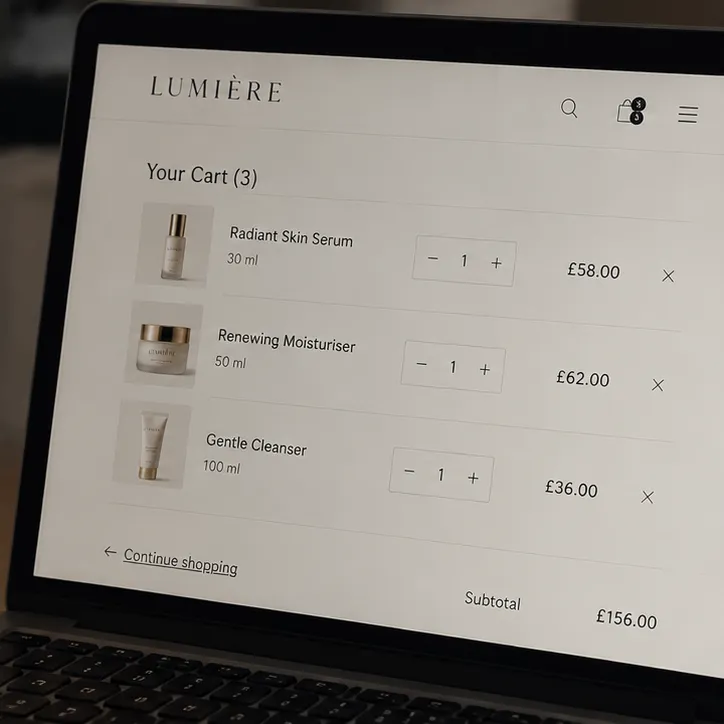
The cost line that gets missed is quality control. A realistic production plan includes a person who can spot bad text, inaccurate variants, impossible shadows, or a scene that no longer fits the product category. That reviewer may be the founder at first, but it should become a documented step as the catalogue grows.
If you need help assigning that repetitive review work, OnlineJobs.ph is worth checking out for finding a remote assistant who can follow a clear image-approval checklist.
That same discipline helps with the business side of the store. My business formation checklist covers the legal and financial foundation you want in place before the catalogue and ad spend get bigger.
For operators who would rather have the store foundation and core workflows built with them, my turnkey done-for-you service is designed for moving from scattered tasks to a more deliberate launch plan.
Do AI-Generated Product Images Help Sell Products More?
Good-looking images can help people picture a product in their own lives, and there are promising commercial results. Online resale marketplace GoodBuy Gear reported a 23% increase in conversion rates after using Photoroom to give its existing product photographs consistent backgrounds. Nordic retailer Stockmann also reported 8% more purchases during a 30-day trial of AI-enhanced fashion imagery, although its conversion rate remained stable.
These results are encouraging, but neither case proves that entirely AI-generated photographs outperform traditional ones.
There’s another side to the story. VML’s Future Shopper 2026 research found that 49% of consumers lose trust when product images look AI-generated. Making AI images look distinctive and professionally finished is becoming increasingly important.
As Scale Oxford, an ecommerce marketing agency, explains:
“The biggest problem with AI-generated product images is that brands often settle for the first result. You end up with the same glossy cosmetics backgrounds that everyone else is using. Brands really need to spend time refining the lighting and changing the setting until the image looks like something they’ve created for themselves. Otherwise, it can come across as lazy and low-quality.”
For retailers experimenting with AI, comparing actual purchases and return rates alongside clicks can give a much better indication of whether the new images are helping sales.
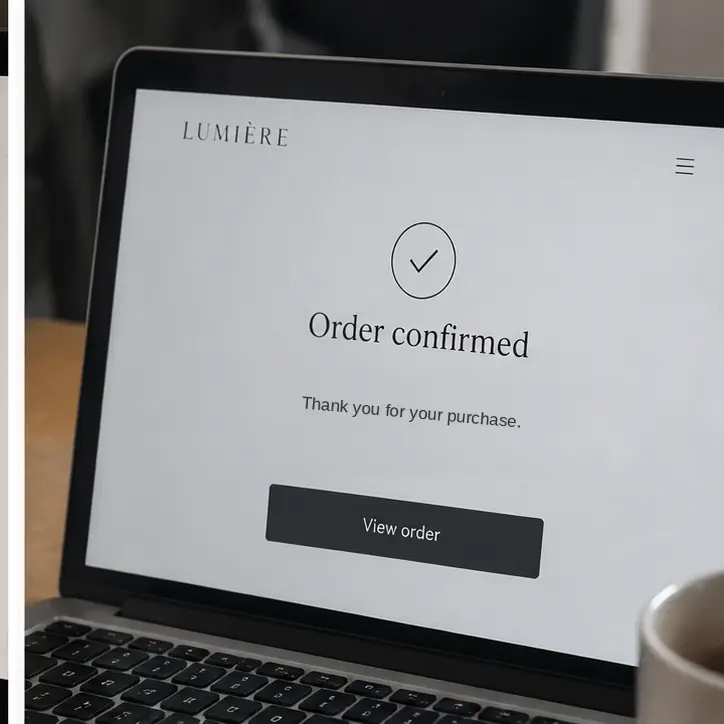
Run a simple test rather than treating a pretty image as proof. Choose one category, keep the product and offer stable, test the creative, and watch conversion, support questions, cancellations, and return reasons together. A higher click-through rate is not a win if the image sets the wrong expectation after the order.
For supporting campaign templates, mockups, and licensed creative assets, Envato Market is a resource to consider when you need more variety without presenting an invented product as real.
I would also keep an eye on model and workflow risk. The NIST Generative AI Profile is a useful primary-source framework for thinking through validity, transparency, and human oversight before an AI workflow becomes business as usual.
Need a second set of eyes on the store, not just the images?
When the creative, supplier process, offer, and customer experience need to work together, my ecommerce coaching can help you build a clear plan instead of optimizing one isolated part of the business.
So What Is The Future of Ecommerce Product Photography
AI has already changed what ecommerce businesses can achieve with a handful of product photos, and the technology is only getting better. For many retailers, it’s becoming a majorly useful way to produce more creative imagery at a much lower cost.
Traditional photography still has an important place, though, particularly when accuracy matters to purchasing decisions. The future will likely involve fewer elaborate photoshoots, with real product images providing the foundation for increasingly impressive AI-generated campaigns.
My takeaway is to build your library around trustworthy product proof first. Once the core images can answer a buyer’s practical questions, use AI to make the campaign more useful, more relevant, and easier to test. That balance protects the store long after one visual trend fades.
If maintaining that system starts taking time away from supplier follow-up, merchandising, and customer experience, my store management service can help operators keep the important day-to-day work organized as they scale.
Frequently Asked Questions
Should an ecommerce store use AI images on product pages?
Yes, provided the AI is extending accurate product photography rather than replacing the product details a shopper needs to judge. It is a better fit for backgrounds, campaign variants, and supplementary lifestyle scenes than for showing an exact finish, logo, condition issue, or included component.
What should I measure after testing AI-assisted product creative?
Track conversion rate alongside add-to-cart rate, customer questions, cancellations, returns, and return reasons. That gives you a more reliable picture than clicks alone because it catches an image that attracts attention but creates a mismatch after purchase.
Keep Building Your Ecommerce Foundation
- AI Product Photography for Ecommerce
- How to Shoot Product Photos That Convert Without a Studio
- Product Imagery for High-Ticket Stores When You Do Not Hold Inventory
- How to Create AI-Generated Product Images for Your Online Store
- Midjourney vs. DALL-E for Ecommerce Product Images

Trevor Fenner is an ecommerce entrepreneur and world traveler from Seattle, Washington, and the founder of Ecommerce Paradise, a platform focused on helping entrepreneurs build and scale profitable high-ticket ecommerce and dropshipping businesses. With over a decade of hands-on experience, Trevor specializes in high-ticket dropshipping strategy, niche and product selection, supplier recruiting and onboarding, Google & Bing Shopping ads, ecommerce SEO, and systems-driven automation and scaling. Through Ecommerce Paradise, he provides free education via in-depth guides like How to Start High-Ticket Dropshipping, advanced training through the High-Ticket Dropshipping Masterclass, and fully done-for-you turnkey ecommerce services for entrepreneurs who want a faster, more hands-off path to growth. Trevor is known for emphasizing sustainable, real-world ecommerce models over hype-driven tactics, helping store owners build scalable, sellable, and location-independent brands.
He maintains homes in Seattle and Bali, spends most of the year overseas, and usually returns to Seattle for about a month each summer.


